Shipping from US to Mexico: A 2026 Compliance Guide
Your complete guide to shipping from US to Mexico. Learn about customs, required documents, duties, restricted items, and how to automate compliance.
You're probably in the same spot a lot of regulated-goods merchants hit. Orders from U.S. customers are routine, your warehouse flow is stable, and then Mexico starts looking like the obvious next market. The demand is there, but the minute you start asking how to ship across the border, the simple questions turn into operational risk. Who is the importer? Which documents have to match? What happens if customs clears the freight but local delivery fails?
That hesitation is rational. Shipping from the US to Mexico isn't hard because the lane is obscure. It's hard because the lane is active, formal, and unforgiving when your paperwork, consignee setup, or delivery rules are loose.
Tapping into the Mexican eCommerce Market
For a U.S. retailer, Mexico isn't a side lane. It sits inside one of the most important freight corridors in North America. In 2024, U.S. freight flows with Canada and Mexico reached $1.6 trillion, which was 1.8% higher than in 2023, according to the U.S. Department of Transportation's transborder freight report. In practice, that means shipping from the US to Mexico happens inside a mature logistics environment with established carriers, frequent crossings, and brokers who handle this traffic every day.
That's the good news.
Automate Shipping Compliance
Block orders to restricted states automatically. 3-day free trial.
Start Free TrialThe bad news is that a lot of merchants confuse a mature lane with a simple lane. It isn't. The movement itself is often manageable. The friction shows up in product admissibility, importer readiness, customs coordination, and final delivery inside Mexico. That matters even more for firearms retailers, because the risk isn't just a late package. It's a held shipment, seized goods, account scrutiny, or a customer order that should never have been accepted.
Why merchants freeze at the border
Most store owners don't get stuck because they can't find a carrier. They get stuck because every step seems connected to a legal decision. If the customer is in the wrong jurisdiction, if the importer can't support the commodity, or if the paperwork doesn't line up with the actual goods, the shipment can fail long before it reaches the buyer.
That's why expansion into Mexico should be treated as an operations project, not a marketing project.
If you're already evaluating broader cross-border marketplace expansion, these strategies for selling on Amazon globally are useful context because they force the same core questions: who owns compliance, who owns landed cost, and who owns last-mile delivery when orders move outside your domestic rules.
What works in the real world
The merchants who handle this well do three things early:
- They define the allowed catalog first. They don't start by turning on Mexico as a destination for the full store.
- They lock in broker and importer workflows before launch. They don't wait for the first order to figure out who files what.
- They treat delivery feasibility inside Mexico as part of compliance. Customs clearance is only one gate.
Shipping to Mexico gets easier once you stop treating it like “international shipping” and start treating it like a controlled process with named owners on every step.
Mastering Your Pre-Shipment Documentation
If your documents are weak, nothing downstream will save the shipment. Carriers can move freight fast. Brokers can process clean files. Customs can release cargo. But none of that happens when the documents conflict, omit key product details, or identify parties that aren't prepared to import.
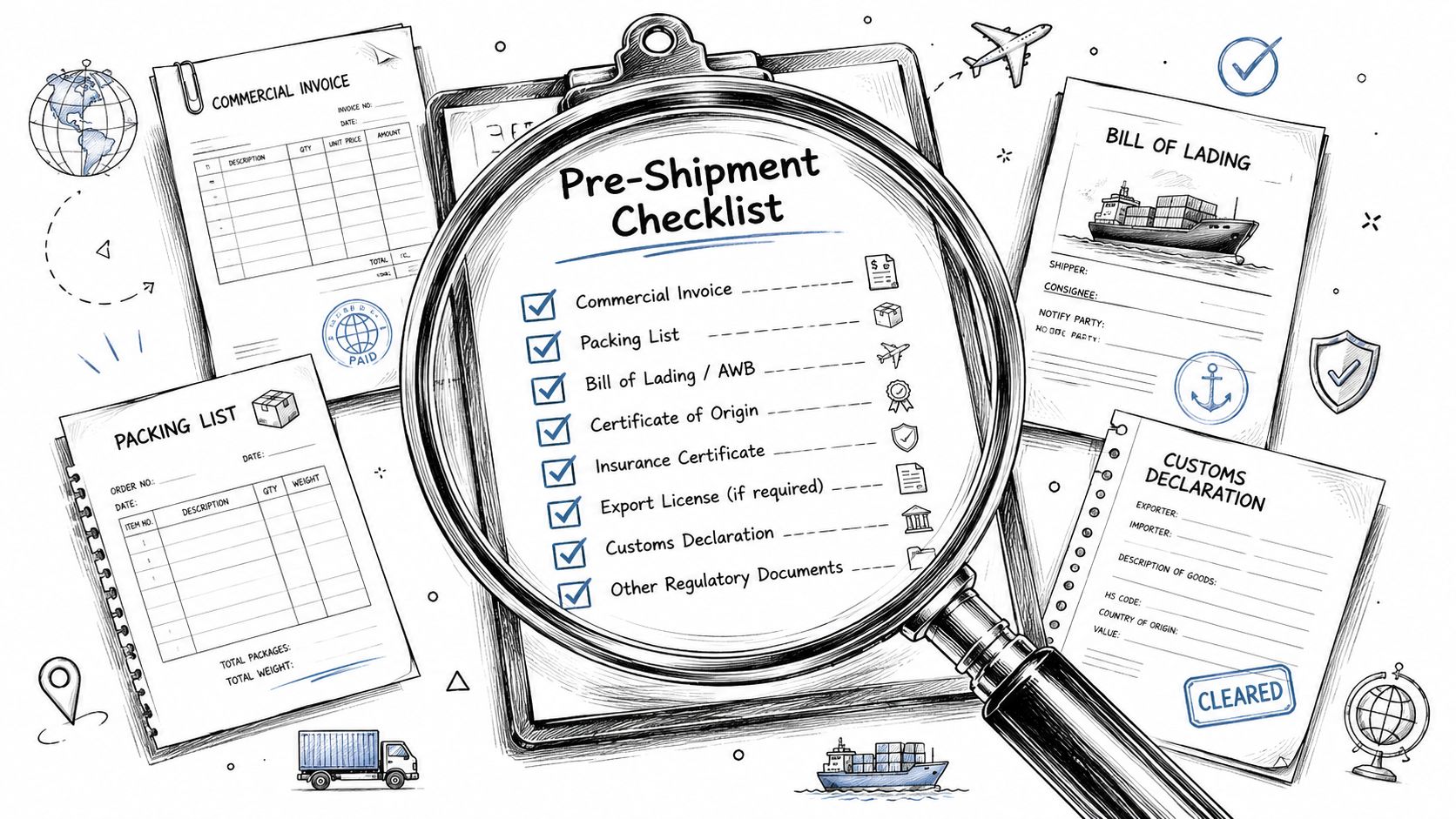
Industry guidance for U.S. to Mexico shipping consistently requires at least a bill of lading, commercial invoice, and packing list. That same guidance also notes that customs uses the commercial invoice to determine duties, and that the importer in Mexico must be registered for the product and have a Mexican customs broker before shipment, as outlined in Redwood Logistics' guide to the U.S. to Mexico shipping process.
Practical rule: Incomplete paperwork is the single biggest cause of avoidable border delays. Most shipment problems start before pickup, not at the port.
The core document set
Start with the commercial invoice. This is the document customs uses to understand what you sold, who sold it, who bought it, and how duties should be assessed. If you sell regulated items or components, vague descriptions are a problem. “Accessory,” “hardware,” or “parts” won't help a broker classify the goods correctly. The invoice needs to describe the product in language that matches what is in the cartons.
Free Shipping Compliance Audit
We'll review your WooCommerce store's shipping compliance for free.
The bill of lading serves a different purpose. It's the transport document. It identifies the shipper, consignee, freight terms, and movement details. If the bill of lading says one thing and the invoice says another, customs and the carrier will both slow down.
The packing list is where inspection discipline shows up. Customs officers, brokers, and warehouse teams use it to verify what is packed in each carton, crate, or pallet. If your invoice is accurate but your carton detail is sloppy, you've still created friction.
For merchants who need a practical reference on invoice construction, this guide to a FedEx commercial invoice for restricted shipments is useful because it highlights the fields that commonly trigger review.
What merchants miss
A lot of teams think the document stack is the hard part. It isn't. The hard part is making sure the people named in the documents are operationally ready.
Check these before freight leaves your dock:
- Importer readiness: The importer in Mexico must be able to import that product category. If they aren't properly set up, clearance can stall or fail.
- Broker assignment: A Mexican customs broker should be engaged before shipment, not after the truck is already booked.
- Catalog control: Your internal SKU data should map cleanly to the descriptions used on export paperwork.
- Consistency across forms: Product descriptions, quantities, and parties should match across the invoice, bill of lading, and packing list.
The Certificate of Origin question
Some shipments also call for a certificate of origin, depending on the product and trade treatment being claimed. The mistake isn't just forgetting it. The bigger mistake is assuming it applies automatically or using one without checking whether the goods and transaction support it.
That same discipline shows up in other cross-border contexts too. Even consumer travel guidance like Mexico pet travel essentials makes one point very clearly: border movement gets smoother when documents are complete, current, and aligned to the item being moved.
The warehouse handoff
The warehouse should never be the first team to notice a documentation problem. By the time a packer asks why the invoice says one quantity and the pick list says another, you're already wasting labor.
A clean process usually looks like this:
- Order review: Confirm the product can be sold into Mexico.
- Importer check: Verify the consignee or importer structure is valid for that commodity.
- Document generation: Build the invoice, bill of lading, and packing list from approved SKU data.
- Pre-dispatch review: Have operations or compliance review the final file set before release.
Navigating the Mexican Customs Clearance Process
The customs process feels mysterious until you break it into owners and handoffs. Once you do that, most of the confusion disappears. The carrier moves the freight. The broker handles the customs filing and coordination. Customs decides whether the shipment can enter. Your job as the shipper is to make sure the file is complete before the load starts moving.
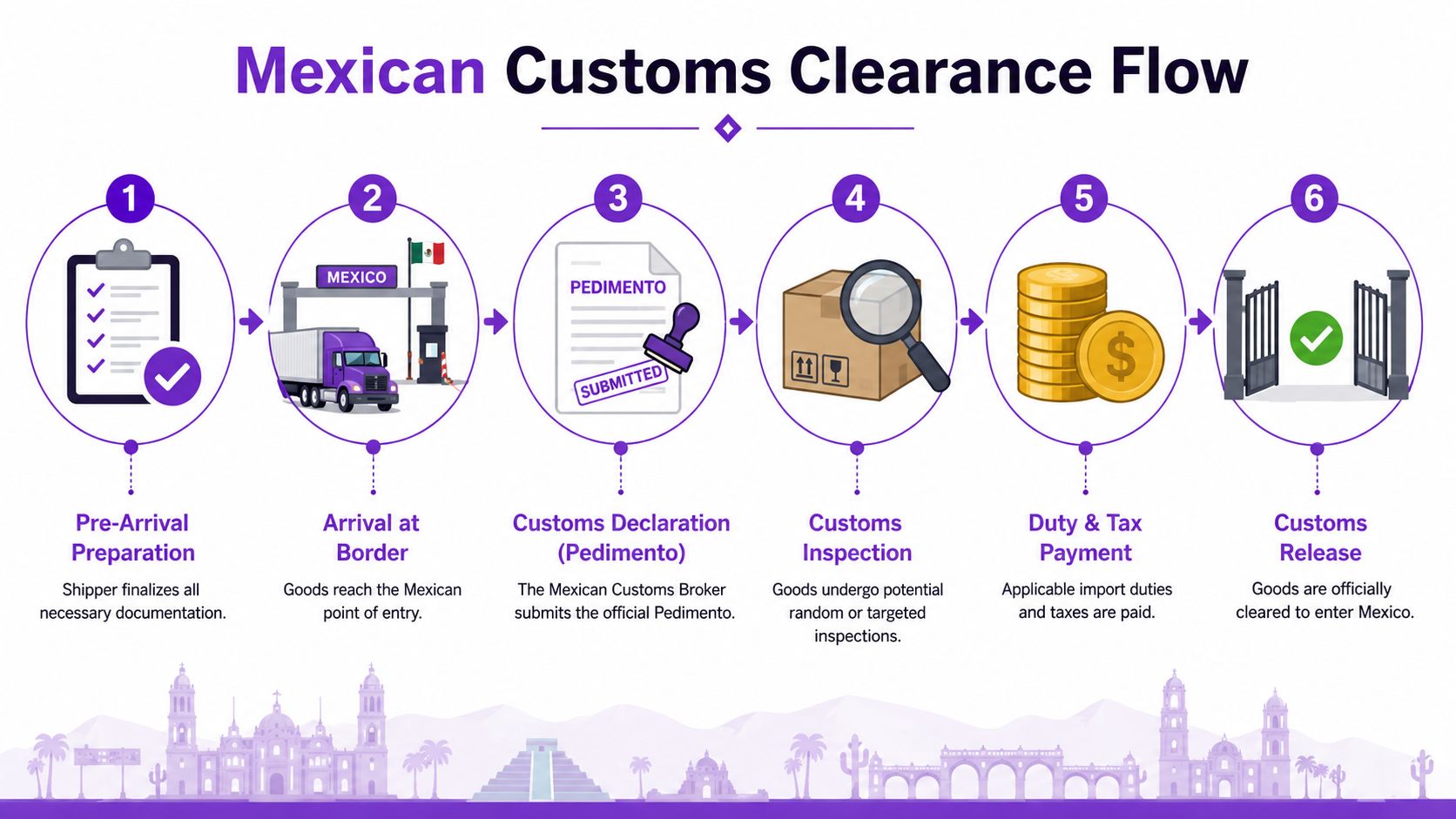
For U.S. to Mexico truckload freight, RXO recommends setting up the customs broker first and allowing about two weeks, then assembling the bill of lading and commercial invoice and filing documents with both customs agencies. RXO also notes that the border crossing itself typically takes only 2 to 5 hours once cleared, which means document readiness is the primary bottleneck, not the final border gate, as explained in their cross-border Mexico shipping guide.
The sequence that actually matters
The shipment usually works best when the sequence is rigid.
- Broker setup comes first. If the broker isn't in place, the rest of the timeline is unstable.
- Documents are assembled and reviewed. That includes the commercial invoice and bill of lading at minimum.
- Filings go to both sides as required. U.S. export requirements and Mexican import requirements have to be aligned.
- The crossing move is dispatched only after the file is ready. Sending the truck before the file is settled is how detention and delay start.
The Mexican customs broker plays a central role because that broker handles the import-side customs interaction, including preparation of the pedimento, which is the formal customs entry record used for import processing.
Why the pedimento matters
If you ship regulated goods, the pedimento isn't just paperwork. It's the legal translation of your shipment into a customs filing. Product identity, valuation, importer details, and supporting documents all need to support that filing. If the commercial reality and the pedimento don't match, customs will expose the mismatch.
For a closer look at the records and support files often needed around controlled products, this article on cross-border restricted goods documentation is a helpful operational reference.
Here's a visual summary of the flow before release:
<iframe width="100%" style="aspect-ratio: 16 / 9;" src="https://www.youtube.com/embed/uLzw9TSTBac" frameborder="0" allow="autoplay; encrypted-media" allowfullscreen></iframe>Where delays really happen
Most new shippers assume border delay means trucks are lined up and customs is slow. Sometimes that happens. More often, the delay starts because someone sent over a poor invoice, forgot a supporting document, or named an importer who can't support the product category.
The physical crossing may be measured in hours. The preventable delay usually starts days earlier in someone's inbox.
That distinction matters because it gives you an advantage. If linehaul time were the primary issue, there wouldn't be much you could do. But if file quality is the issue, your team can fix it with process discipline.
A workable control model
Use a simple responsibility split:
- Sales or customer service confirms the order should be accepted.
- Compliance or operations validates commodity eligibility and consignee setup.
- Documentation staff prepares the shipment file.
- Broker reviews for import-side readiness.
- Transportation team dispatches only after the broker signs off.
That model doesn't eliminate customs risk. It eliminates a lot of self-inflicted customs risk.
Choosing the Right Carrier and Shipping Method
Mode selection is where margin and service collide. If you choose based only on price, you can end up with a service level that doesn't fit the product. If you choose based only on speed, you can bury the order in cost. Shipping from the US to Mexico works best when you choose the mode around the commodity, urgency, and how much handling risk you can tolerate.
The benchmark ranges are fairly clear. According to Welke, truckload shipments usually take 2 to 5 days and cost about $2.00 to $3.50 per mile. LTL typically takes 5 to 8 days at roughly $0.20 to $0.40 per pound. Rail usually moves in 7 to 12 days at about $0.08 to $0.15 per pound. Air freight can arrive in 1 to 3 days at roughly $3 to $6 per kilogram, based on their guide to shipping between the U.S. and Mexico.
US to Mexico shipping options at a glance
| Shipping Mode | Typical Transit Time | Estimated Cost | Best For |
|---|---|---|---|
| Truckload | 2 to 5 days | $2.00 to $3.50 per mile | Palletized freight, higher control, predictable replenishment |
| LTL | 5 to 8 days | $0.20 to $0.40 per pound | Smaller freight moves that don't fill a trailer |
| Rail | 7 to 12 days | $0.08 to $0.15 per pound | Heavy replenishment freight where cost matters more than speed |
| Air Freight | 1 to 3 days | $3 to $6 per kilogram | Time-sensitive, high-value shipments |
How to match mode to product reality
Truckload is usually the cleanest freight option when you have enough volume and want tighter control over handling. For regulated goods, fewer touches can mean fewer opportunities for discrepancy, damage, or chain-of-custody confusion.
LTL works when you're moving smaller quantities, but it introduces more handling points. More handling can be manageable for durable, lower-risk items. It's less attractive when the shipment includes products that demand strict carton accuracy and clean exception management.
Rail is a cost play. If you're moving heavy replenishment inventory and the receiving schedule has room, rail can make sense. It usually doesn't fit orders where timing and customer communication need to stay tight.
Air freight is for urgency, not convenience. It's useful when the item is high value, time sensitive, or operationally critical. It's a poor fit for freight you're only expediting because earlier planning failed.
The freight terms question
Mode choice also interacts with who pays what at destination. If your team still treats duty and delivery responsibilities as an afterthought, it's worth reviewing the practical difference between DDP and DDU in cross-border shipping. A lot of customer-service problems that look like transportation failures are really freight-term failures.
Cheap transportation is expensive when the mode creates avoidable handling, poor visibility, or customer confusion on delivery charges.
What usually works best
For most small and mid-sized merchants, the best setup isn't one mode. It's a lane strategy:
- Use truckload for planned replenishment and wholesale-style moves.
- Use LTL when the freight size doesn't justify a full trailer but the shipment still fits your compliance rules.
- Reserve air for genuine priority orders.
- Use rail only when the commodity, timing, and consignee operations can absorb a longer cycle.
That approach is boring. Boring is good in cross-border logistics.
Managing Prohibited and Restricted Goods
Regulated-goods merchants often encounter trouble. Not because they ignore compliance, but because they assume “restricted” means “possible with extra paperwork.” Sometimes it does. Sometimes it means the product should never be offered into that destination at all.
For firearms retailers, this isn't a theoretical distinction. Firearms, parts, components, accessories, magazines, and adjacent tactical products don't all sit in the same regulatory bucket. Carrier rules may differ from customs rules. Customs admissibility may differ from local delivery feasibility. A product that looks harmless to a general ecommerce manager can still trigger scrutiny because of how it is classified, marketed, or bundled.
The first mistake merchants make
They build policy around product names instead of product function.
A merchant might flag “firearm” but miss a component, mounting item, or part kit that is also controlled in practice. Or they overcorrect and block categories so broadly that they shut down legitimate, lower-risk commerce. Both errors cost money. One creates legal exposure. The other destroys viable demand.
A better internal review asks these questions:
- What is the item's actual function?
- Does the destination allow import of that category?
- Does the importer have the ability to receive that category?
- Will the carrier move it?
- Can the final delivery network complete the handoff without a compliance issue?
Customs clearance isn't the whole answer
Many shipping guides spend most of their time on documents, brokers, and border release. That's necessary, but it can create a false sense of security. If your product is sensitive, the shipment can still fail after customs if local routing, consignee verification, or delivery handling breaks down.
That's especially important for firearms-adjacent ecommerce because what counts as acceptable at checkout often isn't what proves deliverable in the field. A destination may look serviceable in a broad sense while still being a bad fit for a specific regulated SKU.
Build a restricted-goods policy before you build a Mexico sales policy
Your policy should separate products into at least three groups:
- Never ship to Mexico
- Ship only with documented broker and importer approval
- Allowed under defined operational controls
That classification should live outside anyone's memory. If the rule only exists in a shipping manager's head, it will fail during PTO, staff turnover, or a weekend order surge.
For regulated goods, “we'll double-check it later” isn't a control. It's a gamble.
What works better than a static prohibited list
Static lists age badly. Product assortments change. Carrier rules change. Enforcement posture changes. You need a review rhythm that checks:
- SKU descriptions and category tags
- Destination rules by product class
- Broker feedback on recent holds or rejections
- Customer-facing promises at checkout
- Warehouse release permissions
The strongest operators treat restricted-goods management as a live operational system. They don't leave it buried in a PDF policy document nobody opens once the holiday rush starts.
Automating Compliance to Prevent Prohibited Orders
Manual review sounds responsible until order volume rises. Then it turns into a bottleneck that misses edge cases. Someone on customer service approves an order because the product title looks safe. A warehouse lead prints a label because the destination seems normal. The shipment clears one internal check and fails the one that matters.
That's why automation matters most before payment capture and label generation.
A major blind spot in common guidance on shipping to Mexico is last-mile compliance after customs clearance. Many guides explain the customs side well but offer little practical detail on reducing failed final deliveries or handling address-validation problems inside Mexico, which is a meaningful risk for regulated goods, as noted in ArcBest's article on shipping to Mexico from the USA.
The blind spot after customs
A shipment can be perfectly documented, properly brokered, and legally imported, then still become a problem on local delivery. The address may be poorly normalized. The destination may be difficult for a regulated handoff. The local service profile may not support the product category the way your domestic network does.
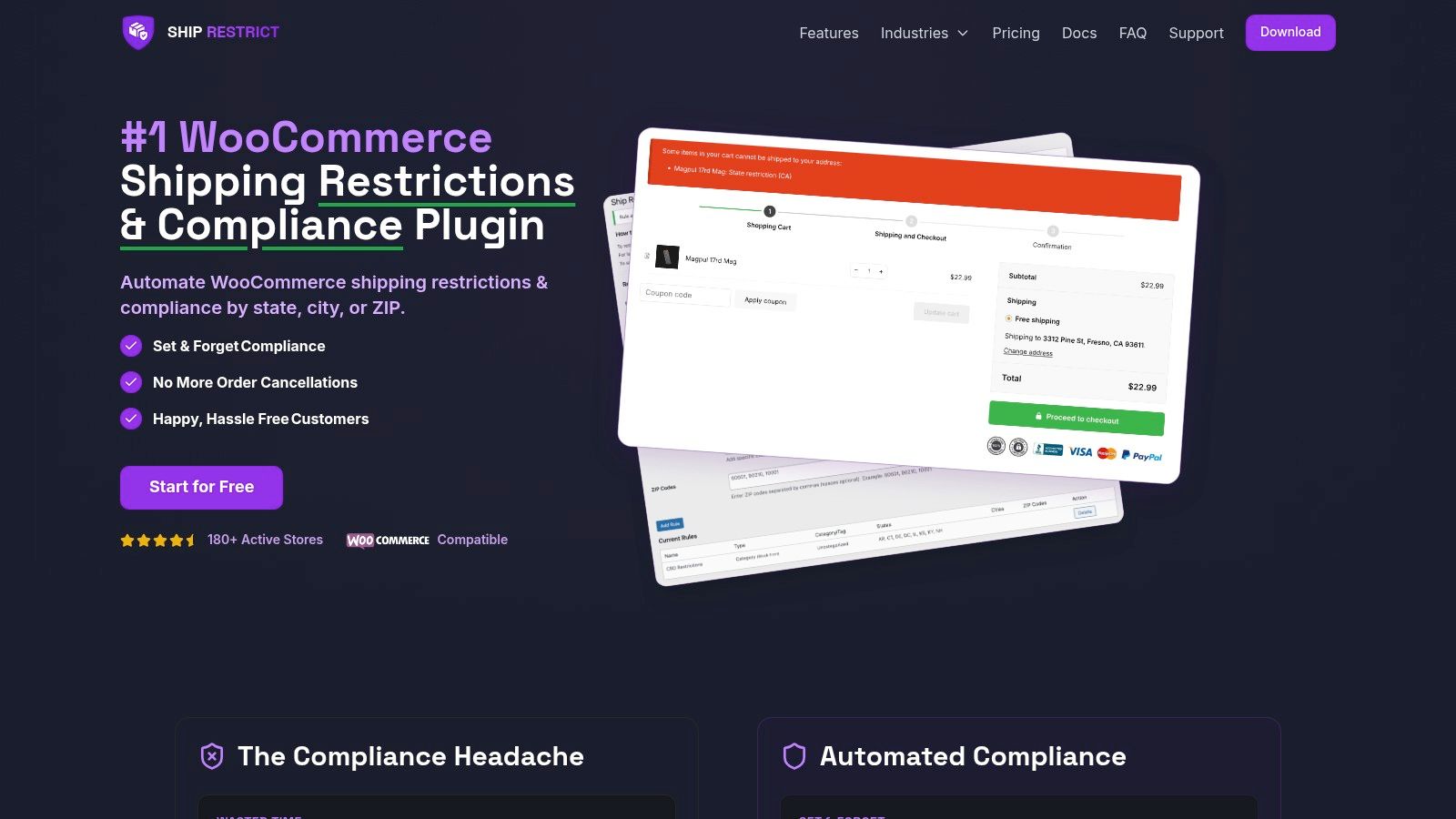
For firearms retailers, that means compliance can't stop at customs admissibility. It has to include destination-level order control. If a shipment should never go to a particular jurisdiction, city, or delivery zone, the best time to enforce that rule is at checkout.
Why manual checks break down
Manual review has three recurring weaknesses:
- People check after the order is placed. By then, the customer expectation is already set.
- Rules live in spreadsheets or tribal knowledge. That creates inconsistent decisions.
- The store platform doesn't enforce destination restrictions automatically. Staff have to catch exceptions by memory.
That pattern should feel familiar to anyone who has dealt with regulated marketplace compliance. The underlying issue is similar to product-warning enforcement on major platforms. If you've dealt with compliance notices in marketplace channels, this article on understanding Amazon Prop 65 notices is a useful parallel because it shows how small listing or compliance gaps turn into larger account problems fast.
What an automated rule system should do
For Mexico-bound regulated orders, a practical automation layer should:
- Block prohibited destination combinations before checkout completes
- Apply rules by product and location, not just country
- Show a clear customer message when an item can't ship
- Reduce warehouse exceptions by stopping bad orders upstream
- Support updates as product and destination rules change
This isn't just about speed. It's about moving compliance to the point where mistakes are cheapest to prevent.
If your team is still checking restricted destinations after a label is printed, the process is late by at least one step.
The operational payoff
When merchants automate destination restrictions, a few things improve immediately. Customer service stops wasting time on orders that should never have gone through. The warehouse prints fewer doomed labels. Compliance reviews shift from reactive cleanup to proactive rule maintenance.
That's the right trade. Cross-border shipping will always involve uncertainty. Your store logic shouldn't add more.
If you sell regulated products on WooCommerce, Ship Restrict gives you a practical way to enforce shipping rules before bad orders become customs problems, carrier disputes, or failed last-mile deliveries. It lets you block restricted destinations by location and product logic at checkout, which is exactly where firearms retailers need control most.
Automate Shipping Compliance
Stop worrying about restricted states. Ship Restrict handles it automatically.

Cody Yurk
Founder and Lead Developer of ShipRestrict, helping e-commerce businesses navigate complex shipping regulations for regulated products. Ecommerce store owner turned developer.
Automate Shipping Compliance
- Block restricted states
- No more cancellations
- Set and forget
3-day free trial · Card required