Shipping Deadlines USPS 2026: Your Essential Guide
Never miss a delivery. Our guide explains the 2026 shipping deadlines USPS for holiday, military, & daily mail, plus e-commerce best practices.
A holiday order comes in late in the day. The customer wants it before Christmas. Your team still has to pick it, pack it, print the label, and get it into the USPS network before the last truck leaves. That's the moment when shipping deadlines USPS guides either help you or fail you.
Most store owners don't lose holiday orders because they never heard of Priority Mail. They lose them because they treated a deadline as a date instead of an operational cutoff. They also miss a second problem that gets far less attention: military APO, FPO, and DPO addresses often work on a completely different calendar than domestic shipments. If your store serves military families, relying on a generic “order by this date” banner can create avoidable failures.
This guide takes the practical route. It focuses on the decisions that matter when you're shipping real customer orders, not just reading USPS marketing pages. That includes daily acceptance cutoffs, holiday send-by dates, how to verify the exact service window for a specific package, and the military deadline gap many retailers overlook. If your back office still uses old paper-heavy workflows for exceptions, approvals, or customer records, it's also worth reviewing modern faxing alternatives so those admin tasks don't slow down fulfillment during peak season.
Meeting the Moment Your Guide to USPS Deadlines
The pressure usually starts with one order, not a thousand. A customer checks out in the afternoon, leaves a note asking for holiday delivery, and expects the shipping option on your site to mean something concrete. If your process is loose, your staff starts guessing. Guessing is what creates late deliveries, refund requests, and support tickets that should never have existed.
Automate Shipping Compliance
Block orders to restricted states automatically. 3-day free trial.
Start Free TrialUSPS deadlines only work when you treat them as part of your warehouse routine. The ship date on a label isn't enough. What matters is whether USPS accepts the parcel that day, whether the service level fits the calendar, and whether the destination falls into a category with different timing.
Practical rule: A USPS deadline is only useful if it matches your internal pick-pack-handoff schedule.
That matters even more for regulated sellers. Firearms retailers and other compliance-heavy merchants don't just need speed. They need the order reviewed, the address validated, and the package released without creating a legal problem or a customer service problem.
What trips stores up most often
A few patterns show up every year:
- Late-day orders get treated like same-day orders even when the pack bench is already backed up.
- Holiday banners stay too generic and don't distinguish between domestic and military destinations.
- Staff rely on memory instead of checking the exact USPS delivery estimate for the package in front of them.
- Cheap service gets chosen by habit when a paid upgrade would have preserved the sale.
The goal isn't to promise more. It's to promise what your operation can execute.
Understanding Your Daily USPS Cutoff Times
A lot of confusion around shipping deadlines USPS searches comes from one basic mistake. People think a deadline is a calendar date. In practice, it's a time of day plus a handoff method.
If you print a label at 6:30 p.m. but your local acceptance point stopped processing outgoing parcels earlier, that package may not enter the mailstream until the next day. For the customer, that still feels late even if your system says “shipped.”
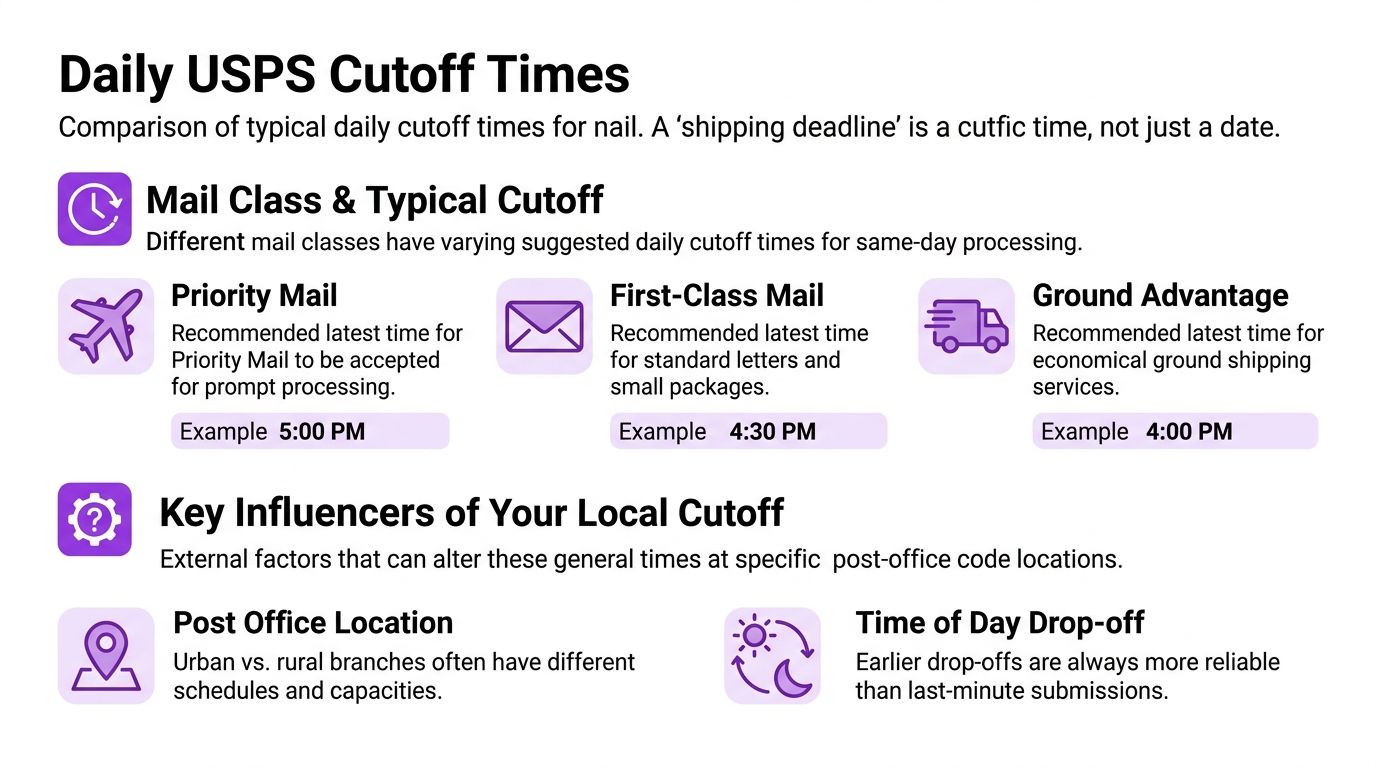
Retail counter, pickup, and blue box are not the same
Dropping a package at the retail counter is different from leaving it for a carrier pickup. Both are different from using a blue collection box. Each method has its own real-world cutoff.
At the retail counter, the limiting factor is the branch's operating hours and last dispatch. At pickup, you're relying on the route timing and whether the parcel is ready when the carrier arrives. At a blue box, the posted collection time is the only time that matters. If you miss it, the label date won't save you.
Free Shipping Compliance Audit
We'll review your WooCommerce store's shipping compliance for free.
How to make cutoff times usable in your store
Use a simple operating rule set:
- Set your own store cutoff earlier than USPS. That gives your team time to pick, pack, label, and stage orders.
- Post location-specific rules for staff. The branch near your warehouse may process differently from the one across town.
- Treat collection box times as hard stops. Don't use them for anything fragile, high-value, or time-sensitive unless you know that box's actual pickup pattern.
- Review weekend movement before making promises. If you're planning around a Friday or Saturday handoff, check how transit expectations line up with whether mail travels on weekends.
The best cutoff time isn't the latest one you can get away with. It's the earliest one your team can hit consistently.
What works and what doesn't
What works
- One posted internal handoff time: Your warehouse team needs one clear answer, not five verbal exceptions.
- Service-specific handling: Priority orders should not sit in the same queue as low-cost ground shipments.
- Daily verification: Branch hours and pickup patterns can change during peak periods.
What doesn't
- Using label creation time as proof of shipment
- Assuming all USPS drop points move parcels the same way
- Letting customer service invent delivery promises after checkout
If your store gets this piece right, the holiday calendar becomes much easier to manage. If you get it wrong, even accurate USPS dates won't protect you.
The Official 2026 USPS Holiday Shipping Deadlines
A customer places an order on December 17 and expects Christmas delivery because your site still says "ships with USPS." If that order goes out by Ground Advantage, you have already put your support team in a bad spot.
For the contiguous U.S., USPS recommends these send-by dates for expected delivery before December 25: December 16 for USPS Ground Advantage, December 17 for First-Class Mail, December 18 for Priority Mail, and December 20 for Priority Mail Express, based on USPS holiday guidance for seasonal mailing deadlines (USPS 2023 holiday shipping and mailing deadlines announced).
2026 USPS Holiday Shipping Deadlines for the contiguous U.S.
| Service | Recommended Send-By Date |
|---|---|
| USPS Ground Advantage | December 16 |
| First-Class Mail | December 17 |
| Priority Mail | December 18 |
| Priority Mail Express | December 20 |
Treat these as customer-facing outer limits, not warehouse operating targets.
Ground Advantage protects margin, but it gives you the least room for error late in the season. If you miss that date, the usual fix is not better execution. The usual fix is paying more for a faster service or accepting a higher chance of post-holiday delivery.
Priority Mail is where many stores regain flexibility. It costs more, but it buys a little more selling time without pushing every order into premium shipping. Priority Mail Express gives you the latest listed window, yet that only helps if the package is packed, labeled, and accepted on time.
That distinction matters more than many stores admit.
USPS publish dates are built around mail entry, not your cart deadline. A practical holiday setup usually means posting store cutoffs one or two days earlier by service level, then tightening those dates again for products with longer pick-and-pack times, custom inserts, or inventory stored off-site. Stores that serve military families should be even more careful here. APO and FPO deadlines often arrive far earlier than domestic ones, so broad "order by December 18" messaging can be accurate for Ohio and completely wrong for an Air Force base overseas.
For a broader view of peak-season carrier planning and why carrier mix matters once USPS windows start tightening, see Snappycrate on holiday shipping partners.
Beyond the Mainland Deadlines for Military and Territories
Many shipping deadlines USPS articles often err in their assumption that “U.S. shipping” means one unified set of dates. It doesn't.
If you ship to military customers, APO, FPO, and DPO addresses need separate handling. USPS holiday guidance makes that clear, yet many store policies still bury military shipments inside the same domestic promise language used for the lower 48.
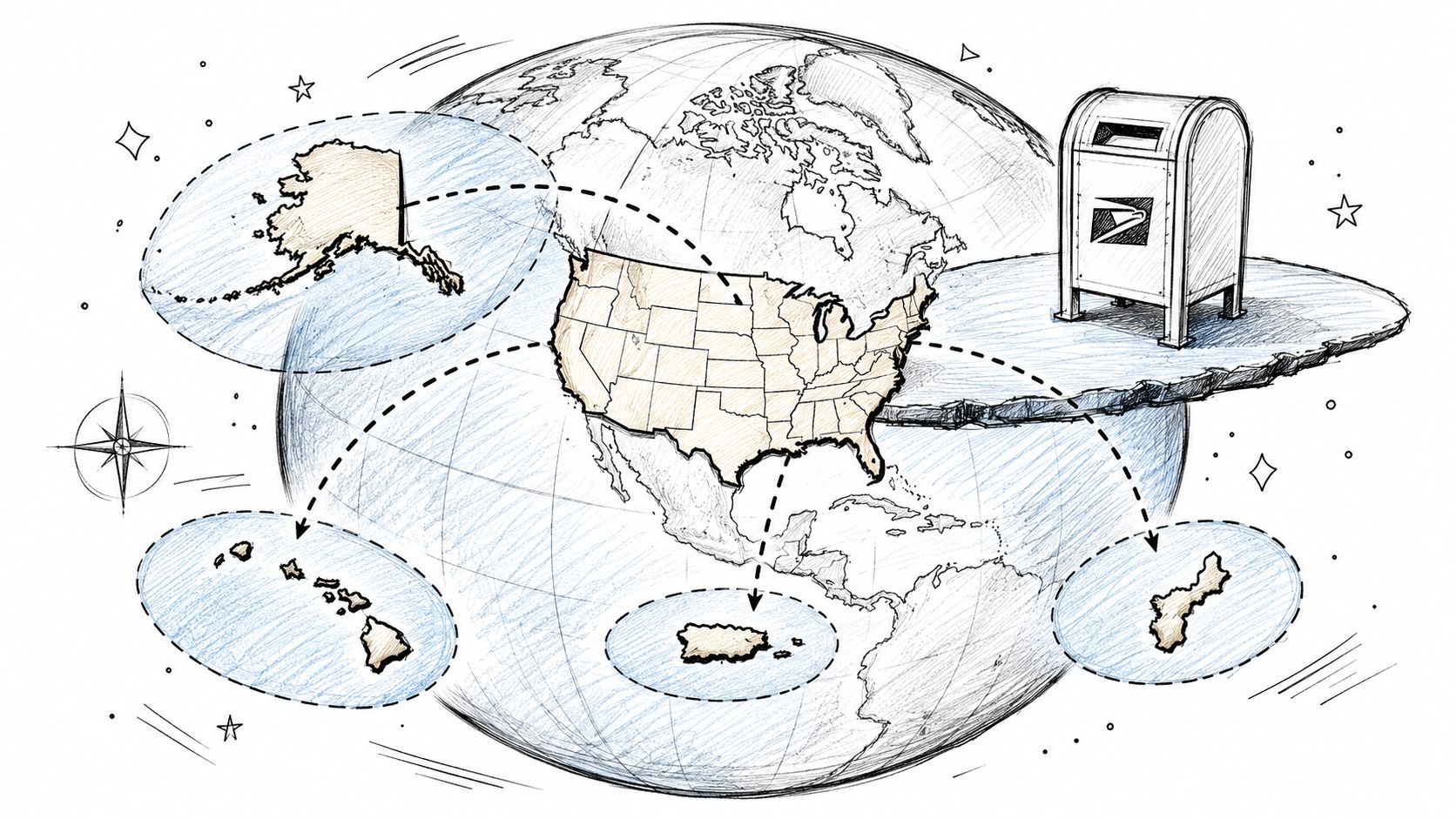
The military deadline gap is large
USPS holiday guidance notes that APO, FPO, and DPO shipping deadlines can be 30 to 50 days earlier than domestic dates, and the deadlines vary by destination ZIP code range. USPS gives one stark example: Ground Advantage can be November 6 for some military destinations versus December 16 for domestic shipping (USPS military holiday deadline guidance).
That's not a minor footnote. It changes how you merchandize, how you set site banners, and how your support team responds to “Will this arrive by Christmas?” for service members and their families.
What stores should do differently
- Separate military messaging from domestic messaging. Don't hide APO, FPO, and DPO timing inside a generic FAQ.
- Train support staff to ask for the destination type early. “Is this going to an APO, FPO, or DPO address?” should be a standard pre-purchase question during holiday rush.
- Flag these orders in your queue. They shouldn't follow the same promotional calendar as domestic orders.
- Review territory rules independently. Alaska, Hawaii, Puerto Rico, and U.S. territories may align differently than your lower-48 assumptions, so don't recycle your domestic messaging without checking the destination and service.
A military address is not a normal domestic holiday shipment. Treating it that way creates false promises.
For stores that serve military communities, this is one of the simplest ways to outperform competitors. Most merchants miss it. Customers notice when you don't.
How to Confirm Your Exact Shipping Deadline
A customer places a gift order at 2:40 p.m., pays for faster shipping, and expects a firm answer before your pickup truck leaves. That is the point where published USPS holiday charts stop being enough. You need the live service estimate for that exact origin, destination, package, and ship date.
For stores shipping to military families, this matters even more. APO, FPO, and DPO orders can look domestic in the cart and behave very differently in transit. If your team confirms the promise from a generic holiday table instead of the actual shipment details, you can miss the date before the order even hits the label queue.
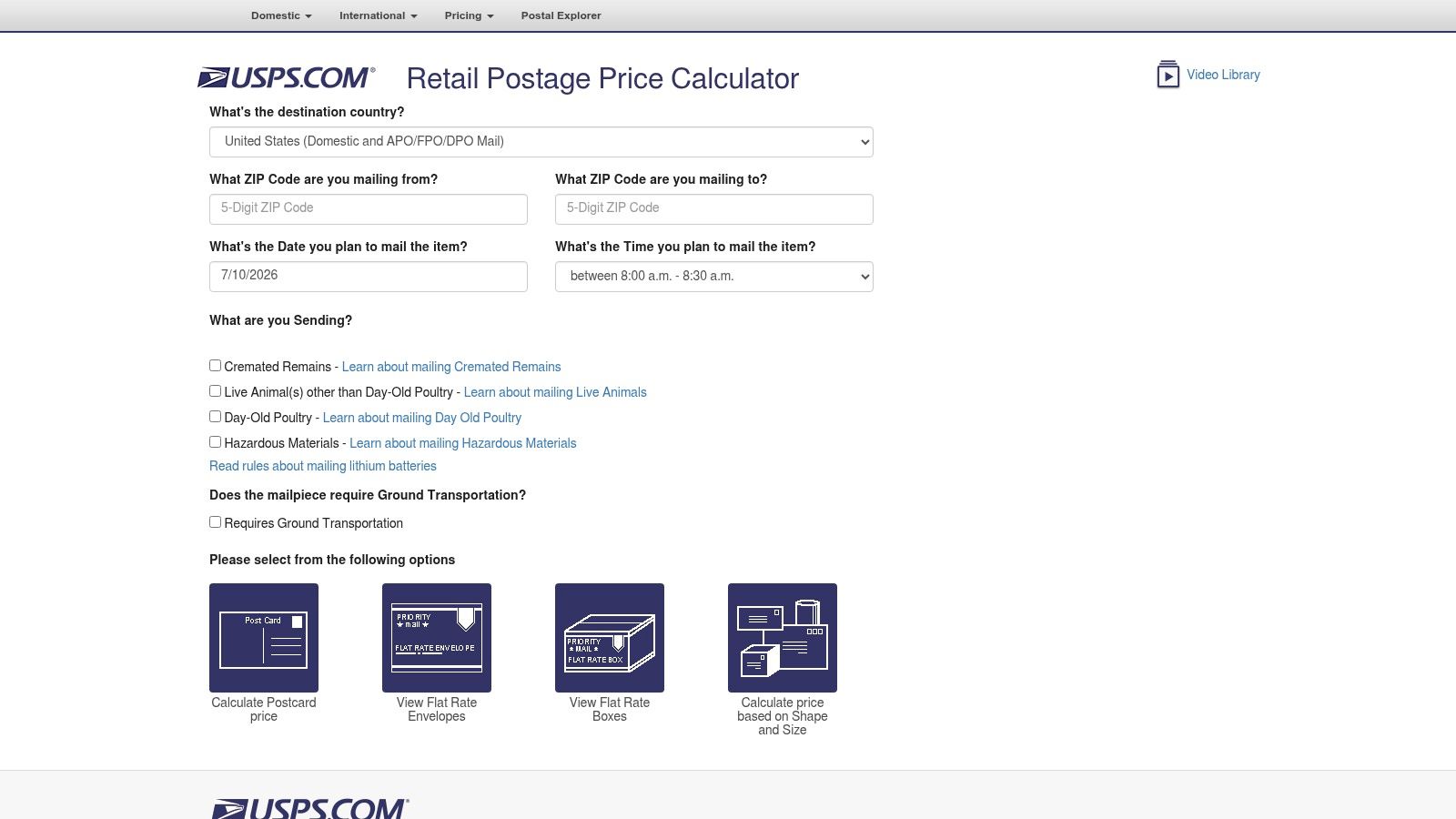
Use the USPS calculator like an operations tool
Use the USPS Price Calculator for the final check, not as a rough planning tool. USPS lets you enter origin ZIP Code, destination ZIP Code, ship date, weight, and dimensions so you can compare available mailing services for the actual package at hand (USPS Price Calculator).
That sounds basic, but small input errors create bad promises. I have seen teams quote a holiday arrival date based on the corporate warehouse ZIP while the order shipped from a satellite location with a later dispatch window.
Enter the details the way your label system will submit them:
- Origin ZIP Code: Use the actual ship-from location for that order.
- Destination ZIP Code: Copy it exactly from the verified address record.
- Weight and dimensions: Use packed measurements, not catalog estimates.
- Mail date: Use the day USPS will receive the package, not the order date.
- Service comparison: Review every available option before you commit to a delivery promise.
Verify the address before you verify the date
A precise calculator result still fails if the address is wrong. Military addresses are the common trap here. A missing PSC, unit number, or incorrect ZIP can push the order into manual review, return it, or route it in ways your customer service team cannot explain cleanly.
Before you approve a last-minute shipment, tighten your process around address verification and lookup workflows. That single step reduces preventable mistakes, especially on APO, FPO, and DPO orders where the formatting rules are less familiar to standard fulfillment staff.
If the order is high value or the delivery date will influence the purchase decision, confirm the address, run the calculator, then check the acceptance window at the tender location. USPS retail counters, docks, and pickup schedules do not all close at the same time. Your stated deadline should reflect the last moment your team can hand off the parcel.
Here's a quick walk-through if you want a visual reference before your team uses the calculator:
<iframe width="100%" style="aspect-ratio: 16 / 9;" src="https://www.youtube.com/embed/Nq1lWBW7oz0" frameborder="0" allow="autoplay; encrypted-media" allowfullscreen></iframe>Set a store deadline, not just a carrier deadline
The calculator gives you the carrier view. Your site needs an operational view.
If USPS shows a service is still possible on a given date, that does not mean your store should advertise that same cutoff to customers. You still need time for payment review, pick-pack, labeling, and handoff. For businesses trying to improve your ecommerce shipping, this is one of the simplest ways to cut failed promises without raising support volume.
My rule is straightforward. If the calculator result looks tight, do not sell the optimistic outcome. Upgrade the service, move the customer-facing cutoff earlier, or state that delivery by the holiday is no longer available. That discipline matters most on military shipments, where the missed deadline is often much earlier than buyers expect.
Integrating USPS Deadlines Into Your E-commerce Workflow
A missed holiday parcel usually starts with an internal process failure, not a carrier failure. The store promised a date based on the USPS calendar, but the warehouse needed another day for payment review, pick and pack, or an address check. APO and FPO orders expose this mistake fast because their deadlines often arrive well before the mainland holiday rush.
Your workflow should treat USPS deadlines as the outer limit, not the date you advertise. Set the customer-facing cutoff earlier, then build rules in your order system that match how your team works under pressure. If you sell to military families, set those rules first for APO and FPO shipments, then build the domestic schedule around them. Standard holiday guides often bury those earlier military dates, and that is how stores end up disappointing some of their most time-sensitive customers.
Build a buffer your team can keep
The practical fix is to map deadlines by service level and destination type inside your store operations. Ground products, Priority Mail, APO/FPO orders, and territorial shipments should not share the same promise logic. As noted earlier, a faster USPS service can keep an order shippable for longer, but the better move is to decide in advance when your team will stop offering each option.
I recommend a simple rule set. If an order needs manual review, hazmat screening, age verification, destination restrictions, or military address validation, move its store cutoff earlier than your standard USPS deadline. That protects your staff from rushed exceptions and protects customers from promises your floor cannot keep.
This matters even more for regulated-product sellers. A label printed on time does not help if the shipment still needs a compliance check before release.
Put the deadline where customers will see it
One banner at checkout is not enough. Customers make timing decisions on product pages, in the cart, during checkout, and after purchase when they read the confirmation email.
Use each touchpoint for a specific job:
- Product pages: show the last order date your store can support for the selected destination class, especially for APO/FPO and non-mainland shipments.
- Cart and checkout: trigger a clear message when the customer must upgrade service or when holiday delivery is no longer a safe promise.
- Order confirmation emails: restate the shipping method, destination type, and what happens next if the order requires review.
- Support macros: give agents approved language for military, territory, and holiday cutoff questions so they do not guess.
Clean naming also matters. If your tech stack labels the same service three different ways, your team will make mistakes in rules, notifications, and support replies. A standardized list of carrier codes helps keep those mappings consistent across plugins and label tools.
For a broader operations view, this guide on improve your ecommerce shipping is useful because it connects shipping promises with conversion, retention, and customer communication.
Stores keep trust by publishing the deadline they can fulfill, not the most optimistic one on the carrier chart.
If you sell regulated products on WooCommerce, Ship Restrict helps you prevent bad shipments before they happen. You can automate location-based restrictions by state, county, city, or ZIP Code, reduce manual address checks, and give customers clearer messages at checkout instead of cleaning up mistakes after the order is placed.
Automate Shipping Compliance
Stop worrying about restricted states. Ship Restrict handles it automatically.

Cody Yurk
Founder and Lead Developer of ShipRestrict, helping e-commerce businesses navigate complex shipping regulations for regulated products. Ecommerce store owner turned developer.
Automate Shipping Compliance
- Block restricted states
- No more cancellations
- Set and forget
3-day free trial · Card required