Can You Mail Frozen Food? 2026 Shipping Guide
Can you mail frozen food? Learn 2026 rules for USPS, UPS, FedEx, packaging, & dry ice. Ship safely and legally with our comprehensive guide.
Yes, you can mail frozen food, but only if you treat it like a controlled cold-chain shipment. For a 24-hour transit window, carriers like FedEx and UPS require 5 to 10 lbs of food-grade dry ice, insulated foam containers with at least 1.5-inch walls, and overnight service so the product stays frozen.
That matters if you're staring at a stack of orders from customers outside your local delivery radius and wondering whether frozen soups, seafood, meal kits, desserts, or butcher boxes can survive parcel shipping. They can. But frozen shipping is unforgiving. If the packaging is weak, the coolant is wrong, the labels are incomplete, or the service level is too slow, you don't just risk a messy delivery. You risk spoiled inventory, refunds, compliance problems, and avoidable customer complaints.
Small food businesses often treat shipping as the last step in the sale. In practice, it's part of production. The condition of the food when it lands is part of the product you sold. That's why the businesses that do this well build their process around packaging discipline, carrier rules, and documentation, not hope.
So You Want to Mail Frozen Food
If you run a small food business, this question usually shows up at a growth moment. A customer wants delivery outside your city. A wholesale buyer asks whether you can ship frozen samples. Your online store starts generating orders in places your van route can't reach.
Automate Shipping Compliance
Block orders to restricted states automatically. 3-day free trial.
Start Free TrialThe short answer to can you mail frozen food is yes, but the shipment has to be engineered. Frozen food doesn't tolerate improvisation. Once it leaves your facility, you lose direct control, so every decision before pickup has to account for delay risk, temperature retention, and carrier handling.
Three issues matter most.
- Temperature control: The package has to stay frozen for the full transit window, not just look cold at drop-off.
- Carrier compliance: Dry ice creates a hazardous materials issue, and that changes labeling and handling.
- Food safety records: If your product falls into a higher-risk category, documentation becomes part of the shipment process, not an admin task you can skip.
A lot of owners focus only on packing materials. That's too narrow. Good frozen shipping sits inside broader cold chain logistics strategies, where packaging, transit speed, handoff timing, and shipment visibility all work together.
Practical rule: Frozen parcel shipping works best when you design for the delay you hope won't happen.
That mindset changes how you buy boxes, when you release orders, and which products you should ship at all. Some frozen items are stable enough for parcel networks. Others are so fragile that one service failure can wipe out your margin on the order.
Understanding the Core Rules and Regulations
Shipping frozen food isn't just a packaging exercise. It sits inside food safety law, carrier policy, and record-keeping obligations. If you sell direct to consumers, that might sound like overkill. It isn't. Once you place temperature-sensitive food into commerce, you own the consequences if it arrives unsafe.
The main federal frame is the FSMA Final Rule on Sanitary Transportation. The FDA states that shippers, receivers, or carriers involved in food transportation operations with less than $500,000 in average annual revenue are exempt from certain compliance requirements, but that doesn't remove the need for core safety practices. The FDA also notes that the Food Traceability List still requires detailed record-keeping for specific high-risk foods moved under temperature control, and industry best practices recommend a maximum transit time of 30 hours for frozen food to reduce spoilage risk, according to the FDA sanitary transportation rule.
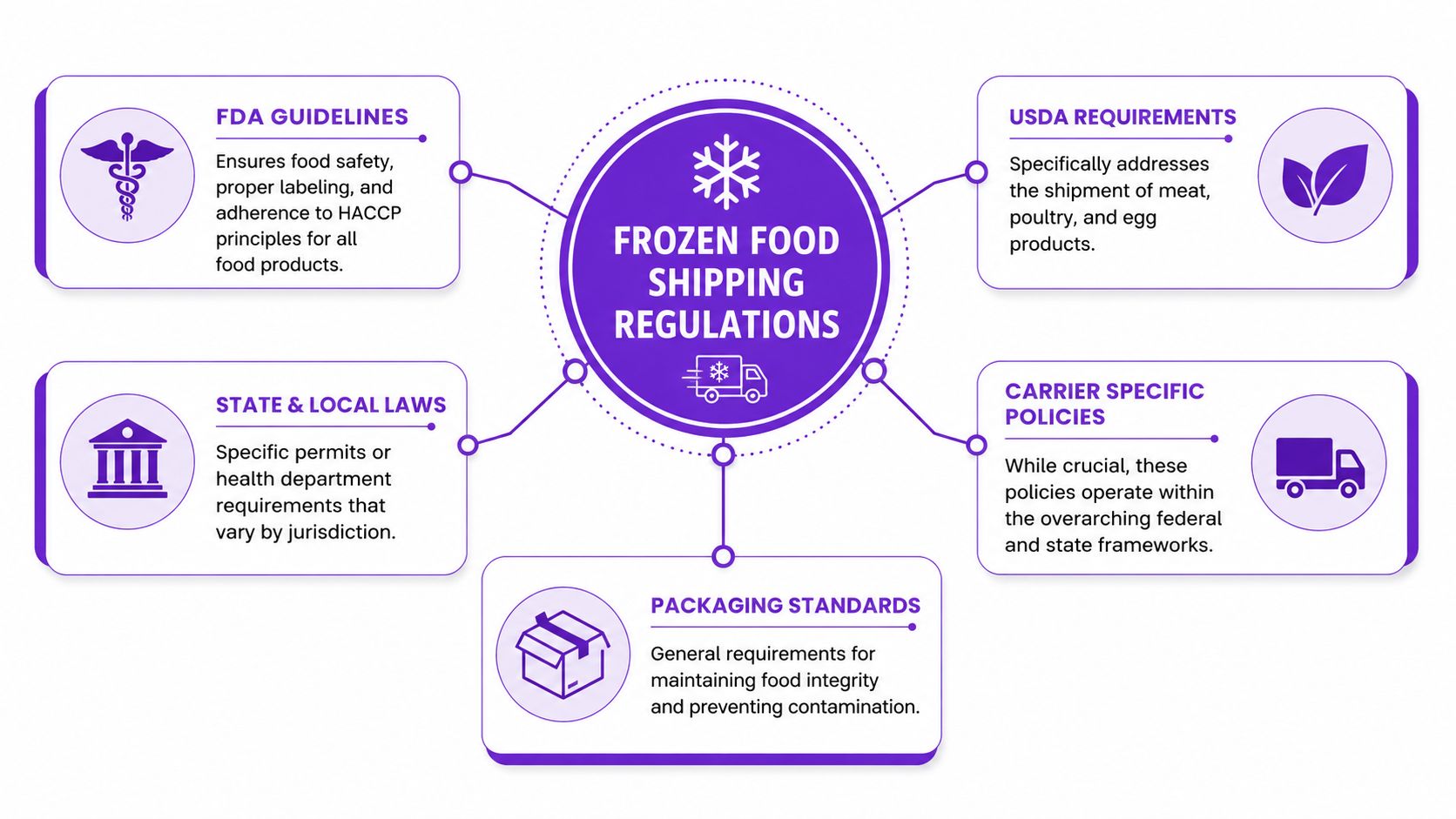
What the exemption does and doesn't do
A lot of small operators read the revenue exemption and assume they're in the clear. That's the wrong reading.
The exemption limits some formal requirements. It doesn't protect you from the business damage caused by bad shipments. If frozen meat, seafood, dairy, or prepared meals arrive thawed, you still own the refund, replacement, and reputational fallout. And if your products fall under traceability expectations, poor records can create a second problem after the shipment itself.
Free Shipping Compliance Audit
We'll review your WooCommerce store's shipping compliance for free.
Use this as a working standard:
| Compliance area | What it means in practice |
|---|---|
| Revenue exemption | Some small operators may be exempt from certain FSMA transportation requirements |
| Traceability duties | Higher-risk foods may still require detailed shipment records |
| Transit planning | Frozen shipments should be routed to minimize time in network |
| Liability reality | Carrier acceptance does not shift food safety responsibility away from the shipper |
Why the rules exist
These rules are trying to prevent one thing. Temperature abuse that makes food unsafe or commercially unacceptable.
A frozen shipment can fail without looking dramatic. The box may arrive intact. The insulation may look fine. But if the internal temperature rose too far during a delay, the product can be compromised long before the customer notices obvious thawing or leakage.
For a plain-English overview of where frozen and perishable shipments run into legal and operational limits, this guide to perishable food shipping restrictions is useful context.
If you can't document how the product stayed under control, you're relying on luck, not a shipping process.
That's the frame small businesses need. Frozen shipping is a controlled operation with legal edges, not a nicer version of standard parcel fulfillment.
Essential Packaging for Frozen Shipments
Most frozen shipping failures start with the package build, not the carrier. The box is your first refrigeration system. If it wastes cold energy before pickup, no overnight label will save it.
The key standard is straightforward. The USDA Food Safety and Inspection Service mandates a minimum dry ice dosage of 5 to 10 pounds per 24 hours of shipping time, and expert guidance says all packaging components, including boxes and gel packs, should be pre-chilled to at least −10°F for 24 hours or more before assembly to prevent thermal shock, according to this guidance on how to ship frozen food.
Build the package from the inside out
Start with the product itself. It should already be thoroughly frozen before packing. Don't use the shipping box to finish freezing product that came out of a weak freezer cycle.
Then build the shipment in layers:
-
Primary food containment
Vacuum-sealed bags, heat-sealed pouches, rigid tubs, or other food-safe inner packaging should hold the product securely and limit exposed air. -
Leak control
If anything could sweat or thaw, use a sealed plastic liner. Moisture turns a normal claim issue into a rejected package. -
Insulated container A foam cooler or equivalent insulated insert slows heat gain. Frozen shipping's success or failure depends on it.
-
Outer corrugated box
The outer carton protects the insulation from crushing and helps the package survive sorting systems.
Pre-chilling is where disciplined shippers separate themselves
Warm packaging steals cooling capacity from your dry ice. That's what the guidance means by thermal shock. If your box, liner, or packs enter the assembly line at room temperature, the coolant starts working against your packaging materials before it ever protects the food.
That's why serious operators pre-stage shipping materials in freezer or cold-room conditions. It feels tedious until you compare the results between a package built from warm components and one built from cold ones.
Warm boxes burn through coolant fast. The shipment may still look professionally packed and still fail.
Packaging details that prevent avoidable loss
Use padding to stop movement. Frozen product that bangs around inside the cooler creates dead space, shifts coolant placement, and raises breakage risk. For items packed in deli containers, trays, or prepared meal packaging, container choice matters too. If you need ideas for inner packaging that helps prevent spills with catering containers, that resource is worth reviewing before you standardize your pack-out.
A practical packing checklist for the assembly bench looks like this:
- Freeze first: Product should be fully frozen before it ever reaches the shipping table.
- Chill components: Boxes, liners, and any supporting cold materials should already be cold-soaked.
- Reduce air gaps: Empty space speeds temperature drift and lets contents shift.
- Contain moisture: Add a watertight liner if there's any chance of melt.
- Protect structure: Use an outer carton that won't collapse under stacking pressure.
The packaging goal isn't elegance. It's thermal stability under rough handling.
Handling Dry Ice and Other Coolants
For fully frozen products, dry ice is usually the right coolant. Gel packs can help with chilled foods, but they're a weaker option when your product must remain solidly frozen through transit.
FedEx and UPS require 5 to 10 lbs of food-grade dry ice for a 24-hour transit window, and if the dry ice exceeds 5 lbs, packages must be marked with both “Perishable” and “Dry Ice” using a Class 9 hazmat label. They also require insulated foam containers with walls at least 1.5 inches thick, a watertight liner if contents can melt, and overnight service for frozen goods, as described in this carrier-focused guide on shipping frozen food safely.
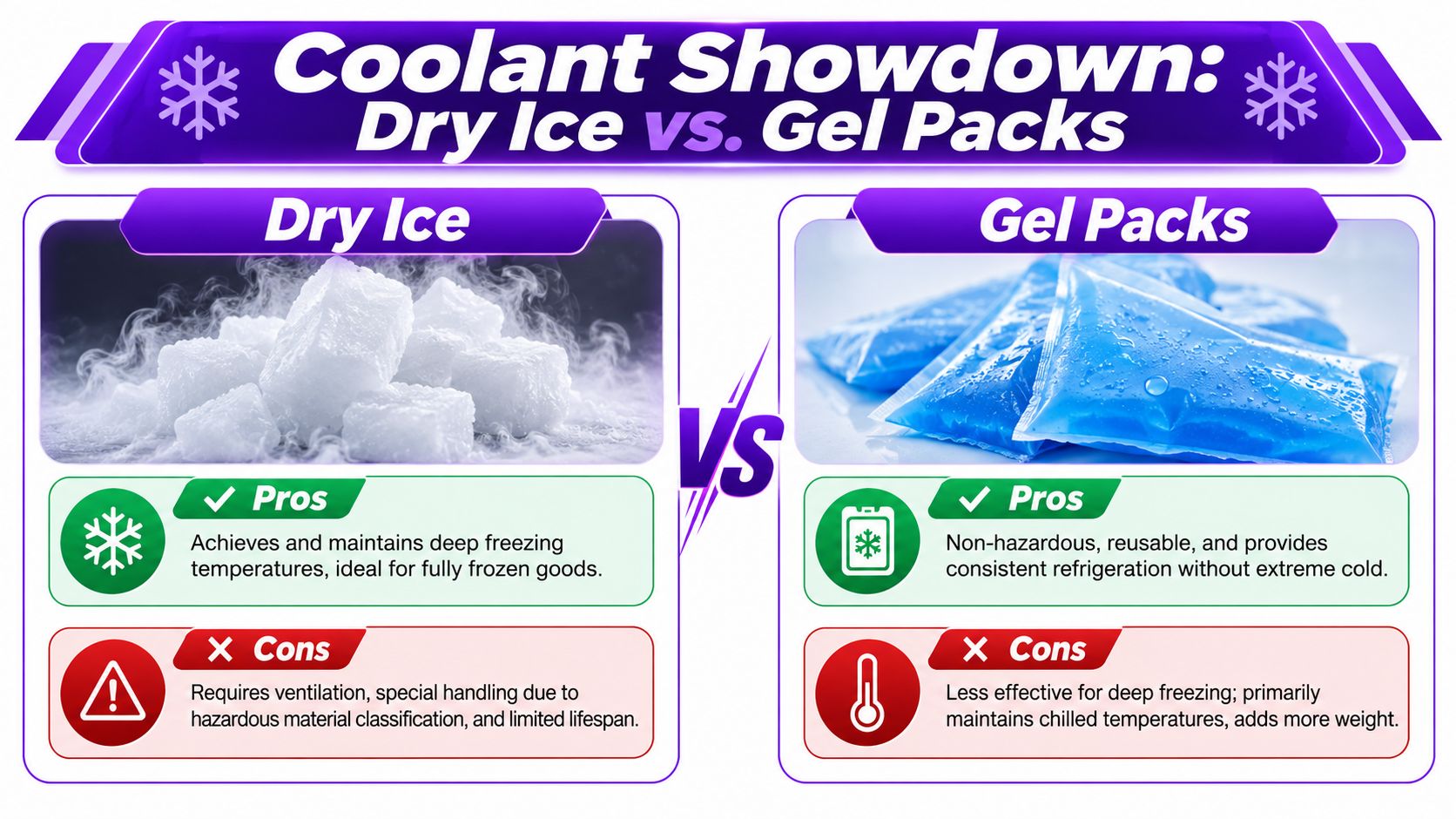
Dry ice versus gel packs
Here's the practical difference:
| Coolant | Best use | Main limitation |
|---|---|---|
| Dry ice | Keeping products fully frozen | Requires ventilation, labels, and hazmat awareness |
| Gel packs | Keeping products chilled | Often not strong enough for deep-freeze protection |
If you ship ice cream, frozen seafood, raw proteins, or frozen prepared meals, dry ice is usually the safer choice. If you're shipping refrigerated desserts or short-window chilled items, gel packs may be enough. The mistake is swapping gel packs into a frozen program just to simplify handling.
Handle dry ice like a regulated material
Dry ice releases carbon dioxide gas as it sublimates. That's why sealed packages are dangerous. The gas needs to vent. If you block that release, pressure builds inside the package.
Place the dry ice so it can cool the product efficiently without turning the box into an airtight chamber. Keep staff trained on safe handling, insulated gloves, and pack-out procedures. Dry ice is common in food shipping, but common doesn't mean casual.
For a more detailed operational walkthrough, this article on how to ship using dry ice is a useful supplement.
A quick visual helps if you're training staff on coolant selection:
<iframe width="100%" style="aspect-ratio: 16 / 9;" src="https://www.youtube.com/embed/vo8NSjVduuc" frameborder="0" allow="autoplay; encrypted-media" allowfullscreen></iframe>What works and what doesn't
What works:
- Match coolant to the product state: Use dry ice when the food must stay frozen, not merely cold.
- Vent the package: Build for gas release.
- Use overnight service: Don't ask a coolant system to rescue a slow service choice.
- Train the packing team: Labeling mistakes are compliance mistakes, not cosmetic errors.
What doesn't work:
- Airtight sealing
- Room-temperature assembly
- Using too little dry ice for the route
- Treating gel packs as a frozen-food substitute
The common failure mode is false confidence. A package can feel sturdy and still be built wrong.
Comparing Carrier Rules for USPS UPS and FedEx
Carrier choice isn't a branding decision. It's an operational decision based on service speed, dry ice handling, labeling, and how much risk your product can tolerate.
The biggest mistake I see is choosing a carrier first and then trying to make the product fit that network. Start with product sensitivity and compliance requirements. Then pick the service.
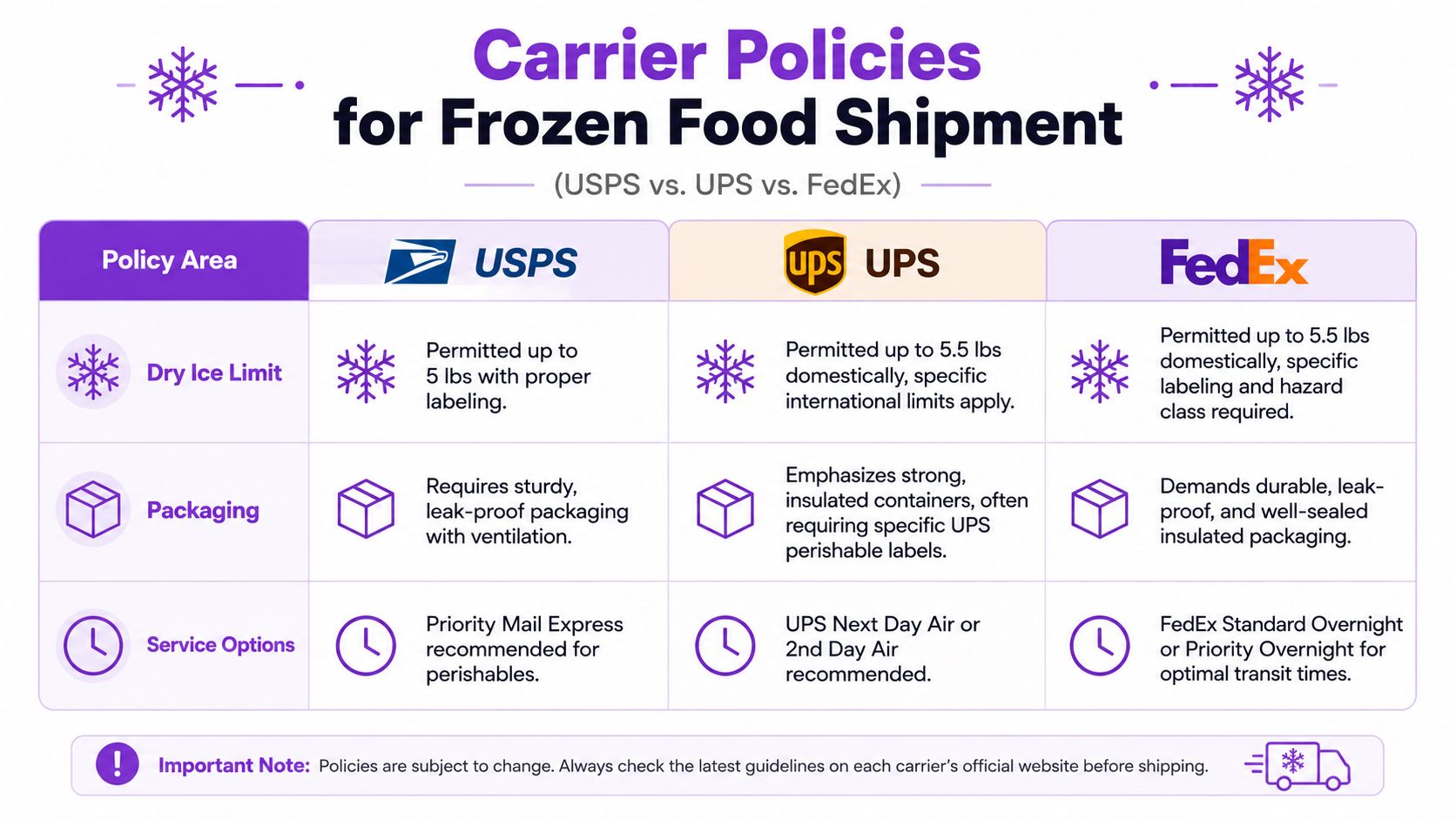
Frozen Food Shipping Rules by Carrier Domestic
| Requirement | USPS | UPS | FedEx |
|---|---|---|---|
| Dry ice labeling | USPS requires dry ice labels on two sides showing net weight in kilograms | Dry ice and perishable labeling required when applicable | Dry ice and perishable labeling required when applicable |
| Recommended service approach | Fastest practical service for perishables | Overnight services such as UPS Next Day Air are used for frozen goods | Overnight services such as FedEx Priority Overnight are used for frozen goods |
| Insulation expectations | Sturdy, vented, leak-resistant packaging is critical | Insulated foam container required for frozen goods | Insulated foam container required for frozen goods |
| Fit for frozen parcel shipping | Possible, but process discipline matters | Strong option when using dry ice and overnight service | Strong option when using dry ice and overnight service |
Where each carrier tends to fit
USPS can work for some perishable programs, but frozen food shippers need to be stricter with packaging discipline and service selection. The labeling requirement for dry ice on two sides with net weight in kilograms is one of those details that catches unprepared shippers.
UPS is a common fit for small businesses shipping frozen food because its overnight network aligns with the handling profile these packages need. If UPS is part of your process, this overview of shipping frozen food via UPS gives a useful operational baseline.
FedEx is also widely used for frozen shipments, especially where early delivery windows matter. The service pairing only works if the package is built correctly before handoff.
How to choose without overthinking it
Ask these questions:
- How fragile is the product after partial thaw? Seafood, dairy, and prepared proteins usually justify the fastest service.
- Can your team execute dry ice labeling correctly every time? If not, simplify the program before scaling it.
- What's your cutoff time relative to carrier pickup? Late handoff compresses your margin for error.
- What happens if the shipment sits one extra cycle? If the answer is refund and reship, your packaging and service plan need to be conservative.
Carriers move the box. They do not guarantee your product remains commercially acceptable.
That's the right way to think about these networks. Use them, but don't outsource judgment to them.
Your Pre-Shipment Checklist for Frozen Goods
Good frozen shipping operations use a release checklist. Not because the team is careless, but because mistakes happen at repetition speed. A checklist catches the error before the driver scans the box.
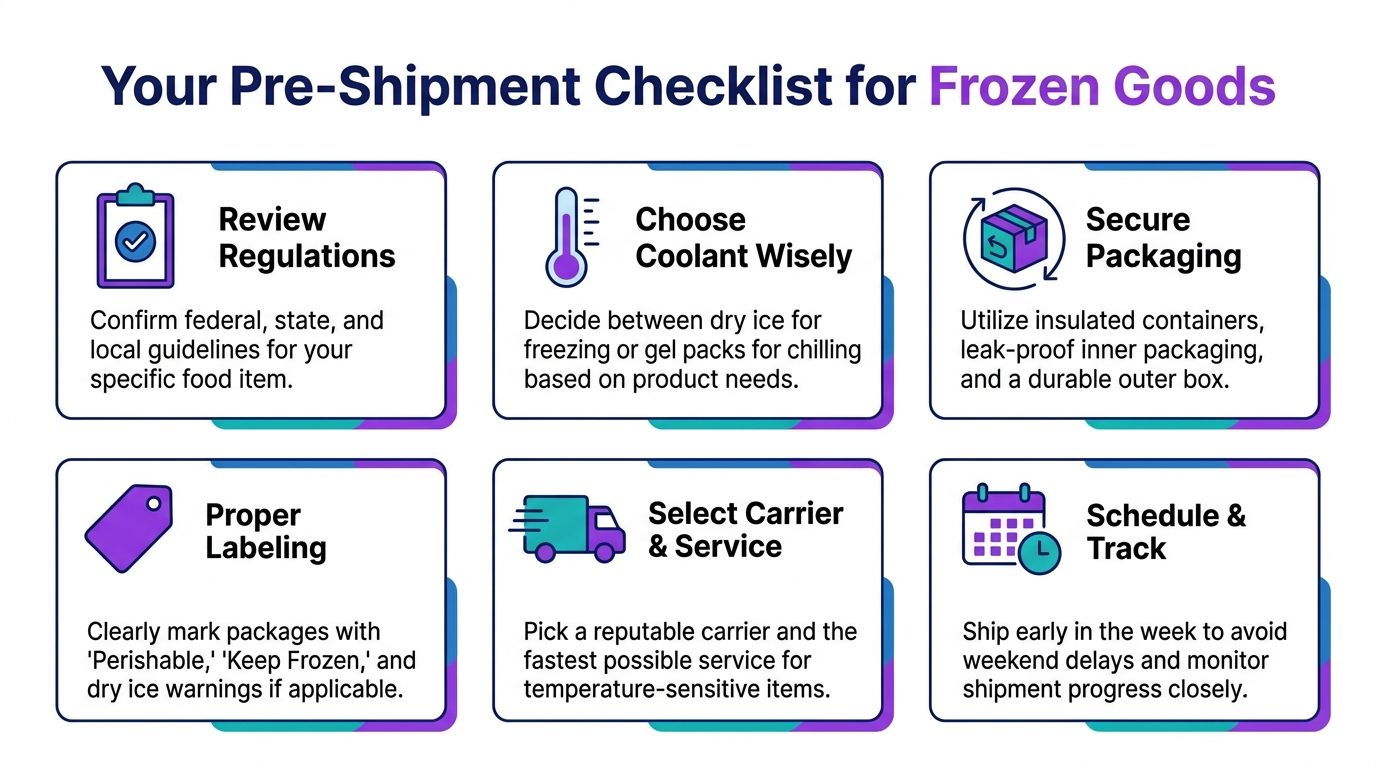
Final release checks
- Confirm the product state: The food should be fully frozen, not semi-frozen or recently chilled.
- Inspect inner packaging: Seals should be intact, containers closed, and leak paths eliminated.
- Verify insulation build: The insulated insert should be seated properly and the carton should close without crushing the contents.
- Check coolant choice: Dry ice should match the shipment's frozen requirement. Don't downgrade to gel packs for convenience.
- Review venting: The box must allow gas release if dry ice is inside.
- Apply required marks: If dry ice labeling is required, make sure it's complete and visible.
- Validate service level: Confirm the order is booked on the overnight service your process assumes.
- Attach records where needed: If the product requires traceability records or temperature documentation in your workflow, make sure that paperwork is ready before handoff.
Quality control at the dock
The last review should happen where the package leaves your custody, not back at the packing bench. Teams often pack correctly and then lose shipments through staging delays, missed pickups, or handoff confusion.
A simple rule helps: if the box sat long enough that you're now guessing about internal condition, rebuild it. The cost of replacing insulation and coolant is usually lower than the cost of a failed delivery and a disappointed repeat customer.
Troubleshooting and Shipping Alternatives
Even a good frozen shipping program will hit problems. Weather interrupts routes. A box misses a sort. A customer isn't home. The right response is operational, not emotional.
When a shipment is delayed, act quickly. Track the package, contact the carrier, and notify the customer before they contact you. If the product category is high risk, don't talk yourself into a gray-area delivery. Replace it if the cold chain looks compromised.
Common trouble signals include:
- Condensation outside the box: Often points to thermal loss or weak insulation.
- Shifted contents: Usually a packing void problem.
- Label confusion: Staff may have packed correctly but failed on release checks.
- Frequent claims on one lane: That route may be a bad parcel fit for frozen goods.
Some businesses eventually outgrow parcel shipping for frozen products. That usually happens when order size increases, wholesale volume grows, or service failures start eating margin. At that point, alternatives make sense.
Better options when parcel stops fitting
- Regional frozen fulfillment: Useful when you need inventory closer to buyers and less transit risk.
- Refrigerated LTL: Better for larger wholesale orders where pallet control matters more than parcel speed.
- Local or zone-based delivery: Strong option if your densest demand is clustered geographically.
If you're selling frozen food online, the question isn't only can you mail frozen food. It's whether mailing frozen food is still the right model for the order profile you're trying to serve. For many small businesses, parcel shipping is the right starting point. It just shouldn't become a permanent habit when volume or product sensitivity says otherwise.
If your store ships regulated or restricted products and you need tighter control over where orders can and can't go, Ship Restrict helps WooCommerce merchants automate shipping compliance at checkout. It's built to stop restricted orders before they become costly mistakes, which is exactly the kind of control growing eCommerce operations need when compliance starts affecting daily fulfillment.
Automate Shipping Compliance
Stop worrying about restricted states. Ship Restrict handles it automatically.

Cody Yurk
Founder and Lead Developer of ShipRestrict, helping e-commerce businesses navigate complex shipping regulations for regulated products. Ecommerce store owner turned developer.
Automate Shipping Compliance
- Block restricted states
- No more cancellations
- Set and forget
3-day free trial · Card required