Shipping Frozen Food via UPS: A Complete 2026 Guide
Learn how to start shipping frozen food via UPS with our complete 2026 guide. Covers packaging, dry ice rules, costs, and compliance for eCommerce retailers.
You’ve got frozen inventory, a WooCommerce store, and customers who expect food to arrive hard-frozen, not “still kind of cold.” That’s where most first-time shippers get burned. They focus on the carrier label and ignore the system around it: service selection, packaging, hazmat rules, cutoff times, and what happens when a customer chooses the wrong delivery option.
Shipping frozen food via UPS can work very well for small eCommerce brands. But it only works when you treat it like a compliance process, not a box-and-label task. The mistakes that cost money are predictable: using a service that’s too slow, underbuilding the package, missing dry ice rules, or giving shoppers checkout choices they should never see.
Planning Your Frozen Food Shipment Strategy
A customer places a $140 frozen order at 3:40 p.m. on Thursday. Your warehouse prints a UPS label, picks the cheaper air option, and gets the box out the door. If that package misses the handoff or spends an extra day in transit, the loss is not just the freight charge. You eat the product cost, insulated packaging, labor, refund risk, and the customer’s next impression of your brand.
That is why frozen shipping strategy starts before packing. Service choice, ship day, and order cutoff rules decide whether the cold chain has a realistic chance to hold.
Automate Shipping Compliance
Block orders to restricted states automatically. 3-day free trial.
Start Free TrialUPS allows frozen food shipments, but the practical question is whether your product can survive the service you select. UPS publishes its service options and time-in-transit tools through its UPS service and transit time resources. Use those tools to price Next Day Air against 2nd Day Air for your real zones and package weights, then compare that freight spend against the full replacement cost of a failed order. New frozen shippers often look only at the label price. Margin disappears much faster on the remake.
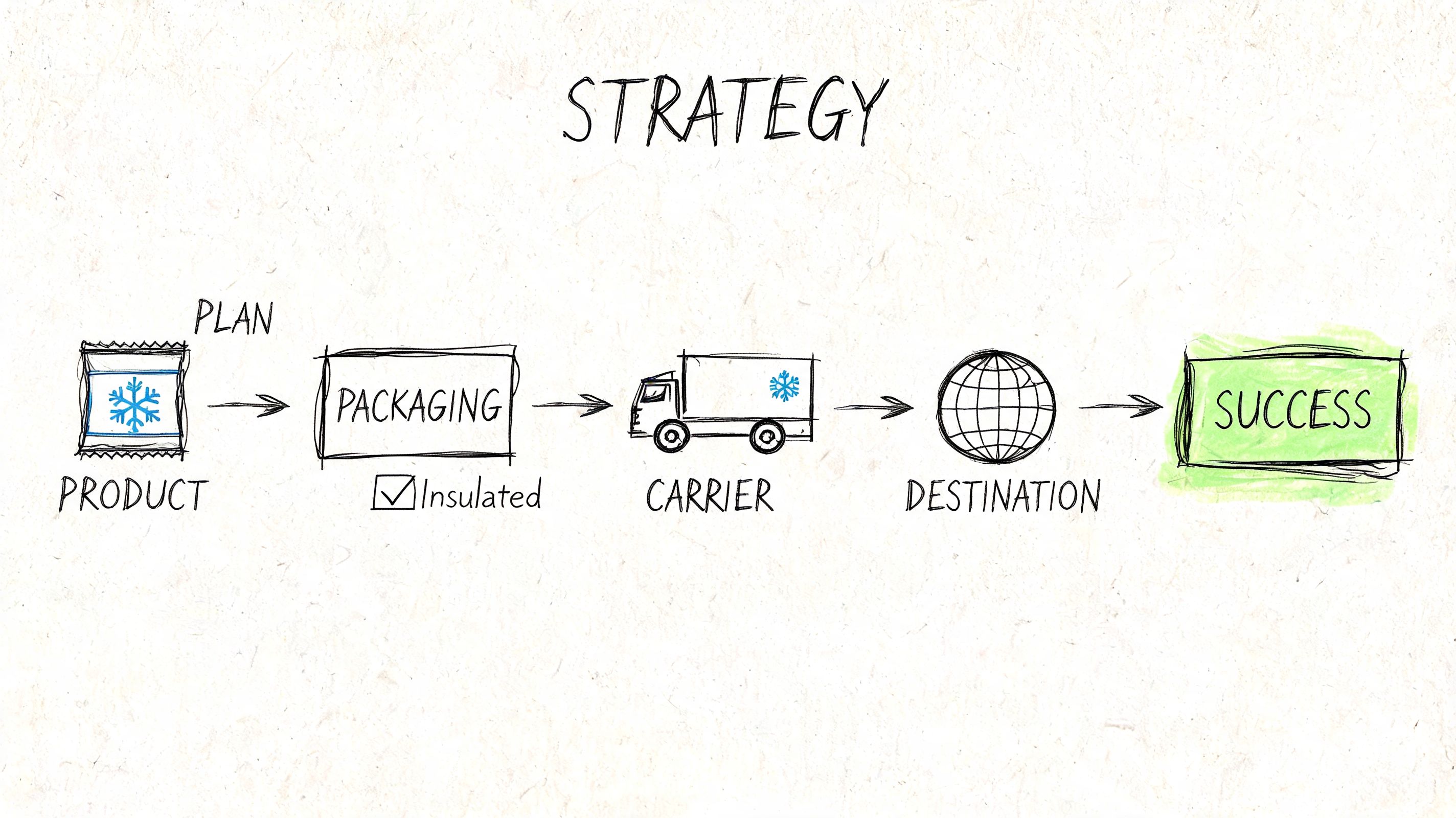
Pick the service by spoilage risk and dry ice limits
Use Next Day Air for products with little tolerance for temperature drift, high replacement value, or weak insulation performance. Use 2nd Day Air only after you have tested the packout and know the product still arrives in spec.
There is also a UPS-specific compliance angle small brands miss on their first frozen program. If you plan to use dry ice on air services, package design and service choice are tied to regulation. UPS follows dry ice rules that are stricter than many first-time shippers expect, including the often-misunderstood 5.5 lb limit for certain air shipments that can trigger rework, refusal, or extra handling if you build the box first and ask compliance questions later. That issue affects the entire shipping plan, not just the label.
Build your week around cutoff discipline
Ship frozen orders Monday through Wednesday in most cases. That guidance is consistent with perishable food shipping restrictions and timing risks. The point is simple. Late-week shipments have less room for delay, weather events, missed sortation, or residential delivery exceptions.
A workable operating rhythm usually includes:
- A daily cutoff time that gives the team enough packout and tender time
- Separate fulfillment rules for frozen, chilled, and ambient SKUs
- A hold policy for risky Thursday and Friday orders
- Written service rules so packers do not choose between Next Day Air and 2nd Day Air by instinct
I advise clients to write those rules before the first order ships. If a team has to debate service level at the packing table, the process is already too loose.
Plan the operation, not just the shipment
Frozen fulfillment fails when inventory, packaging, and carrier timing are managed as separate tasks. They are one operating system. The warehouse needs the right insulated components staged in the right area. Customer service needs to know which days frozen orders can ship. Store settings need to block bad delivery choices before payment is captured.
If you are still organizing the floor, this guide for warehouse managers is useful because it separates packaging supplies from shipping supplies clearly. That distinction matters fast once insulated cartons, liners, refrigerants, labels, and backup corrugate start competing for space.
Free Shipping Compliance Audit
We'll review your WooCommerce store's shipping compliance for free.
Set decision rules your team can repeat
Start with four questions:
- Which SKUs can ship together without raising spoilage risk or pushing dry ice over an air-service limit?
- Which UPS services are approved for each product category and destination zone?
- What is the latest day and time an order can leave the building?
- When does the order get held for a safer ship date instead of pushed out?
Reliable frozen shipping via UPS comes from repeatable rules. Small businesses usually lose money on the avoidable mistakes first: sending a marginal package on a slower service, shipping too late in the week, or building an air shipment that does not comply with dry ice limits. Set the rules early, and the rest of the workflow gets much easier to control.
Mastering Insulation Packaging and Refrigerants
Your box is the cold chain. Once the package leaves your hands, insulation and refrigerant do the work. If that package is built badly, express service only reduces the damage.
UPS-oriented packaging guidance points to a proven structure: EPS foam insulated containers inside corrugated cardboard, dry ice for frozen products, waterproof wrapping, at least 2 inches of clearance from the walls, and pre-cooling the container before packing (UPS food shipping special-care guidance).
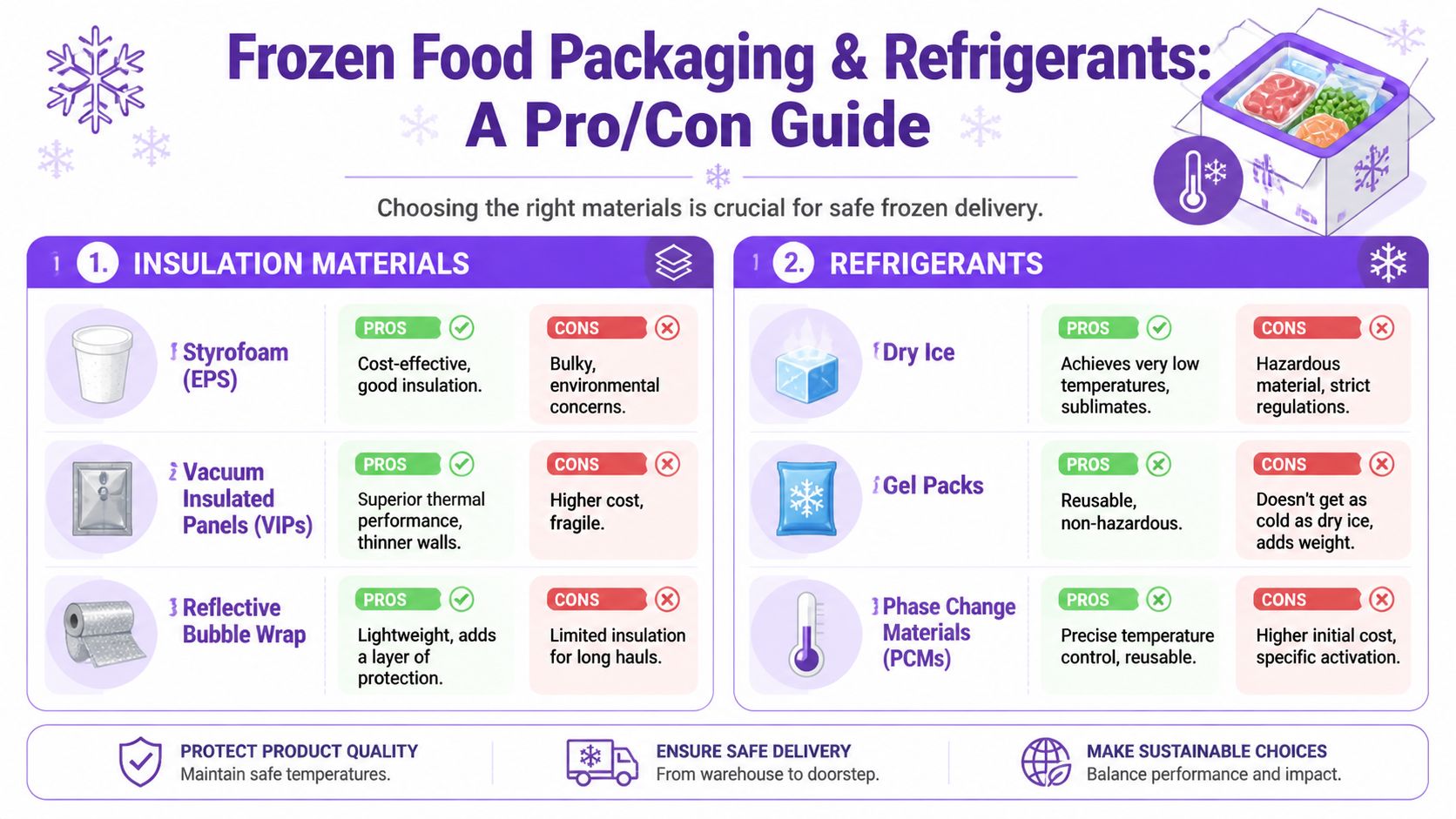
Build the package in layers
Start with the product, not the box. Product should already be at its target state before packing. Frozen meat should be fully frozen. Some bakery items and produce often do better chilled rather than frozen solid, because freeze-thaw can ruin texture.
Then build the shipment like a thermal enclosure:
- Insulated core: Use an EPS foam cooler or similar insulated insert.
- Outer shell: Place that insulated container inside a sturdy corrugated box.
- Moisture control: Add a waterproof liner so condensation or leakage doesn’t weaken the package.
- Spacing: Keep the product centered with about 2 inches of clearance from the walls.
- Stability: Use bubble wrap or other dunnage so contents don’t shift.
- Pre-cooling: Cool the insulated container before pack-out so refrigerant isn’t wasted fighting warm packaging.
A common failure point is warm-pack assembly. Teams move fast, grab room-temperature containers, and load expensive dry ice into a warm system. That burns cold energy before the carton even reaches the driver.
Pre-cooling is one of the cheapest ways to improve thermal performance because it lowers the heat load inside the box before transit starts.
Choose the refrigerant based on temperature target
Dry ice and gel packs are not interchangeable. They solve different problems.
If the item must remain frozen, dry ice is usually the right tool. If the item only needs to stay cold within a refrigerated range, gel packs are often easier to handle and less complicated operationally.
Dry Ice vs. Gel Packs
| Attribute | Dry Ice | Gel Packs |
|---|---|---|
| Best use | Products that must stay frozen | Products that need to stay chilled |
| Temperature profile | Very cold, suitable for frozen states | Better for refrigerated ranges |
| Compliance burden | Hazmat handling and labeling required | Simpler to use operationally |
| Transit fit | Better for longer frozen protection | Better for shorter chilled shipments |
| Packaging note | Needs ventilation and proper marking | Needs leak-resistant packing |
The mistake I see most often is using gel packs for products that should never thaw. Gel packs can support chilled shipping. They are not a substitute for frozen-state protection.
Match packaging to order profile
A small store usually doesn’t need a dozen box sizes. It needs a few standard pack-outs that staff can assemble correctly every time. That means choosing a limited set of carton sizes and coolant patterns tied to real order combinations.
For businesses that also evaluate palletized or larger refrigerated moves, Snappycrate's LTL refrigerated guide is helpful context because it shows how quickly the packaging logic changes once you move beyond parcel. That contrast can help you avoid overengineering parcel shipments or underengineering larger ones.
What works and what doesn’t
What works:
- Standardized pack plans by SKU mix
- Centered product placement with void fill for stability
- Leak-proof inner wrapping
- Pre-cooled insulated containers
- Express services paired with the right refrigerant
What doesn’t:
- Loose product sitting against outer walls
- Warm packaging loaded at the last minute
- “Extra ice” with no calculation behind it
- Reusing damaged insulated components for premium orders
Good frozen packaging isn’t flashy. It’s boring, repeatable, and designed to survive handling without relying on luck.
Navigating UPS Rules for Dry Ice and Perishables
Most frozen food shipping losses don’t come from exotic failures. They come from routine non-compliance. A package gets built correctly for temperature control, then fails because the shipper ignored a dry ice rule, missed required marking, or never secured the right UPS approval for perishables.
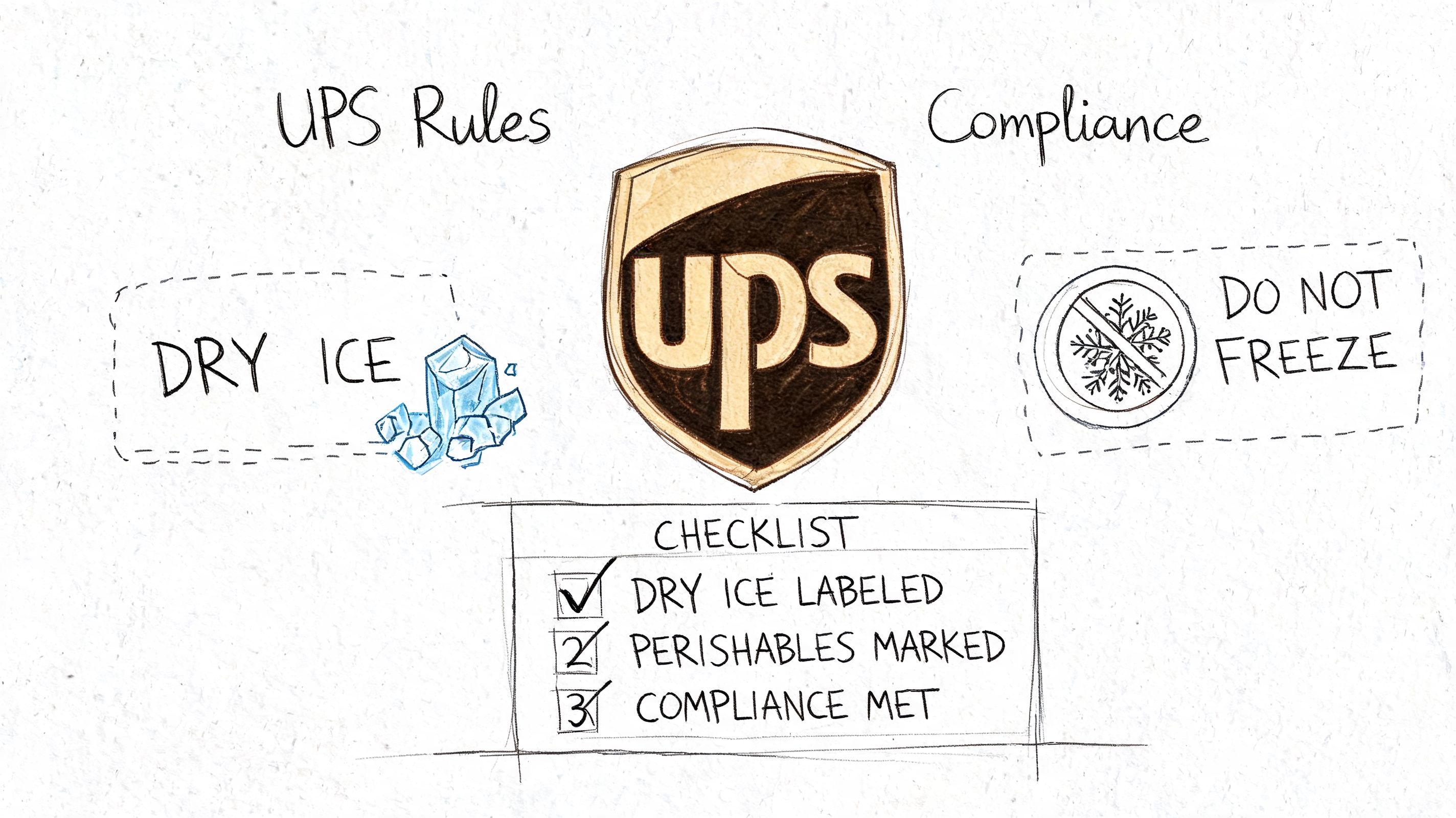
The 5.5 lb dry ice limit is where many shippers get in trouble
For UPS air services, dry ice is strictly limited to 5.5 lbs (2.5 kg) per package, and exceeding that can trigger rejection, delays, or surcharges. The same source notes that 15-20% of perishable claims stem from improper hazmat packing (dry ice compliance overview for UPS and other parcel carriers).
That rule matters because many frozen food brands naturally prefer air services such as Next Day Air or 2nd Day Air. They move fast, but the dry ice ceiling is tight. If your pack-out requires more than that to stay safe, you don’t have a pricing problem. You have a packaging and service design problem.
Non-negotiable: Don’t “round up” dry ice for extra comfort on an air shipment. The compliance risk is real, and the package can be stopped before delivery.
Perishable approval and shipment setup
UPS requires a signed agreement for perishable, confectionery, and liquid foods before shipping under its perishable framework. New merchants often skip this step because they assume a standard UPS account is enough. It isn’t something I’d leave to warehouse staff to discover on ship day.
You should also make sure your team understands the difference between “cold product” and “regulated package.” The second one requires documentation discipline.
Key compliance habits:
- Get shipper approval early: Don’t wait until your first launch week.
- Declare contents accurately: Perishable shipments shouldn’t be disguised as ordinary merchandise.
- Use the right service class: Faster services reduce spoilage risk, but the dry ice rules still apply.
- Train packers on labeling: A strong box with weak marking still fails.
If your store sells anything with location-based or category-based shipping constraints, a broader perishable shipping compliance approach helps because it pushes restrictions upstream instead of leaving them to manual review.
Labeling is not an afterthought
Dry ice shipments need proper hazmat communication. In practice, that means the package must be marked for UN1845 and prepared so venting is possible. A sealed carton that traps gas is a bad idea operationally and from a compliance standpoint.
Here’s a good visual primer before you train staff or write SOPs:
<iframe width="100%" style="aspect-ratio: 16 / 9;" src="https://www.youtube.com/embed/M8oGgnJ79ac" frameborder="0" allow="autoplay; encrypted-media" allowfullscreen></iframe>The expensive mistake is assuming compliance is mostly paperwork. It isn’t. It affects service eligibility, acceptance, routing, and whether the package ever stays in motion. For shipping frozen food via UPS, dry ice rules are part of the product design.
Calculating Costs and Creating Your Shipment
A frozen order can look profitable at checkout and turn into a loss the moment fulfillment packs it. I see this on first launches all the time. The merchant budgets for the UPS label, then forgets the insulation, refrigerant, dimensional weight, and the replacement order that follows one soft or thawed delivery.
For domestic frozen shipments, build your margin around total landed shipping cost, not the published carrier rate. UPS service is usually the largest line item, but the box configuration often decides whether the order still works financially. A larger carton with thicker insulation can protect the product better, yet it can also push the shipment into a higher billed weight. That trade-off has to be priced before you open sales.
What belongs in your true cost
Use four cost buckets and assign them at the order level:
-
Carrier service
Rate, surcharges, residential delivery, pickup fees, and any negotiated discount. -
Packaging
Insulated liners, foam coolers, corrugated cartons, tape, labels, and pack labor. -
Refrigerant
Dry ice or gel packs, plus the extra billed weight they add. For air shipments, this is also where compliance and cost meet. If you design around dry ice, make sure the quantity stays within UPS air rules, including the often-missed 5.5 lbs threshold that can change how a small business needs to prepare the package. -
Failure cost
Refunds, reships, customer support time, and wasted product.
A cheap label does not protect margin if the shipment needs to be replaced.
If your catalog mixes frozen and shelf-stable items, set rules for split orders when some products cannot ship together before you price shipping. Stores lose money fast when a low-risk item forces a frozen item into the wrong carton or service level.
Creating the shipment correctly
Create the UPS shipment from the packed box, not from a product-page estimate. Final dimensions and final weight are what matter. Frozen shipments are especially easy to understate because insulation and refrigerant change both numbers enough to affect rating and service suitability.
A clean process looks like this:
- Pack the order before rating it: Empty-carton dimensions are planning numbers, not shipping numbers.
- Weigh the final parcel: Dry ice, gel packs, liners, and dunnage add up fast.
- Enter exact dimensions: Dimensional weight can erase margin even when the product itself is light.
- Match service to hold time: If the package needs tighter temperature control, pay for speed before you pay for a reship.
- Declare regulated contents correctly: If dry ice is in the box, the shipment record and package marking need to match.
- Review the label before handoff: Wrong service, wrong weight, or missing dry ice details create expensive delays.
Pickup or drop-off
Choose the handoff method that cuts idle time. Pickup usually works better for stores with a packing window and enough daily volume to stage orders right before the driver arrives. Drop-off can work for low-volume operations, but only if the location is staffed and the package enters the UPS network without sitting in a retail back room.
I advise new frozen shippers to test this, not guess. Time how long the package sits after sealing. That dwell time matters as much as the line-haul service in many first-time programs.
Customer communication also belongs in the shipment workflow because failed delivery attempts raise spoilage risk and support costs. A practical model is to trigger order-ready, shipped, and delivery-day texts using a comprehensive guide on automated SMS for businesses as a starting point for your notification setup.
WooCommerce Workflows and Customer Communication
Most frozen-shipping problems start before fulfillment. They start at checkout, when the store lets customers choose services they should never be allowed to buy. If your WooCommerce setup shows Ground, an economy option, or a delivery window that conflicts with your frozen schedule, you’ve created your own claims queue.
For WooCommerce stores, using a UPS shipping plugin to automate service selection and prioritize Next Day Air and 2nd Day Air can cut spoilage-related claims by up to 60% compared with manual selection (WooCommerce frozen shipping workflow guidance).
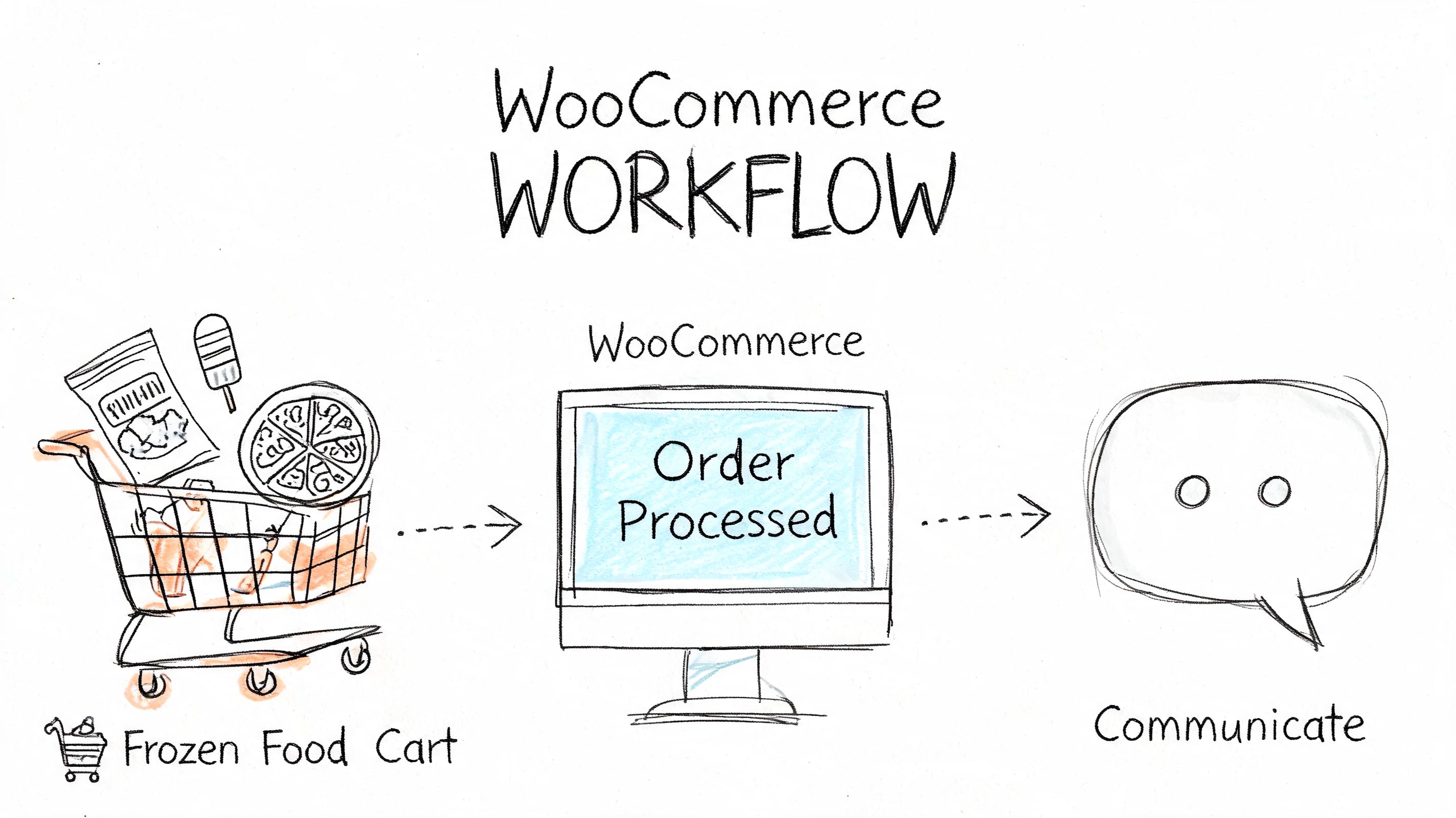
Restrict choices before the order exists
A good WooCommerce flow removes risky options instead of warning about them after purchase. Frozen SKUs should trigger service rules automatically.
That usually means:
- Allow only compliant UPS services for frozen products
- Block mixed-cart combinations that create fulfillment conflicts
- Limit ship days based on your packing schedule
- Use split-order logic when frozen and non-frozen items shouldn’t travel together
If your catalog includes products with different shipping requirements, this guide on handling split orders when some products can't ship together is worth reading. It addresses the exact operational mess that happens when a single cart contains incompatible fulfillment rules.
Write customer-facing messages that reduce support load
Frozen shipping works better when customers know what to expect before they pay. Put the key rules on product pages, in the cart, and in the order confirmation.
Tell them:
- Which days you ship frozen orders
- What delivery window they should expect
- That someone should receive the order promptly when possible
- What happens if weather or carrier exceptions disrupt transit
This is also where proactive messaging helps. If you want a stronger post-purchase communication system, this comprehensive guide on automated SMS for businesses is useful because text updates often get read faster than email shipping notices. For frozen food, speed of customer awareness matters.
A customer who knows the box is arriving today is much less likely to leave it outside for hours and then blame the carrier.
Build an exception policy before the first claim
Returns for thawed perishables are rarely handled like apparel returns. You need a policy that tells staff what to do when a customer says an item arrived soft, partially thawed, or warm.
Keep the policy simple:
- ask for photos of product and packaging,
- review tracking and delivery timing,
- decide whether refund, replacement, or denial applies,
- document the pack-out and service used.
The most profitable frozen operation isn’t the one with zero issues. It’s the one that prevents bad choices at checkout and resolves the few remaining issues quickly.
Troubleshooting and Frequently Asked Questions
Can I use UPS Ground for frozen food?
Usually, no. Ground can work in narrow situations, but it introduces more variability and less protection against spoilage claims than express services. For a first frozen program, I’d keep the rule simple: if the item must stay frozen, build around UPS air services and only expand after you’ve tested lane performance and packaging.
What if the package is delayed?
Act fast. Check tracking, confirm the package is still moving, and document the service purchased and packaging used. If the shipment was sent on an eligible express service, review whether the delay may support a freight recovery request under UPS’s service guarantee.
Then contact the customer before they contact you. Tell them what happened, when delivery is expected, and what to do upon receipt.
If a frozen package is delayed, communication should happen the same day you see the exception. Waiting creates angry customers and weaker claim files.
How much dry ice is enough for a cross-country order?
There isn’t a safe one-size-fits-all answer. The right amount depends on product mass, insulation, destination, season, and service level. What matters most is that your pack plan stays within the air-service limit covered earlier and is based on testing, not guesswork.
If you haven’t validated the pack-out, don’t scale it.
What should I do if the customer isn’t home?
Plan for that before shipping. Use messaging that tells the customer when the order is arriving and that frozen products should be brought inside quickly. If signature requirements or delivery instructions make sense for your product mix, decide that upfront and apply it consistently.
What if the product arrives partially thawed?
Review the condition, not just the complaint. Some frozen foods can arrive very cold but not rock-hard and still be acceptable, while others should be considered a failure. Your customer service team should have product-specific guidance so they don’t make inconsistent refund decisions.
Should I reship immediately when there’s a complaint?
Not always. First confirm:
- delivery timestamp,
- photos of the contents and packaging,
- whether the customer retrieved the box promptly,
- whether the service or packaging failed.
A fast replacement policy is good for retention, but a blind replacement policy teaches customers that every complaint gets free product.
If your WooCommerce store handles products with shipping restrictions, Ship Restrict helps you enforce those rules before checkout instead of relying on manual review after the order is placed. That’s useful when you need to control which products can ship together, which services appear by address, and where compliance decisions should happen in the buying flow.
Automate Shipping Compliance
Stop worrying about restricted states. Ship Restrict handles it automatically.

Cody Yurk
Founder and Lead Developer of ShipRestrict, helping e-commerce businesses navigate complex shipping regulations for regulated products. Ecommerce store owner turned developer.
Automate Shipping Compliance
- Block restricted states
- No more cancellations
- Set and forget
3-day free trial · Card required