Why Is International Shipping So Expensive? a 2026 Guide
Wondering why is international shipping so expensive? This guide breaks down the 8 key cost drivers, from fuel to customs, with tips for WooCommerce merchants.
You're looking at a WooCommerce order from overseas. The customer is ready to buy. Then the shipping quote appears and it's so high that it threatens the sale.
That moment catches a lot of merchants off guard, especially when the product is compact, the order value looks reasonable, and the buyer assumes international shipping should work like domestic shipping with a longer transit time. It doesn't. Cross-border fulfillment runs through more checkpoints, more handoffs, and more rules. If you sell regulated goods, the quote also reflects risks that generic eCommerce stores never have to think about.
For firearms retailers and other regulated-product merchants, the question isn't just why is international shipping so expensive. It's which parts of the bill are unavoidable, which parts are self-inflicted, and which parts come from compliance mistakes that can be prevented before an order ever reaches a label printer.
The Sticker Shock of Global eCommerce
A common scenario looks like this. A customer in another country adds a regulated accessory to cart, enters their address, and gets a rate that feels disconnected from the item itself. The merchant assumes the carrier is overcharging. Sometimes that's partly true. More often, the quote is the result of stacked costs inside a volatile system.
Automate Shipping Compliance
Block orders to restricted states automatically. 3-day free trial.
Start Free Trial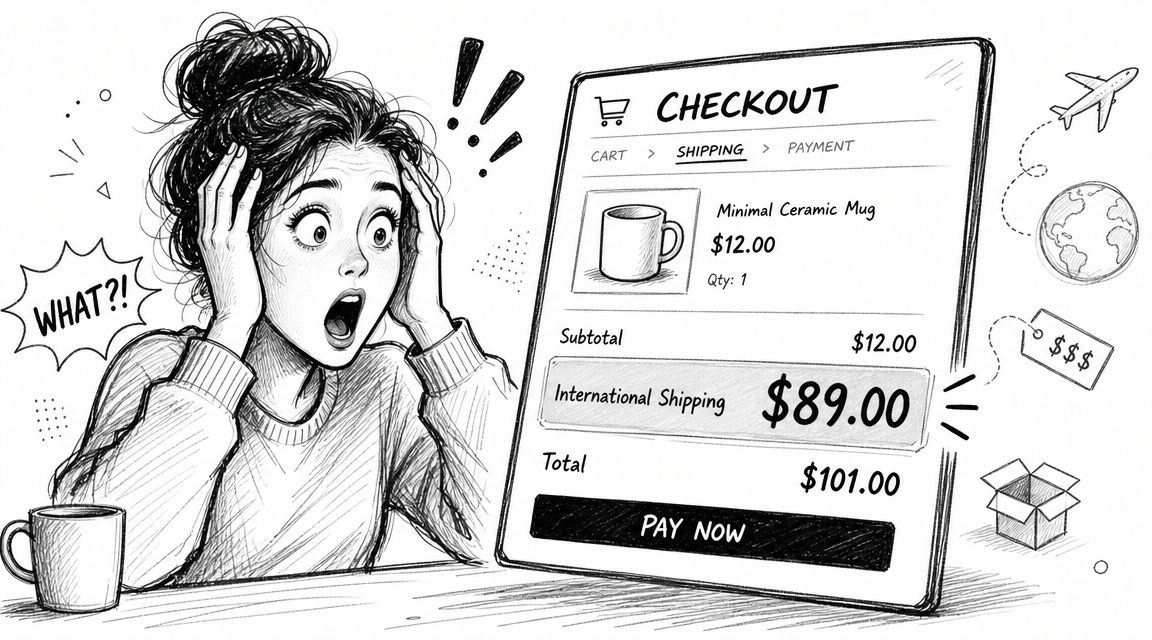
International shipping prices don't behave like a flat formula based on miles traveled. Costs move with fuel surcharges, carrier capacity decisions, and geopolitical disruption, and the same lane can become cheaper or pricier depending on mode and network conditions, as explained by SkyPostal's overview of shipping price volatility.
That matters because many WooCommerce merchants price shipping as if it's stable. It isn't. A quote that looked manageable last quarter can turn ugly when a carrier adds a surcharge, changes service availability, or routes freight through a more expensive path.
The quote isn't only about transport
For regulated goods, the issue gets wider fast. You may need special packaging, stricter documentation, carrier-specific approval, and a shipping setup that blocks prohibited destinations before checkout. Even packaging decisions can feed the final quote. If you're reviewing materials for protective packing, barrier wraps, or specialty films for e-commerce fulfillment can be part of the discussion because packaging affects both compliance handling and chargeable shipment characteristics.
Most merchants don't lose money on one giant shipping expense. They lose it on a pile of smaller costs they didn't model upfront.
The sticker shock is real. But the quote usually isn't random. It reflects a system with more labor, more regulation, and more volatility than domestic fulfillment.
Deconstructing Your International Shipping Quote
Treat the quote like a restaurant bill. The entrée isn't the whole check. You're paying for the base service, the add-ons, the taxes, and the operational friction around the order.
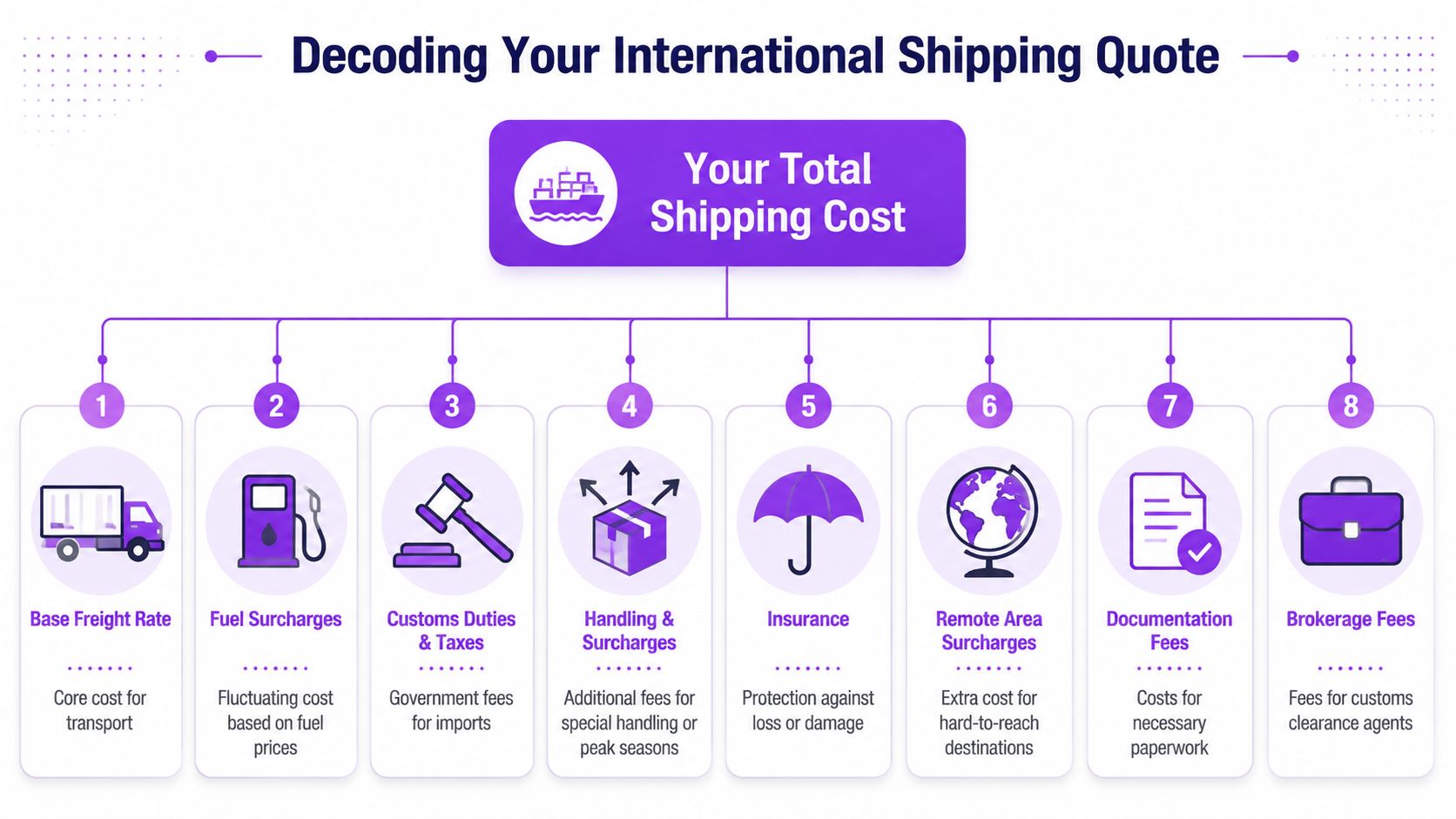
One of the clearest ways to understand why international shipping is expensive is to look at total landed cost. Cross-border shipping is more capital-intensive and labor-intensive than domestic delivery because parcels move through multiple handoffs, transport modes, customs inspection, and final delivery. The landed cost can include the product price, packaging, handling, shipping, duties, taxes, and card-processing fees, as described in Sendcloud's breakdown of international shipping costs.
The eight drivers behind the final number
Here's how that usually breaks down for a WooCommerce merchant.
| Cost driver | What it means in practice |
|---|---|
| Base freight rate | The starting price for moving the parcel from origin to destination |
| Fuel surcharges | Extra charges that change with fuel markets and carrier policy |
| Customs duties and taxes | Import charges assessed by the destination country |
| Handling surcharges | Added fees for peak periods, special processing, or non-standard shipments |
| Insurance | Coverage for loss, damage, or higher-risk goods |
| Remote area surcharges | Added charges for hard-to-reach delivery zones |
| Documentation fees | Costs tied to required customs and shipping paperwork |
| Brokerage fees | Charges for customs clearance support and import processing |
For merchants selling regulated products, three of these line items usually hurt the most. Documentation is heavier. Insurance can be stricter. Brokerage gets more involved when product classification or restricted-goods review requires extra attention.
Free Shipping Compliance Audit
We'll review your WooCommerce store's shipping compliance for free.
The bill gets worse when responsibilities are unclear
A lot of merchants also confuse shipping price with import responsibility. That's how they create checkout surprises, refused deliveries, and support tickets after the parcel arrives. If you need a practical explanation of when the seller pays versus when the customer pays, this guide to DDP vs DDU for cross-border orders is worth reviewing before you publish international rates.
If your store also charges cards from international buyers, payment friction can sit beside freight friction. For a useful companion read on fee exposure outside the carrier quote, this actionable playbook for international fees helps frame the non-shipping costs that still affect landed margin.
A short explainer is useful here before you tune your checkout settings:
<iframe width="100%" style="aspect-ratio: 16 / 9;" src="https://www.youtube.com/embed/BypMEmWgtQo" frameborder="0" allow="autoplay; encrypted-media" allowfullscreen></iframe>Practical rule: If your team can't explain every line item in the quote, you're not ready to sell that route at scale.
The quote becomes easier to manage once you stop treating it as one price and start treating it as a stack of operational decisions.
How Carriers Calculate and Inflate Your Costs
Carrier pricing starts with a base rate, but that isn't the primary takeaway. Instead, carriers charge for the space your package consumes, the complexity it creates, and the inconvenience it causes their network.
Dimensional weight changes the math
International carriers often bill by dimensional weight, meaning they compare actual weight to volumetric weight and charge whichever is greater. That's why a light but bulky carton can cost far more than a compact heavy one. Packaging choices directly affect billable weight, and right-sizing cartons is one of the few reliable ways to cut cost without changing the product, as explained in Elevated Craft's note on dimensional weight pricing.
If your team hasn't mapped this into packing workflows yet, use a plain-language guide to calculate dimensional weight for shipments. That's often the first place I tell merchants to look when rates seem irrational.
Surcharges are part of the model
Carriers also layer fees around the shipment:
- Fuel adjustments that move independently of your product margins.
- Remote delivery charges for addresses outside standard delivery zones.
- Security-related fees for shipments that need more scrutiny.
- Peak or demand-based surcharges when networks get crowded.
- Special handling charges for awkward cartons, labeling issues, or non-standard service conditions.
Many stores go wrong by negotiating or comparing the base rate and ignoring the surcharge environment. Then they wonder why their margin disappears on international orders that looked profitable at checkout.
A practical fix is to audit the carton before you audit the carrier. If the box is too large, the surcharge problem gets worse. If the packaging is already tight and compliant, then it makes sense to compare services.
Carriers don't price only for movement. They price for the burden your package places on their network.
That's a subtle difference, but it explains a lot of “why is international shipping so expensive” complaints from merchants who focus only on miles and weight.
The Compliance Tax on Regulated Products
If you sell regulated goods, standard shipping advice only gets you halfway there. The rest of the cost sits in compliance work that most generic retail stores never face.
Your shipment isn't just expensive. It's exposed.
A regulated parcel can trigger extra review before pickup, during export, at import clearance, or at final handoff. The direct shipping cost matters, but the hidden cost is often the staff time spent checking destination rules, product eligibility, required documentation, and carrier restrictions for that exact combination of item and address.
Some product types also narrow your mode choices. That matters because shipping mode has a major impact on cost. Air freight can cost up to five times more than ocean shipping, and congestion, security screening, and equipment shortages add surcharges that carriers pass through, according to TextMaster's summary of international shipping cost factors.
For regulated goods, the practical problem is that “cheapest mode” isn't always an option. Sometimes the product, the timeline, or the regulatory pathway pushes you into a tighter carrier and service set.
The real compliance tax
For a WooCommerce firearms retailer or merchant shipping other restricted items, the extra burden usually shows up in a few places:
- Restricted carrier options. Some carriers won't handle certain items or will only handle them under specific conditions.
- Documentation overhead. Product descriptions, declarations, and supporting records need to be accurate and consistent.
- Manual destination screening. Teams often check country, region, or postal restrictions by hand.
- Higher failure costs. A rejected shipment can mean return fees, storage fees, lost inventory time, and customer support fallout.
- Insurance scrutiny. Higher-risk categories can require more deliberate coverage choices.
If your operation still relies on staff memory and ad hoc notes, the margin leak isn't just in shipping spend. It's in labor and avoidable error.
For merchants that need a practical foundation, this guide to cross-border restricted goods documentation is a good checkpoint. It helps teams stop treating paperwork like an afterthought and start treating it like part of the shipment itself.
A regulated international shipment is really two workflows running at once. One is logistics. The other is legal defensibility.
How Automation Reduces Your Biggest Compliance Risks
A regulated order can look fine until the last moment. The customer pays, the warehouse picks the item, the label prints, and then someone notices the destination should have been blocked at checkout. At that point, the shipping problem is no longer a rate problem. It is a process failure with labor, refund, and compliance costs attached.
Automation reduces that risk by enforcing shipping rules before an order reaches fulfillment. For WooCommerce stores selling restricted products, that usually means checking destination, product type, and shipping method together, then stopping ineligible orders before payment and packing create extra work.
What automation actually fixes
The biggest benefit is consistency. Staff can follow a good process and still miss a province-level restriction, an APO/FPO edge case, or a product-specific rule that changed since the last review. Software applies the same rule set every time.
That matters most at checkout, where bad orders are cheapest to stop.
For regulated goods, effective automation should handle a few specific jobs:
- Block restricted destinations early so prohibited orders never enter the fulfillment queue.
- Apply product-level logic so one restricted SKU does not slip through inside an otherwise valid cart.
- Show clear checkout messaging so the customer understands why a shipping option is unavailable.
- Reduce manual exception handling so staff review true edge cases instead of routine destination checks.
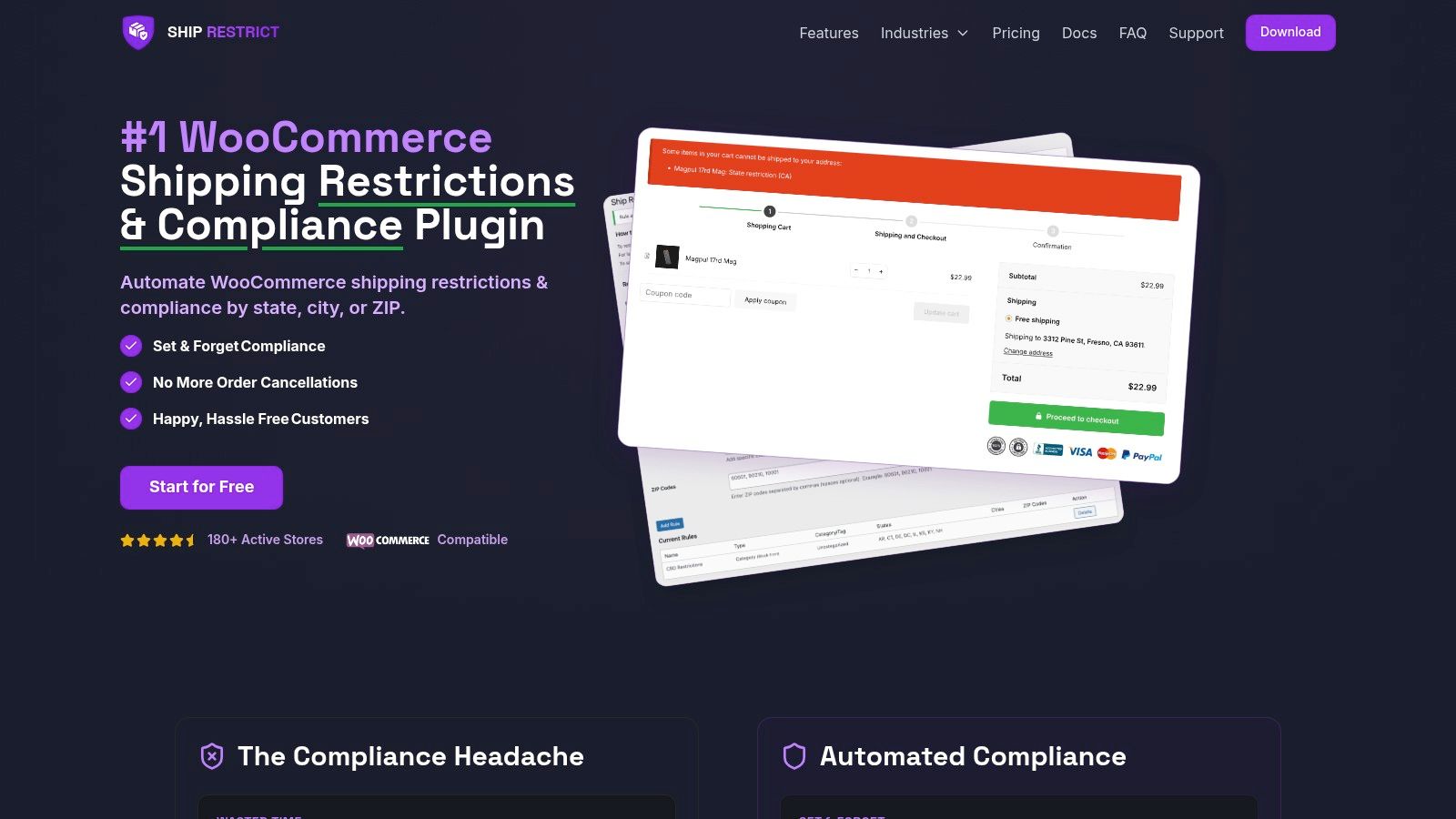
A tool like Ship Restrict fits that role in WooCommerce by letting merchants apply shipping restriction rules by location and product logic, which helps prevent non-compliant orders from getting through checkout.
Prevention saves more than better rates
For regulated products, the lowest-cost shipment is often the one you never should have accepted. Rate shopping does not fix a non-compliant order. It only changes which carrier gets involved in the failure.
I usually advise merchants to measure three costs together: staff time spent reviewing orders, customer service time spent explaining blocked or canceled shipments, and the direct cost of returns, relabeling, or disposal when an order gets too far downstream. Automation cuts all three when the rules are configured well.
It also creates a cleaner operating model. New warehouse or support staff do not need to memorize every destination rule. Compliance decisions move out of sticky notes, inbox threads, and tribal knowledge, and into the checkout logic where they belong.
Human review still has a place. Borderline classifications, document mismatches, and unusual destinations may need a person to decide. The practical goal is narrower than that. Use automation for repeatable rules, and reserve staff judgment for the small set of orders that require it.
A regulated shipping workflow should be built around prevention. Rescue is slower, more expensive, and much harder to defend if something goes wrong.
A Checklist for Lowering International Shipping Costs
You can't control fuel markets, port congestion, or every customs decision. You can control carton size, service design, documentation quality, and checkout logic.
Start with the shipment itself
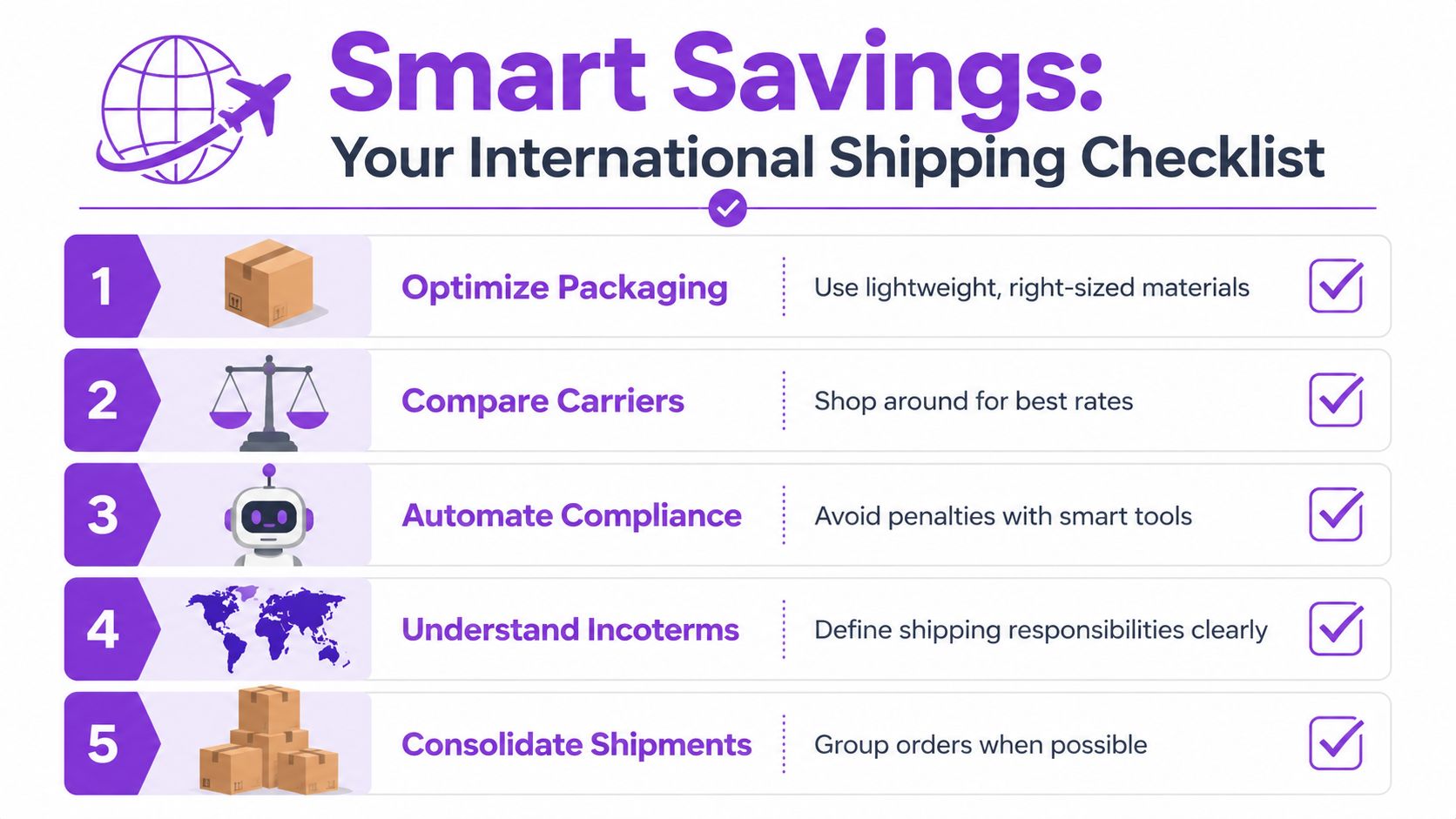
Use this checklist before you turn on or expand international service.
- Right-size packaging. Review your top-selling SKUs and match them to the smallest compliant carton that protects the item. If you ship bulky empty space, you're inviting dimensional charges.
- Reduce packing variability. Give warehouse staff approved box options for each product class. That prevents one packer from using an oversized carton “just to be safe.”
- Consolidate where possible. If your business model allows it, combining items into fewer parcels can reduce repeated handling and paperwork.
Clean up your checkout decisions
A lot of margin loss starts with poor expectation setting.
- Offer service tiers. Let customers choose between economy and faster options when your carrier setup supports it. Some buyers care more about price than speed.
- Be clear about import responsibility. If the buyer may owe duties or taxes on arrival, state that plainly before payment.
- Use destination rules. Don't display shippable products or methods in places where fulfillment is likely to fail.
Tighten your documentation habits
Customs delays often come from sloppy operational habits, not unusual legal drama.
- Standardize product descriptions so the same item isn't described three different ways across invoice, label, and internal record.
- Check destination restrictions early rather than after payment capture.
- Review insurance terms for regulated categories and higher-risk routes.
- Verify carrier policy fit before you promise delivery for a specific product type.
Compare systems, not just prices
A cheap rate can become expensive if the carrier creates more exceptions, weaker tracking, or more manual compliance work.
| What to compare | Why it matters |
|---|---|
| Rate structure | The visible shipping price is only part of the cost |
| Surcharge behavior | Some services look cheap until add-ons appear |
| Documentation support | Better workflows reduce avoidable delays |
| Restricted-goods handling | Policy fit matters more than headline price |
| Claims process | Weak support becomes expensive during exceptions |
One practical habit helps more than most merchants expect. Review every returned, refused, or delayed international shipment as a process failure, not just an isolated event. Ask what the store could have blocked, clarified, or packed differently before the order shipped.
Shipping Smarter Not Harder Across Borders
The expensive quote at checkout isn't a mystery once you break it apart. International shipping costs rise because cross-border delivery involves more labor, more transport complexity, more pricing layers, and more exposure to disruption than domestic shipping.
History also matters. During the pandemic, container shipping prices rose from about $2,000 to as much as $20,000 in some cases, and even as rates normalized, carriers continued using fuel surcharges and dimensional-weight pricing, as noted by Red Stag Fulfillment's analysis of shipping cost pressure. That legacy still shapes how merchants experience shipping today. The old baseline didn't fully come back.
For regulated goods, the bigger lesson is that freight cost is only half the problem. The other half is compliance exposure. Every manual address check, every unclear destination rule, and every avoidable documentation error adds labor and risk before the parcel ever leaves your warehouse.
The merchants who handle this well don't chase the cheapest label on every order. They build a system that makes bad shipments hard to create. They tighten packaging, define responsibilities clearly, choose carriers that fit the product, and automate destination controls wherever possible.
That's the practical answer to why international shipping is so expensive. It's expensive when the shipment is bulky, the route is volatile, the service is surcharge-heavy, and the compliance workflow depends on human memory. It gets more manageable when your store treats shipping as an operational discipline instead of a last-step checkout add-on.
The goal isn't perfect predictability. It's fewer surprises, fewer exceptions, and fewer orders that should never have been accepted.
If your WooCommerce store sells regulated products, Ship Restrict can help you enforce shipping rules before checkout, block restricted destinations automatically, and reduce the manual compliance work that often makes international orders more expensive than they need to be.
Automate Shipping Compliance
Stop worrying about restricted states. Ship Restrict handles it automatically.

Cody Yurk
Founder and Lead Developer of ShipRestrict, helping e-commerce businesses navigate complex shipping regulations for regulated products. Ecommerce store owner turned developer.
Automate Shipping Compliance
- Block restricted states
- No more cancellations
- Set and forget
3-day free trial · Card required