Can You Ship Beer in the Mail? A Complete Shipping Guide
Thinking about shipping beer? Learn the definitive answer to 'can you ship beer in the mail' with our guide on federal laws, carrier rules, and packaging.
"Can you ship beer in the mail?" It's a question many of us have asked, and the short answer is no—at least, not if you're an individual just trying to send a six-pack to a friend. The United States Postal Service (USPS) has a strict, no-exceptions policy against mailing any alcoholic beverages.
And while private carriers like UPS and FedEx do ship beer, they only work with licensed businesses holding special alcohol shipping agreements. The general public is out of luck.
The Bottom Line on Shipping Beer
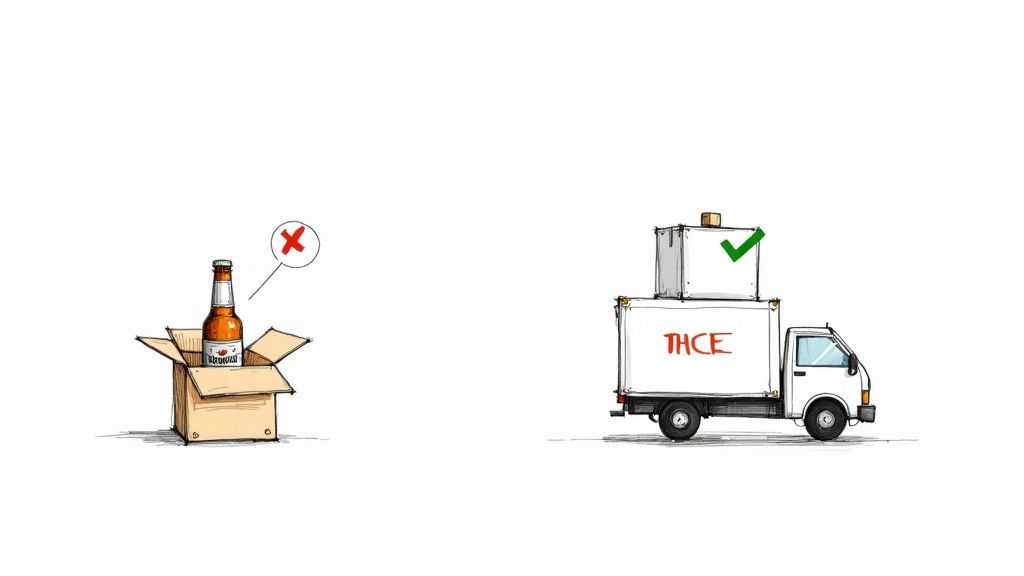
If you've ever tried to send a rare craft brew to a buddy or share a local favorite with family across the country, you’ve probably hit this wall. The rules around shipping alcohol are intentionally complex, designed to control distribution and make sure all the right taxes get paid. This isn't just a simple carrier policy; it's a legal framework with deep roots in American history.
The heart of the issue goes all the way back to the repeal of Prohibition in 1933. When the 21st Amendment was passed, it handed the power to regulate alcohol back to individual states. This created the three-tier system we still have today: producers, wholesalers, and retailers. It's this very system that explains why the USPS flat-out bans all alcohol shipments, period.
Automate Alcohol Shipping Compliance
Block orders to restricted states automatically. 3-day free trial.
Start Free TrialWho Can Ship and Who Cannot
The distinction between a personal shipment and a commercial one is everything. Private carriers like UPS and FedEx have created pathways for licensed businesses to ship their products, but those avenues are completely closed off to individuals.
Here’s how it breaks down:
- Individuals: You cannot legally ship beer using USPS, UPS, or FedEx. Trying to get around this by mislabeling a package is illegal and comes with real risks, including hefty fines and having your package seized.
- Licensed Businesses: Breweries, wineries, and approved retailers are in a different boat. They can ship beer, but only after signing specific agreements with carriers, following rigid packaging standards, and complying with a tangled web of state laws.
For businesses trying to navigate these complexities, the entire process—from getting licensed to final delivery—demands absolute precision. It even comes down to the small details, like using the right specialized shipping and mailing labels to meet compliance and ensure proper handling.
The rule of thumb is simple: if you don't hold a license to produce or sell alcohol, you cannot legally ship it. The system is built to keep alcohol distribution within a regulated, taxable, and age-verified chain of custody.
Who Can Legally Ship Beer in the US
To make it even clearer, here's a quick summary of who can and can't ship beer with the major US carriers.
| Shipper Type | USPS | UPS (With License) | FedEx (With License) |
|---|---|---|---|
| Individuals (Personal) | Prohibited | Prohibited | Prohibited |
| Licensed Businesses | Prohibited | Allowed | Allowed |
As you can see, the path for individuals is completely blocked. For businesses, however, it’s a matter of getting the right licenses and carrier agreements in place.
Understanding these foundational rules is the first step. For eCommerce businesses, trying to manage all these regulations manually is a recipe for costly mistakes. That’s where robust systems come into play. To learn more about how to manage regulated alcohol shipments and automate compliance, our guide will walk you through the specifics of state laws, carrier requirements, and best practices for packaging.
Understanding US Beer Shipping Laws
To really get why you can't just drop a six-pack in a box and mail it to a friend, we have to look back almost a century. The entire system is built on a legal framework that rose from the ashes of Prohibition: the three-tier system of alcohol distribution.
Think of it as a mandatory, three-step journey for every bottle of beer. At the top, you have the producers (breweries). In the middle are the wholesalers and distributors. And at the bottom, you have the retailers, like your local liquor store or bar. In most states, beer has to legally travel from the brewery, to a wholesaler, and then to a retailer before you can ever buy it.
This system was created to prevent monopolies, make it easier for states to collect taxes at every stage, and keep a tight grip on who sells booze. It's the biggest reason a straight line from a brewery—or another person—directly to your doorstep is usually illegal.
Free Alcohol Compliance Audit
Selling alcohol online? We'll review your WooCommerce store's shipping compliance for free.
The Patchwork of State Regulations
When the 21st Amendment ended Prohibition in 1933, it handed the power to regulate alcohol back to the individual states. What followed was a messy, often contradictory web of laws that can change dramatically the second you cross a state line. What's perfectly fine to do in Oregon might land you in hot water in Utah.
This means there's no simple, one-size-fits-all answer to whether you can ship beer. Instead, you're dealing with 50 different rulebooks.
The real kicker is that a shipment has to be legal in both the state it's coming from and the state it's going to. A brewery in shipping-friendly California still can't legally send its IPA to a customer in Alabama, where direct-to-consumer (DTC) shipments are flat-out banned.
Intrastate vs. Interstate Shipping
This state-by-state approach splits beer shipping into two very different ballgames:
- Intrastate Shipping: This is when a shipment starts and ends inside the same state. Some states are a lot more relaxed about this, letting licensed breweries or retailers deliver directly to residents within their own borders.
- Interstate Shipping: This is where things get really tough. Shipping beer across state lines is far more restricted. Only a small handful of states allow out-of-state breweries to ship directly to their residents, and even then, it involves a mountain of licensing paperwork and tax compliance.
As of 2024, fewer than 15 states explicitly allow licensed, out-of-state breweries to legally ship beer directly to consumers. It's a world away from the wine industry, where over 45 states give wineries the green light for DTC shipping. The craft beer community is pushing for change, but it’s a slow and grinding process.
The Federal Hurdle: The USPS Ban
Even if you live in a state that allows direct beer shipments, there’s one more massive roadblock: the United States Postal Service (USPS). Federal law puts a blanket ban on mailing any alcoholic beverages through the postal system. Period. There are no exceptions for individuals or even fully licensed businesses.
This isn't a rule with wiggle room. Attempting to mail beer via USPS is a federal crime, and postal workers are trained to spot and pull any packages they suspect contain alcohol. To get a sense of how seriously these rules are taken, you can look at the strict permit requirements for other types of restricted mail at https://shiprestrict.com/blog/shipping-restrictions/usps-restricted-mail-permit-requirements.
Getting alcohol delivered is a specialized business. If you're curious how companies manage it legally, this comprehensive guide to liquor subscription boxes breaks down the complex logistics and legal hoops they have to jump through.
Where Can Licensed Businesses Ship Beer?
So, if USPS is off the table, how does any beer get shipped legally? Licensed breweries and retailers have to use private carriers like UPS and FedEx, and only after signing specific contracts for shipping alcohol. Even with that in place, they can only ship to the states that permit it.
Here’s a quick look at how states generally break down on DTC beer shipping from licensed sellers:
- Permissive States: States like Ohio, Oregon, Virginia, and Kentucky have laws on the books that allow out-of-state breweries to ship directly to residents, as long as they get the right permits.
- Restrictive States: Many states, including Texas and New Jersey, draw the line at their own border. They only let in-state breweries ship to residents, effectively blocking out-of-state competition.
- Prohibited States: Then you have states like Alabama, Mississippi, and Utah, which have a near-total ban on any and all direct alcohol shipments to consumers.
These laws are always changing, making legal compliance a constant headache for any business trying to do things by the book. This complicated legal maze is exactly why there’s no easy answer to the question, "Can you ship beer in the mail?"
Comparing Carrier Policies for Alcohol Shipments
Once you get past the post office's absolute "no," the world of shipping beer does open up a bit—but only for a select few. Private carriers like UPS and FedEx have created specific, highly regulated programs for businesses to ship alcohol. These services are strictly off-limits to individuals and are designed exclusively for licensed companies.
Trying to sneak a package past them by mislabeling the contents isn't a clever workaround. It's a direct violation of their policies that can get your package confiscated, your shipping account shut down, and maybe even land you a fine. For a legitimate business, though, following the rules unlocks a powerful way to reach customers.
The UPS Approach to Shipping Beer
UPS is a major player in the alcohol shipping game, but they run a tight ship. To get started, a business has to become a licensed alcohol shipper and sign a formal UPS Alcohol Shipping Agreement. This isn't just a checkbox you tick online; it's a real contract that requires your business to be vetted.
Even after you're approved, the rules are strict:
- Proper Packaging: Every shipment has to be packed in materials designed to prevent breakage, like sturdy corrugated boxes with foam or pulp inserts. No rattling bottles allowed.
- Clear Labeling: The outer box needs to be clearly labeled to show it contains alcohol. UPS provides special stickers just for this.
- Adult Signature Required: This is completely non-negotiable. Every single delivery requires a signature from someone 21 or older who can show a valid ID. Packages can never be left at the door.
UPS also sticks to the letter of the law, meaning they'll only carry beer to destinations where direct-to-consumer (DTC) shipments are legal.
The FedEx Alcohol Shipping Program
FedEx runs a nearly identical playbook. Individuals are flat-out prohibited from shipping alcohol of any kind. Only pre-approved, licensed businesses that have signed a FedEx Alcohol Shipping Agreement can use their network for beer shipments.
This decision tree breaks down the basic questions a licensed business needs to answer before trying to ship beer, whether it's across town or across the country.
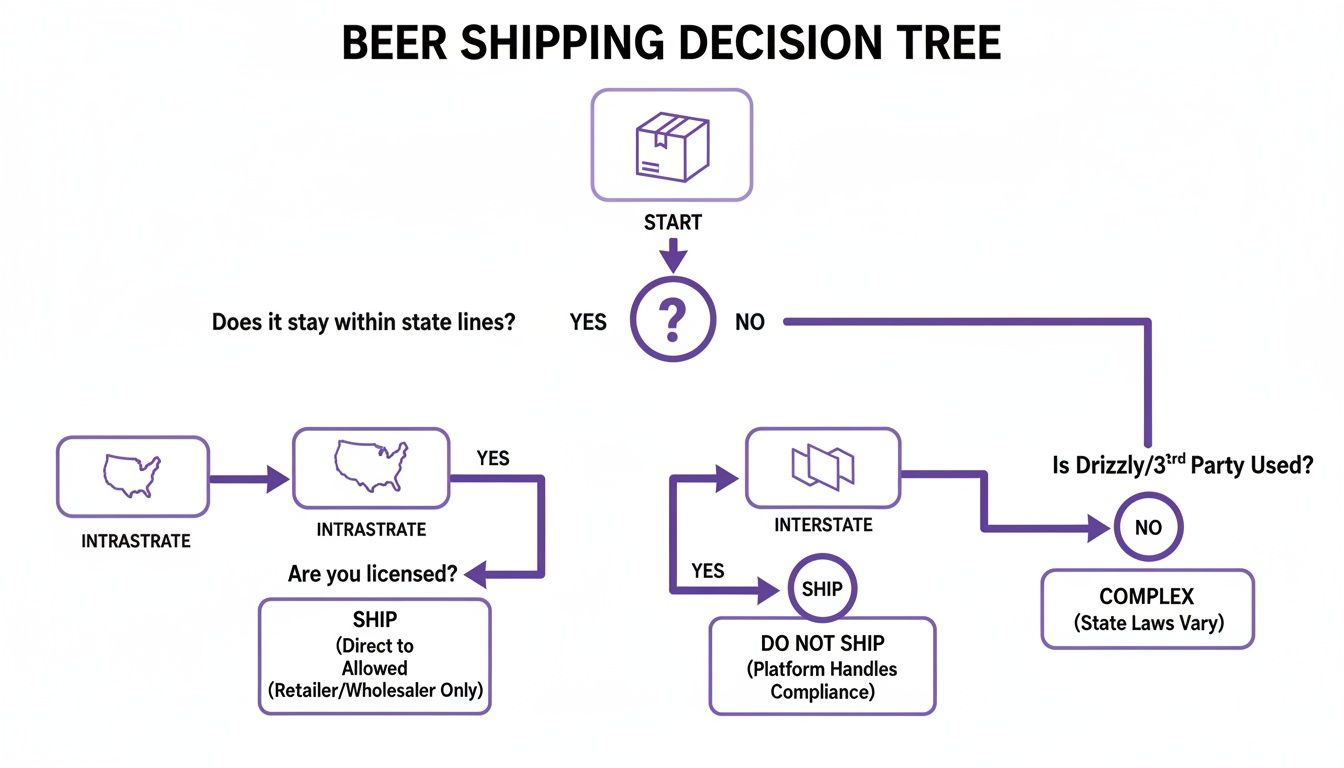
As the chart shows, whether you're shipping intrastate or interstate, you have to be a licensed business with a direct agreement in place with a private carrier.
FedEx has its own tough standards for approved shippers:
- Protective Packing: Just like UPS, FedEx requires packaging that can withstand the bumps and drops of transit without leaking or breaking.
- Specialized Labels: You must use FedEx's specific alcohol shipping labels to make sure packages are handled correctly every step of the way.
- Mandatory Age Verification: An adult signature (21+) is required at the time of delivery. There are no exceptions.
Getting through the approval process for either carrier can be a real project. For a detailed walkthrough, our complete FedEx alcohol shipping account setup guide offers step-by-step instructions.
Key Takeaway: Both UPS and FedEx treat alcohol as a specialized, high-risk product. Their policies all boil down to one core principle: only licensed businesses that have signed a formal contract with them are allowed to ship beer. Period.
Why Are Carrier Policies So Strict?
The tough rules from UPS and FedEx aren't just there to make life difficult. They're a direct response to the massive legal and financial risks that come with shipping a regulated product like alcohol.
By partnering only with licensed businesses, the carriers effectively shift the biggest compliance headaches onto the shipper. It's the brewery or retailer's job to verify that the shipment is legal in both the origin and destination states, collect the right taxes, and confirm the buyer's age. The carrier’s main role is to provide a compliant transportation network that enforces the final, crucial safeguard: getting that adult signature at the door.
This shared-responsibility model is what allows them to stay in the game, moving beer legally while keeping their own liability to a minimum.
How to Package Beer for Safe Shipping
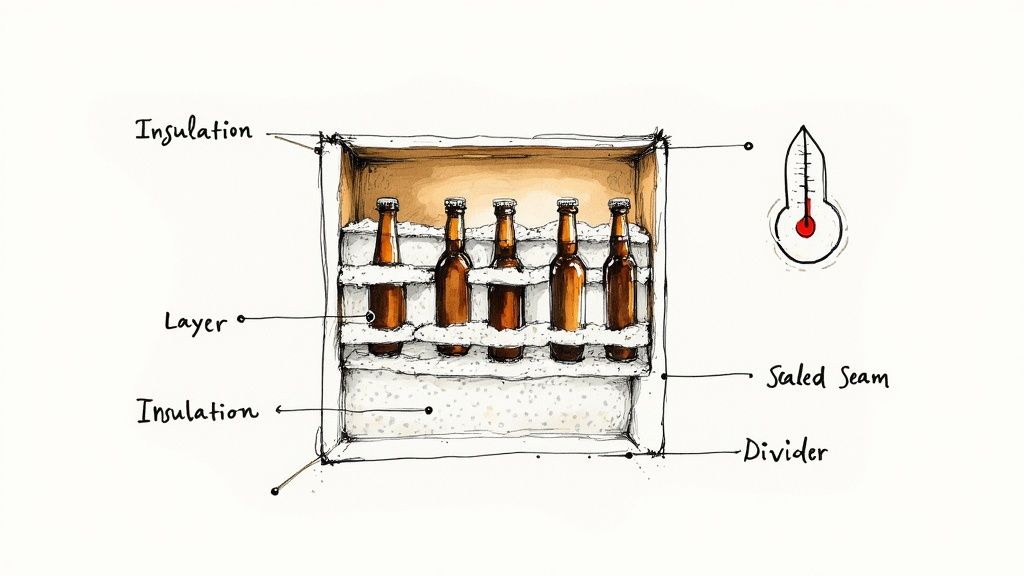
For a licensed brewery or retailer, getting the green light to ship beer is just the start. Once you’ve sorted out the legal side and carrier agreements, the real hands-on work begins. A broken bottle isn't just a lost sale; it's a disappointed customer and a sticky mess for the delivery driver.
Proper packaging is a non-negotiable part of the process. You're essentially building a small fortress around your product, one that can take the inevitable drops, bumps, and temperature swings that happen on the road. Cutting corners here is a recipe for disaster.
This isn’t just a recommendation—it's a requirement. Carriers like UPS and FedEx have strict packaging standards for alcohol to prevent leaks from damaging other packages in their network.
Choosing Your Core Materials
The backbone of any solid beer shipment is a tough outer box and snug inner padding. Your goal is to eliminate all movement and cushion the contents from every possible angle. Think of it as a custom-fitted suit of armor for every bottle and can.
Here are the must-haves for a secure journey:
- A High-Quality Cardboard Box: Don't just grab any box lying around. You need a new, sturdy, double-walled corrugated cardboard box. This provides the structural integrity to survive being stacked under heavier packages.
- Specialized Inserts: This is the most critical part. Never, ever let glass bottles clang against each other. Use molded pulp trays, high-density foam shippers, or corrugated dividers made specifically for shipping beverages.
- Cushioning and Void Fill: Once your beers are secured in their inserts, fill every last bit of empty space in the box. Bubble wrap or packing peanuts work great to ensure absolutely nothing can shift or rattle around.
- A Plastic Liner: It's a smart move to line the box with a heavy-duty plastic bag (like a contractor bag) before you put anything inside. If a leak does happen, this liner will contain the spill and keep the box from getting soaked and falling apart.
A great rule of thumb is the "shake test." After you've sealed the box, give it a gentle shake. If you hear or feel anything moving, it needs more padding. A silent, solid box is a well-packed box.
A Step-by-Step Packing Process
With your materials ready, following a consistent process will minimize risks and ensure every package you send is built to withstand the journey.
- Line and Pad the Box: First, place your plastic liner inside the box. Then, create a protective base by adding a layer of bubble wrap or other cushioning at the bottom.
- Wrap and Secure Each Item: If you aren't using form-fitting molded shippers, take the time to wrap each bottle or can individually in bubble wrap. A little tape will keep the wrap snug.
- Place Items and Dividers: Carefully set your wrapped items or molded shippers into the box. Use cardboard dividers to separate everything. The golden rule is no glass-on-glass contact.
- Fill All Voids: Now, stuff cushioning material into every single gap—between items, along the sides, and on top. The goal is to make the contents completely immobile.
- Seal It Up: Once packed, close the plastic liner and add one more layer of padding on top before closing the box flaps. Use high-quality packing tape and apply it using the "H-tape" method, sealing the middle seam and then across both edge seams for extra strength.
- Label Correctly: Finally, stick your shipping label and any required alcohol warning labels where they can be easily seen. Adding "Fragile" and "This Side Up" stickers is also a good idea to encourage careful handling.
Navigating International Beer Shipping
<iframe width="100%" style="aspect-ratio: 16 / 9;" src="https://www.youtube.com/embed/KsouChhCNFc" frameborder="0" allow="autoplay; encrypted-media" allowfullscreen></iframe>If you thought shipping beer within the U.S. was a puzzle, sending it across international borders is a whole different beast. Think of domestic shipping as navigating your home state with a good map. International shipping is like trying to drive across several continents without a GPS, where the language, traffic laws, and road signs change every time you cross a border.
While big names like UPS, FedEx, and DHL have programs for shipping alcohol internationally, they’re built exclusively for licensed businesses. The process is a dense labyrinth of customs paperwork, duties, import laws, and taxes that are unique to every single destination country. What gets a package to the United Kingdom is completely different from what Japan demands.
The Global Regulatory Maze
Every country has its own way of handling alcohol imports, creating a unique set of hurdles for each and every shipment. A licensed U.S. brewery can't just box up some IPAs and send them to a customer in Germany. They first have to become experts on German import laws, labeling standards, and tax obligations.
This goes way beyond filling out a simple customs form. You’ll typically run into requirements like:
- Detailed Customs Declarations: These forms need hyper-specific information: alcohol by volume (ABV), a full ingredient list, and the product's value. One tiny error can get a shipment stuck in customs indefinitely.
- Excise Taxes and Duties: Most countries slap significant taxes on imported alcohol. These fees have to be calculated and paid perfectly to avoid delays or, even worse, seizure of your product.
- Country-Specific Labeling: A beer label that’s 100% legal in the United States might be totally non-compliant in the European Union, which has its own strict rules about allergen warnings and volume measurements.
Key Insight: International shipping isn't just about logistics; it's about becoming a temporary expert in another country's alcohol laws. Forgetting a single step, like a specific health warning required by the destination country, can cause the entire shipment to be rejected at the border.
Carrier Requirements and Logistics Partners
The major carriers are your gateway to the global market, but they don't hold your hand through the legal mess. They provide the transportation, but you—the shipper—are responsible for all the compliance. Internationally, sending beer via courier is possible but heavily regulated. Carriers like FedEx, UPS, and DHL offer specialized alcohol shipping to dozens of countries, but only for approved shippers who nail all the customs requirements.
For example, FedEx allows licensee-to-consumer wine shipments (and beer follows similar rules) to over 30 destinations across North America, Europe, and the Asia-Pacific region. This network includes all 10 Canadian provinces, 10 EU nations like Germany and the UK, and key hubs like Japan and Australia. All told, that's around 40 approved territories as of their latest updates. You can get a better sense of how these global systems work in this detailed overview of beer shipping.
Because this is all so complicated, many businesses just hire specialized logistics partners. These firms act as your expert guides, managing everything from customs brokerage to tax payments. They make sure every "i" is dotted and every "t" is crossed, turning an overwhelming process into something manageable for breweries looking to go global. For any business even thinking about international sales, deep research and a good logistics partner are non-negotiable first steps.
A Few Common Questions About Shipping Beer
Even after breaking down the laws and carrier policies, a few specific questions always pop up when people think about mailing beer. The rules can feel a bit backward, especially when you just want to share an awesome craft brew with a friend.
Let's tackle the most common questions head-on to clear up any lingering confusion. We'll cover everything from sending beer as a gift to what really happens if you try to bend the rules, and how legitimate businesses pull it off.
Can I Ship Beer as a Gift to a Friend?
The short, simple answer is no. If you're an individual, you cannot legally mail beer as a gift through any carrier in the United States. This is probably the biggest misconception out there, and it's a hard-and-fast rule. No exceptions for birthdays, holidays, or anything else.
Why? The United States Postal Service (USPS) has a total federal ban on shipping alcoholic beverages. And private carriers like UPS and FedEx will only touch alcohol shipments from businesses that hold the right state and federal licenses and have signed a specific alcohol shipping agreement with them.
Thinking you can just hide the beer in a box and not say what's inside isn't a clever workaround—it's illegal. Mislabeling a package to hide alcohol is a direct violation of both carrier policy and federal law. If they find it, the package will be seized, and you could be looking at fines and a permanent ban from using that carrier.
The only legal way to get beer to a friend is to buy it from a licensed retailer, brewery, or a specialty gift service that is legally set up to ship directly to your friend's address. These businesses have jumped through all the hoops to get the right licenses and carrier agreements so every shipment is above board.
What Happens If You Get Caught Shipping Beer Illegally?
The consequences for trying to ship beer as an individual range from inconvenient to pretty severe, depending on the carrier and the situation. It’s a high-risk gamble that just isn’t worth it.
Here’s a realistic look at what you can expect if your unauthorized shipment gets discovered:
- Your Package is Gone: At the very least, your shipment will be confiscated and most likely destroyed. You'll lose the beer and the money you spent on shipping.
- Your Shipping Account is Terminated: If you have an account with UPS or FedEx, you can bet it will be shut down. You could even be blacklisted, making it impossible to open a new account.
- Fines and Penalties: Getting caught by USPS is a federal offense that can come with some hefty fines. While it's less common for a single personal shipment, the authority is there. State alcohol control boards can also levy their own fines if they catch wind of it.
- Legal Trouble: In more serious cases, especially if we're talking about larger quantities, you could even face legal action from state authorities for breaking alcohol distribution laws.
Don't think they won't find it. Carrier employees are trained to spot packages that might contain alcohol by looking for signs like leaking, sloshing sounds, or sketchy labeling.
Are There Any Services That Ship Beer for Individuals?
No, there isn't a service that can legally pick up beer you already own and ship it for you. Any third-party service claiming they can ship alcohol on behalf of an individual is operating outside the law and putting both you and themselves at risk.
The good news, however, is that there are plenty of fully legal businesses that can sell you beer and then ship it to its destination, as long as the receiving state's laws allow it. These are your only legitimate options.
Your best bets include:
- Online Beer Retailers: Many websites are licensed to sell and ship craft beer to states where it's permitted.
- Breweries with DTC Licenses: More and more breweries are getting direct-to-consumer (DTC) licenses, which let them ship their beer straight to customers in approved states.
- Beer Subscription Clubs: Those popular beer-of-the-month clubs are fully licensed businesses that handle all the legal and logistical headaches of shipping beer to their members.
When you use one of these services, you aren't the one shipping the beer—they are. They take on all the legal responsibility, using their licenses and carrier agreements to make sure everything is done by the book.
How Do Breweries and Beer Clubs Ship Legally?
Breweries and beer clubs don't have some secret trick; they work within a strict, highly regulated system that's completely off-limits to the public. Their ability to ship beer legally is built on a foundation of licenses, contracts, and compliance tech.
First, they have to get both a federal brewer's or wholesaler's permit and the right state-level licenses to make or sell alcohol. Next, they have to apply for and sign a formal alcohol shipping agreement with a private carrier like UPS or FedEx. This contract locks them into following all carrier policies, including very specific packaging and labeling rules.
Finally, they have to navigate the maze of state laws, only shipping to states that legally allow direct beer shipments. This usually means using specialized software to verify a buyer's age, check state volume limits, and make sure the delivery address is in a "wet" area. The last critical step is slapping the mandatory Adult Signature Required label on every single box, ensuring someone 21 or older is there to sign for it.
Navigating shipping regulations can be a major challenge for businesses dealing with restricted products. At Ship Restrict, we provide a powerful solution that automates these complex rules directly within your WooCommerce store. Our plugin saves you time, prevents costly shipping errors, and ensures your business stays compliant with state and local laws, so you can focus on growing your business with confidence. Learn more at https://shiprestrict.com.
Automate Alcohol Shipping Compliance
Stop worrying about restricted states. Ship Restrict handles it automatically.

Cody Yurk
Founder and Lead Developer of ShipRestrict, helping e-commerce businesses navigate complex shipping regulations for regulated products. Ecommerce store owner turned developer.
Automate Alcohol Compliance
- Block restricted states
- No more cancellations
- Set and forget
3-day free trial · Card required