USPS Restricted Mail Permit Requirements Explained
Your definitive guide to USPS restricted mail permit requirements. Learn how to apply for a permit, follow packaging rules, and stay compliant to ship legally.
Think of a USPS restricted mail permit as a special license. It's what you need to ship items that the postal service carefully controls for safety, security, and legal reasons. This isn't just another mail class; it's a formal agreement you make with the USPS, proving you understand and will follow all the strict rules for shipping regulated goods, like firearms or certain biological materials.
What Are USPS Restricted Mail Permits
Imagine trying to drive a semi-truck with only a standard driver's license. You can't. You need a commercial license because it proves you have the specialized knowledge to operate that vehicle safely. A USPS restricted mail permit is your "commercial license" for shipping regulated items. It’s an official authorization showing you’re legally cleared to ship these products and will stick to every single protocol.
This system isn't about making things difficult for businesses. It's a critical framework that rests on three core principles:
- Safety: First and foremost, it ensures that potentially hazardous or sensitive items are packaged and handled correctly, protecting USPS employees, the public, and everyone in between.
- Accountability: The permit creates a clear chain of custody. It directly links a specific shipper to a regulated package, which is vital for both law enforcement and regulatory oversight.
- Compliance: It forces shippers to align their practices with the complex web of federal, state, and local laws governing the transport of specific goods, effectively shutting down illegal shipments.
Without these permits, the mail system could easily be misused to transport dangerous items improperly, creating massive risks. That’s why understanding the USPS restricted mail permit requirements is the first and most important step for any business dealing in controlled products. You can learn more about specific categories and their rules by exploring the various restriction types carriers recognize.
Automate Shipping Compliance
Block orders to restricted states automatically. 3-day free trial.
Start Free TrialOverview of Common Restricted Items and Associated Requirements
Not every product needs a permit, but the ones that do fall into distinct categories regulated for public safety and legal reasons. This formal agreement is your way of telling the USPS, "I am an authorized, responsible shipper who knows the rules and will follow them."
A restricted mail permit is your formal agreement with the USPS. It demonstrates that your business is authorized to ship controlled items and commits you to following all packaging, labeling, and handling regulations without exception.
To give you a clearer picture, here's a quick look at some common restricted item categories and the general requirements that come with them. This table provides a high-level overview before we dive deeper into the specifics for each category later in this guide.
| Restricted Item Category | Examples | General Permit/Licensing Requirement |
|---|---|---|
| Firearms | Handguns, rifles, shotguns | Requires a valid Federal Firearms License (FFL) and USPS approval via PS Form 1508. |
| Live Animals | Bees, day-old poultry, small cold-blooded animals | Requires specific permits and adherence to strict packaging and air circulation rules. |
| Biological Materials | Medical specimens, patient samples, certain toxins | Must follow specific regulations from the CDC and DOT, often requiring special permits. |
| Alcoholic Beverages | Wine, beer, spirits | Generally prohibited for mailing by consumers; licensed distributors may ship under specific rules. |
| Hazardous Materials (HAZMAT) | Lithium batteries, flammable liquids, certain chemicals | Requires adherence to USPS Publication 52, with specific permits for commercial quantities. |
As you can see, the requirements vary widely depending on what you're trying to ship. Getting the right permit is just the start; following the associated rules is what keeps your business compliant and your shipments moving.
Who Needs a Permit and Why It Matters
Figuring out if you need a USPS restricted mail permit boils down to one simple question: what are you shipping? The product itself is what drives the legal requirement.
Think of it like a specialized driver's license. Your standard license lets you drive a car, but you’ll need a Commercial Driver's License (CDL) with special endorsements to legally haul a tanker full of hazardous materials. A USPS permit is that "endorsement" for shipping controlled goods. It’s not an optional checkbox—it’s a core requirement for specific industries to ensure safety and accountability every step of the way.
The permit system creates a clear framework, confirming that you're a known, vetted business authorized to handle and ship items that require special care. It’s a critical tool for protecting postal workers, the public, and the integrity of the mail stream. When you ship a regulated item with a permit, you are officially stating that you understand and will follow all the rules, from packaging to labeling.
Identifying Required Industries
While most businesses can ship products without any special authorization, several sectors are legally required to get a permit before mailing certain items. The common thread? Their products are regulated by federal or state law for public safety, health, or security reasons.
Here are the main groups that must secure a permit:
Free Shipping Compliance Audit
We'll review your WooCommerce store's shipping compliance for free.
- Federal Firearms License (FFL) Holders: This is probably the most well-known category. Licensed firearms manufacturers, dealers, and importers must have an approved permit to ship handguns and other eligible firearms through the mail.
- Pharmaceutical Companies: Businesses shipping prescription drugs, certain medical devices, or biological materials often need permits to stay compliant with federal health and safety regulations.
- Agricultural Shippers: Anyone mailing live animals (like bees or poultry), plants, or even soil samples has to follow strict guidelines to prevent the spread of diseases and invasive species, which usually requires a specific mailing authorization.
- HAZMAT Shippers: Companies that handle hazardous materials—like certain chemicals, lithium batteries, or flammable liquids—must follow the strict rules in USPS Publication 52 and may need a permit for commercial volumes.
The core purpose of the permit is to create a chain of accountability. It ensures that only legally authorized and knowledgeable shippers are introducing regulated items into the mail system, preventing dangerous goods from being handled by untrained individuals.
The Role of Permits in Modern Commerce
Permits aren't just about red tape; they are also about enabling legitimate business. The USPS has used permit systems for decades to manage different types of mail more efficiently. Early on, bulk mailers needed permits to streamline processing, and while the systems have evolved, the principle is the same: create an organized, accountable method for handling specialized mail.
Sometimes, the motivation for getting a permit is about the bottom line. It’s a great example of how mailing solutions can help reduce postage costs by unlocking specific USPS services. As far back as 1928, the USPS lowered the minimum piece count for third-class mailings with permit imprints to just 200 pieces, making bulk rates more accessible to smaller businesses.
For businesses shipping regulated products today, understanding the subtle differences between carriers is crucial. What works for one might not work for another. We break down these differences in our guide comparing USPS vs UPS vs FedEx for shipping ammunition.
Ultimately, the permit is your official pass to legally and safely ship your products, protecting both your business and the public.
Your Step-by-Step Permit Application Guide
Getting a USPS restricted mail permit can feel like you're trying to assemble furniture without the instructions, but it doesn’t have to be that complicated. With the right documents and a clear plan, you can get it right the first time.
The whole point of the application is for the USPS to verify that you're a legitimate, licensed business authorized to ship specific controlled goods. Think of it as your official introduction to your local Post Office—you’re not just another customer, you’re becoming a trusted shipping partner. This guide will walk you through every step.
This flowchart shows the simple but critical relationship between your product and your permit needs.
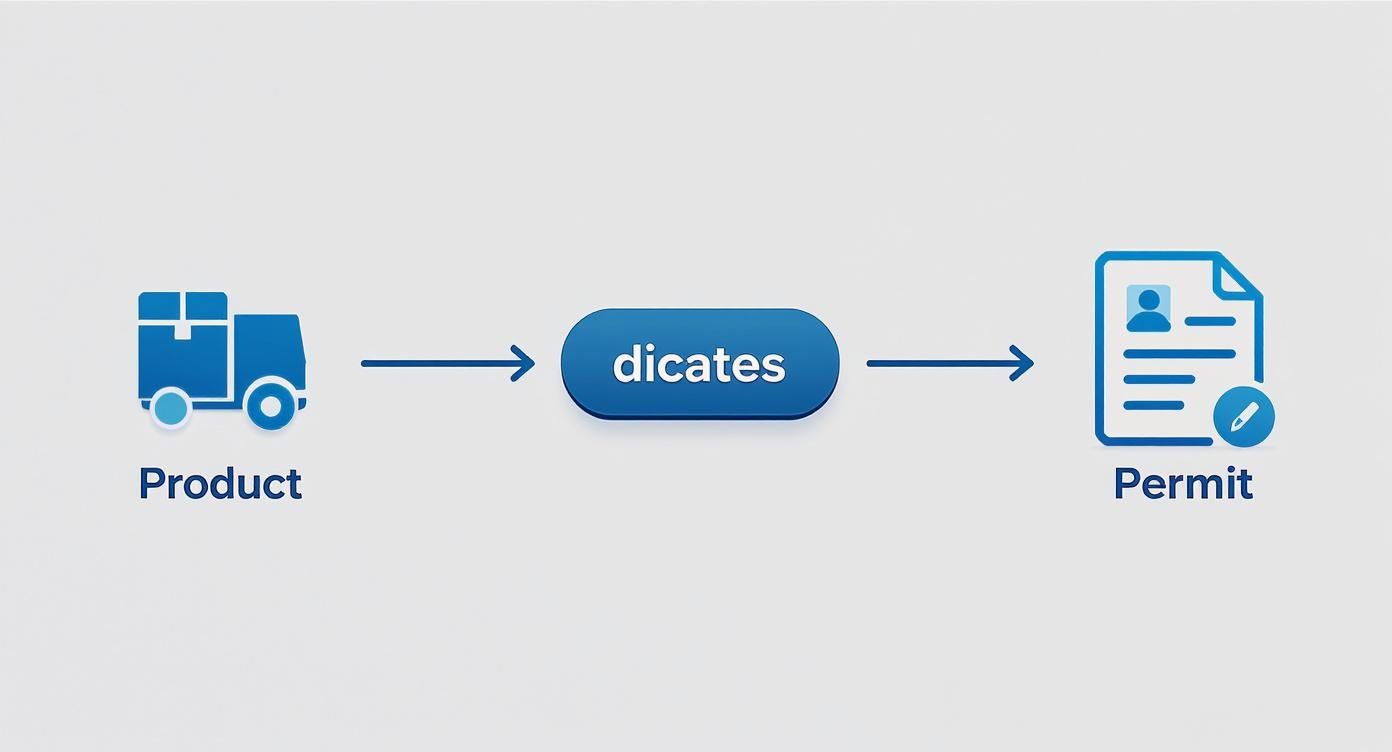
As you can see, the specific item you plan to ship is the single most important factor. It's what dictates your need for a USPS permit, drawing a direct line from product to compliance.
Step 1: Prepare Your Documentation
Before you even think about heading to the Post Office, your first job is to get all your paperwork in order. Showing up unprepared is the fastest way to get sent home and start over. This is your compliance toolkit, and having it ready shows you're serious about following the rules.
Your documentation checklist should include:
- A Valid, Signed Copy of Your Business License: For firearms dealers, this is your Federal Firearms License (FFL). Make sure it’s not expired and that the address on it is current and matches where you'll be shipping from.
- Government-Issued Photo ID: A current driver's license or passport will work. The name on your ID must match the name on your business license exactly.
- Completed USPS Application Form: The form you need depends on what you're shipping. For FFL holders, the key document is PS Form 1508, Application for Mailing Firearms. Fill it out completely and accurately before you go.
Pro Tip: Make photocopies of everything. Keep one set for your own records and have another ready to hand over to the Postmaster. This simple step can save you a return trip.
Step 2: Locate and Contact the Right Post Office
Not all Post Offices are created equal. You can't just walk up to any retail counter for this. You need to find the specific branch that handles business mail, often called a Business Mail Entry Unit (BMEU) or just the main Post Office in your city.
Once you’ve found the right location, give them a call. This is a crucial step that a lot of people skip. Ask to speak with the Postmaster or the business mail specialist and tell them you need to submit an application to ship restricted items (like firearms under an FFL).
This call does two things:
- It confirms you have the right spot. You'll know for sure they can process your specific application.
- It gives them a heads-up. A little courtesy goes a long way and can make your in-person visit much smoother.
Step 3: Submit Your Application In Person
With your documents organized and your location confirmed, it’s time to submit everything. Go to the designated Post Office and present your complete package to the postal official. They will review your FFL, photo ID, and the filled-out PS Form 1508 to make sure everything lines up.
They are verifying that the information is consistent across all documents and that you are who you say you are. Once they approve it, they will keep a copy of your license on file, officially authorizing you to ship eligible items from that location.
While you're dealing with your permit, it's smart to be aware of other USPS forms. For example, businesses using a commercial mail receiving service need to understand the USPS Form 1583 requirements to manage their mail properly.
Mastering Packaging and Labeling Rules
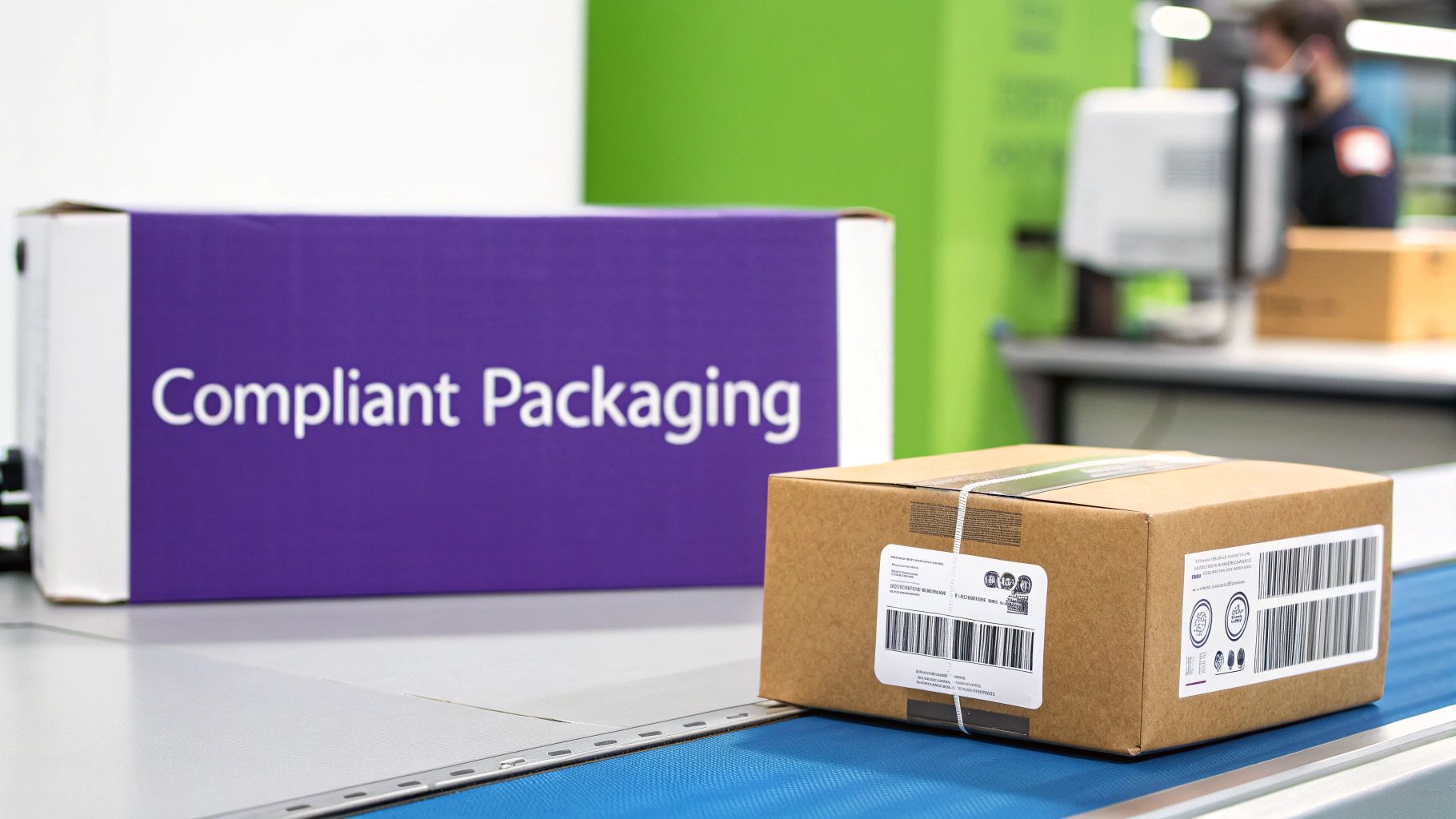
Securing your permit is like getting the keys to the car; now you have to prove you can drive it safely. This is where mastering the USPS packaging and labeling rules becomes non-negotiable. Every restricted item has a specific protocol designed to ensure safety and security from the moment it leaves your hands to the moment it’s delivered.
These regulations aren't arbitrary. They are carefully crafted rules, detailed in USPS Publication 52 ("Pub 52"), that prevent accidents, theft, and misuse. Think of Pub 52 as the official rulebook for safely navigating the mail system with regulated goods.
The Logic Behind Strict Packaging Rules
The core principle behind these rules is discretion and durability. The packaging must be tough enough to handle the journey without breaking open, and the outer box absolutely cannot give away what's inside. This protects USPS employees from unknowingly handling hazardous items and deters theft of valuable goods.
Take handguns, for example. The USPS requires a double-boxing method. The firearm goes into a sturdy, sealed inner box, which then goes inside a plain, ordinary-looking outer box. This simple step adds layers of protection and, just as importantly, anonymity.
A compliant package is a silent package. It should never advertise its contents through markings, logos, or brand names on the outer box. Anonymity is your primary tool for security and compliance.
Essential Labeling and Service Requirements
Proper labeling goes hand-in-hand with secure packaging. But it's not just about the address label. The type of mail service you choose is a critical part of compliance.
For many restricted shipments, especially firearms, you have to use a service that includes:
- Tracking: This gives you end-to-end visibility of your package's journey. No more guessing games.
- Signature Confirmation: This is your proof that the package was handed directly to an authorized person, not just left on a doorstep.
These services create a documented chain of custody, a non-negotiable part of the USPS restricted mail permit requirements. They serve as your evidence that you shipped the item correctly and that it reached the right hands.
Packaging and Labeling Requirements Comparison
The rules can change dramatically depending on what you're shipping. The requirements for a handgun are worlds apart from those for live honeybees or a box of lithium batteries. Getting it wrong isn't an option.
This table highlights just how different the rules can be, showing why you have to know the specific regulations for your products.
| Requirement Type | Firearms (Handguns) | Live Animals (e.g., Bees) | Lithium Batteries (Standalone) |
|---|---|---|---|
| Outer Box Markings | Strictly prohibited. Must be plain with no indication of contents. | Required. Must be clearly marked "Live Animals" with proper ventilation. | Required. Must have the UN3480 lithium battery mark and other specific warnings. |
| Inner Packaging | Must be double-boxed with the firearm in a separate inner container. | Must be in a container that allows for airflow and prevents escape. | Must be cushioned and protected against short-circuiting. |
| Required Mail Service | Typically USPS Ground Advantage or Priority Mail with Signature Confirmation. | Generally requires Priority Mail Express for speed and humane transport. | Varies by size and type, but ground transportation is often mandatory. |
| Recipient Eligibility | Must be shipped to another licensed FFL dealer (for dealers). | Varies by state and local laws regarding the importation of certain species. | Adherence to DOT regulations for hazardous materials. |
As you can see, compliance is incredibly specific. Accidentally applying the rules for one category to another can lead to a rejected shipment, fines, or far worse. Diligence here isn't just good practice—it's essential.
Avoiding Common Mistakes and Penalties
<iframe width="100%" style="aspect-ratio: 16 / 9;" src="https://www.youtube.com/embed/Rit-DwEzuBg" frameborder="0" allow="autoplay; encrypted-media" allowfullscreen></iframe>Navigating the world of USPS restricted mail is a game of precision. Getting the permit is a big step, but true compliance happens in the flawless execution of every single shipment. Unfortunately, simple mistakes can snowball into severe consequences, turning a routine order into a major business liability.
The path to non-compliance is often paved with small, seemingly minor errors. A busy day, a new employee, or one overlooked detail is all it takes. These common pitfalls act as tripwires for even the most well-intentioned businesses, proving the need for constant vigilance and rock-solid internal processes.
Common Pitfalls for Shippers
Many businesses run into trouble by making assumptions or letting details slide. These aren't malicious acts, but their impact can be just as damaging. Keeping these common mistakes on your radar is the first step toward preventing them.
Some of the most frequent errors include:
- Using the Wrong Mail Class: Choosing a service like Media Mail for a restricted item just to save a few bucks is a serious violation. You have to use the approved mail classes that provide the required tracking and security.
- Improper or Revealing Labeling: Any marking on the outer box that even hints at the contents is strictly forbidden for items like firearms. This includes company names or logos that are widely associated with the restricted product.
- Letting Licenses Expire: Your USPS permit is tied directly to your underlying business license (like an FFL). If that license expires, your authority to ship is instantly void—even if you renew it the very next day.
- Shipping to Unauthorized Locations: This is a huge one. Without a system to verify state and local shipping restrictions, you could easily send a package to a prohibited ZIP code, county, or city, breaking the law despite having a valid federal permit.
The consequences of non-compliance are not just a slap on the wrist. They can escalate rapidly from a seized package to federal charges that threaten the very existence of your business. Ignorance of the rules is never an accepted defense.
The High Cost of Getting It Wrong
When a mistake happens, the penalties can be swift and severe. The USPS and its law enforcement arm, the Postal Inspection Service, take these violations seriously to protect public safety and the integrity of the mail system.
The consequences for failing to meet USPS permit requirements can include:
- Package Seizure: Your shipment can be confiscated and may never be returned.
- Hefty Fines: Financial penalties can range from hundreds to thousands of dollars per violation.
- Loss of Shipping Privileges: The USPS can revoke your permit, effectively shutting down a critical part of your business.
- Business License Revocation: Federal agencies can revoke your primary license (e.g., your FFL) for shipping violations.
- Federal Criminal Charges: In the most serious cases, violations can lead to prosecution and imprisonment.
Even seemingly unrelated permits come with strict rules to prevent system abuse. For example, to qualify for Nonprofit USPS Marketing Mail rates, organizations must meet specific eligibility standards and get the right mailing permits. This ensures only legitimate groups can access discounted rates, a rule the USPS enforces diligently. You can read more about these nonprofit mailing requirements and see just how seriously the USPS takes permit compliance across the board.
Ultimately, the best defense is a proactive offense. This is where modern compliance software becomes an indispensable safety net. Systems like Ship Restrict automate the rule-checking process, blocking an order at checkout if it violates federal, state, or local shipping laws. It stops mistakes before they can become costly penalties, protecting your business and ensuring ongoing compliance.
How Modern Shipping Tech Aligns with Permits
In the fast-paced world of eCommerce, printing a shipping label feels as simple as clicking a button. Modern shipping technology, especially online postage platforms, has made creating labels for your packages incredibly easy. But this convenience comes with a critical responsibility that never goes away: you, the shipper, are 100% accountable for what’s in the box and whether it complies with the law.
Think of it like using software to file your taxes. The program makes the process smoother, but it doesn't absolve you of the need to provide accurate financial information. The software is just a tool; the legal responsibility for the data remains yours. Similarly, no matter which shipping software you use, your USPS restricted mail permit requirements are still your burden to bear. The technology helps with logistics, but it does not and cannot replace your legal obligation to follow every single rule.
The Guarded Gates of Digital Postage
This heavy responsibility is a key reason why the USPS maintains such strict control over who can provide digital postage services. The system for becoming a PC Postage provider is notoriously difficult to enter. For years, the USPS has kept this space tightly regulated to ensure security and prevent fraud.
"In November 2017, the USPS put the application process on hold indefinitely, citing a need to review the onboarding process... the application window remains closed to new providers, and no measurable progress has been made in reopening it."
This near-total closure of the program highlights the high stakes involved. At that time, only one new provider had been authorized since 2000, which tells you everything you need to know about the immense barriers to entry. You can learn more about this decision from the USPS Office of Inspector General's report. This context is crucial—it explains why you can’t just use any new shipping app to send regulated items. You have to partner with established, compliant software providers who get these complexities.
Where Technology Meets Compliance
So, how do you merge the convenience of modern tech with the strict demands of a USPS permit? The solution lies in using specialized compliance software that works alongside your shipping platform. This is where tools designed for high-risk industries become essential.
For example, a platform like WooCommerce can be supercharged with tools that automate rule-checking right at the point of sale. This is a game-changer for businesses selling regulated goods. Instead of hoping your team catches everything with manual address checks, you can use software that automatically blocks illegal shipments before the order is even finalized. For businesses that need this protection, learning about automated shipping compliance for WooCommerce stores is a crucial next step.
Ultimately, modern shipping tech is an incredible asset, but it’s just one piece of the compliance puzzle. It streamlines the how of shipping, but the what and where are still governed by your permit and the law. Marrying smart automation with your legal responsibilities is the only way to ship safely and successfully.
Frequently Asked Questions
When you're dealing with USPS restricted mail permits, a lot of questions come up. Let's tackle some of the most common ones to clear up the confusion and get you on the right track.
Do I Need a Separate Permit for Each Restricted Item I Ship?
Generally, no. Think of the USPS permit as a layer on top of your existing business license. Your primary authorization to ship a certain product, like a firearm, comes from your Federal Firearms License (FFL). When you apply with the USPS, they're mostly just verifying that you hold the right underlying license for that category of items.
Where it gets tricky is if you deal in multiple, completely different regulated categories. For example, if you're both an FFL holder and a shipper of specific biological materials, you'd need the proper federal or state licenses for each of those activities. You'll have to show the USPS all the relevant licenses to get their blessing to ship items under each set of rules.
How Long Does Permit Approval Usually Take?
This is one of the most unpredictable parts of the process, and the timeline can vary wildly from one Post Office to the next. Some business owners walk in and get approved on the same day. Others have found themselves waiting for days or even weeks.
Pro Tip: To avoid getting stuck in limbo, always call your local Post Office's business mail unit before you go. Confirm they handle these applications, ask about their specific process, and show up with all your paperwork perfectly organized. A little prep work here can make a world of difference.
The two biggest factors are the local Postmaster's experience with these permits and how busy that particular branch is. Being proactive is your best bet for a smooth approval.
Can I Use a USPS Permit for International Shipping?
Not a chance. A domestic USPS permit for restricted mail is only valid for shipments within the United States and its territories. Shipping regulated goods to another country is a completely different ballgame with a far more complex set of rules.
International shipments, especially for things like firearms, fall under strict federal export laws and international treaties. This is handled by agencies like the U.S. Department of State and involves separate export licenses and a deep understanding of the destination country's import laws. Your USPS permit has zero authority once a package leaves U.S. borders.
What Happens If My Business License Expires?
The moment your underlying business license—like your FFL—expires, your authorization to ship restricted items via USPS is immediately and automatically void. There's no grace period. If your credentials lapse, you legally have to stop all shipments of those regulated products that same day.
Once you've successfully renewed your license, you need to bring an updated, signed copy to the Post Office where your permit is on file. This updates their records and officially re-validates your shipping privileges so you can get back to business.
Manually keeping up with these complex rules can be a huge drain on your time and resources. Ship Restrict automates compliance by blocking restricted orders at checkout, ensuring you never make a costly shipping mistake. Protect your business and streamline your operations by visiting ShipRestrict.com to see how it works.
Automate Shipping Compliance
Stop worrying about restricted states. Ship Restrict handles it automatically.

Cody Yurk
Founder and Lead Developer of ShipRestrict, helping e-commerce businesses navigate complex shipping regulations for regulated products. Ecommerce store owner turned developer.
Automate Shipping Compliance
- Block restricted states
- No more cancellations
- Set and forget
3-day free trial · Card required