How to Improve Customer Satisfaction: How To Improve
For WooCommerce firearms retailers: Learn how to improve customer satisfaction. Automate compliance, refine UX, and build trust to grow your business.
You're probably dealing with one of two situations right now. Either customers keep reaching checkout and discovering too late that an item can't ship to their address, or your staff is catching problems manually after the order comes in. Both create the same result. Frustration, support tickets, cancellations, and a store that feels harder to buy from than it should.
In firearms eCommerce, customer satisfaction doesn't rise because you add generic perks. It rises when you remove uncertainty from a regulated purchase. Customers can accept restrictions. What they won't accept is confusion, silence, or a dead end at the last step.
That's why, in this niche, shipping compliance is usually the biggest lever. A 2023 Harvard Business Review study on boosting customer satisfaction found customer satisfaction at a two-decade low, and in niche eCommerce, manual shipping restrictions can lead to 15-20% order cancellation rates, while automating these rules can improve satisfaction by 25-30%. For firearms retailers, that matches what happens on the ground. The stores that handle legal restrictions clearly and early usually feel easier, safer, and more professional to buy from.
Measure What Matters in Regulated Ecommerce
Generic CSAT advice falls short in firearms retail because the customer isn't always unhappy with the product. They're often unhappy with the process around the product. If you don't separate those two things, you'll fix the wrong problem.
Automate Shipping Compliance
Block orders to restricted states automatically. 3-day free trial.
Start Free TrialA customer who gets blocked because of a ZIP-based rule may still want the item and still trust your brand. What they hate is not knowing why the block happened, whether there's an alternative, or if the issue is their address, the product, or state law. Standard post-purchase surveys won't catch that well.
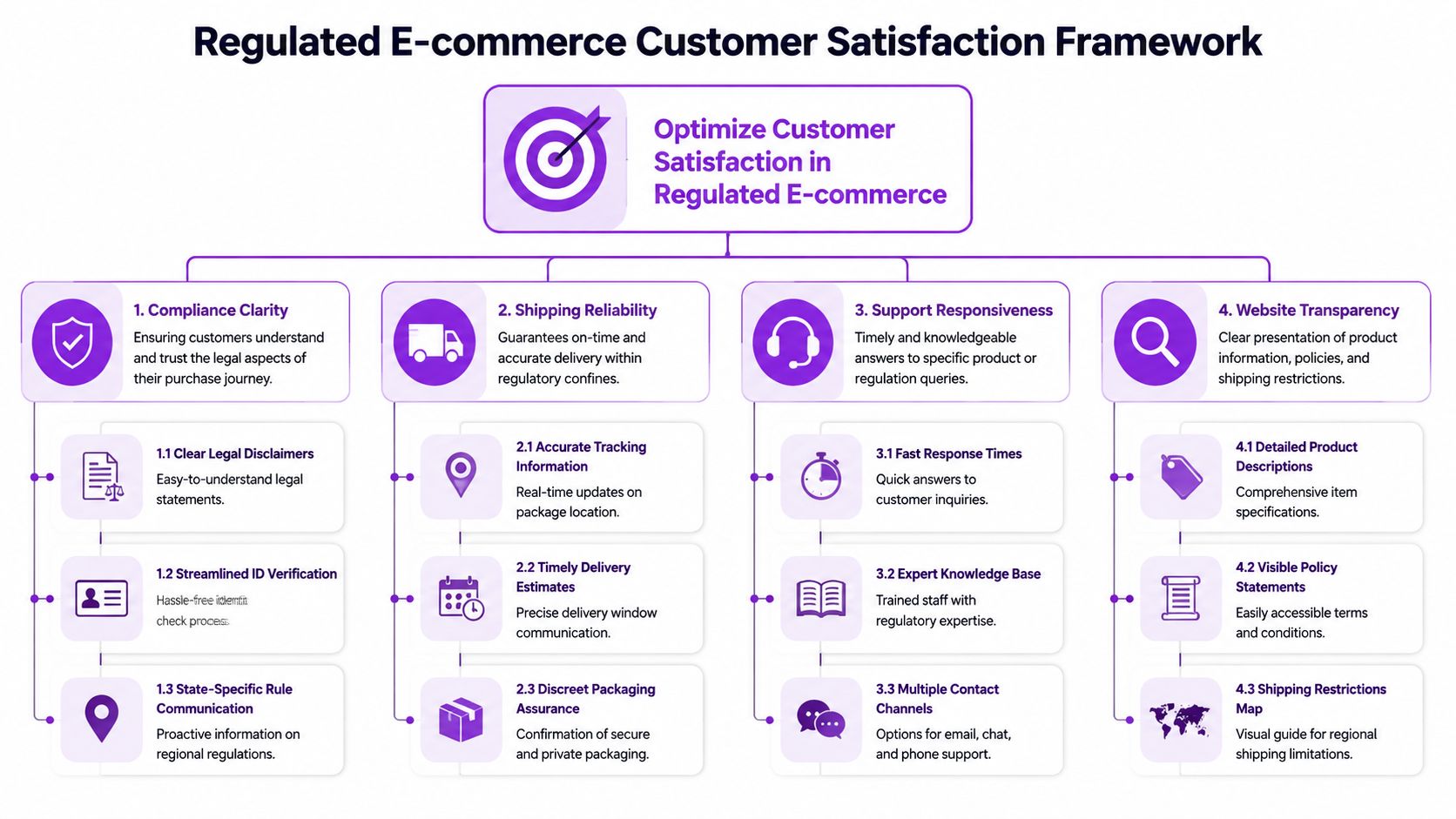
Track the moments that actually create friction
Measure satisfaction at the touchpoints where regulation intersects with the buying journey. That means more than a survey after delivery.
Use a simple structure like this:
- After rule setup in admin if your team manages a large catalog and frequent legal updates.
- After a checkout block when a customer hits a shipping restriction.
- After customer support resolves a restriction question.
- After fulfillment confirmation for compliant orders that required extra steps.
The point is to tie feedback to a specific event. That gives you useful diagnosis instead of a vague average.
Use CSAT, CES, and open text together
In this niche, one score is never enough. You need a short set of signals that tell you whether the issue is legal friction, site friction, or service friction.
| Metric | What it tells you | Best place to use it |
|---|---|---|
| CSAT | Whether the customer felt satisfied with a specific interaction | After support replies, fulfillment updates, or checkout blocks |
| CES | Whether the process felt easy or difficult | After FFL selection, address validation, or blocked checkout |
| Open-ended feedback | Why the score happened | Every micro-survey |
If a customer gives a low CSAT score after a blocked order, read the written comment before you blame the policy itself. Often the issue is wording. “Restricted” tells them nothing. “This item can't ship to your ZIP code because of local restrictions. You may be able to complete this purchase through a compliant transfer option” gives them context and a next step.
Practical rule: If your feedback form can't tell you whether the problem was legal restriction, unclear messaging, address mismatch, or support delay, it's too generic.
Build a closed loop, not a survey archive
Most stores collect feedback and never operationalize it. That's wasted effort. Your support lead, store manager, and developer should each have ownership over a different class of complaints.
A working review rhythm looks like this:
Free Shipping Compliance Audit
We'll review your WooCommerce store's shipping compliance for free.
- Support owns message clarity: Rewrite customer-facing restriction notices when feedback shows confusion.
- Operations owns policy accuracy: Check whether blocked orders came from outdated or incomplete rules.
- Development owns checkout friction: Reduce extra steps, page reloads, and unclear field requirements.
One practical way to structure this is to review blocked-order comments and support tickets alongside a formal compliance check. A quarterly process like this regulated eCommerce compliance review guide helps teams catch where legal updates and customer friction overlap.
Watch for the wrong kind of effort
A regulated purchase will never feel frictionless in the same way as buying a T-shirt. That's fine. The goal isn't zero effort. The goal is justified effort.
Customers tolerate effort when it feels necessary, explained, and consistent. They get irritated when they repeat the same information, discover restrictions late, or receive vague answers from support. Measure that difference. It's the foundation of how to improve customer satisfaction in a firearms store without pretending regulation doesn't exist.
Redesign Your Checkout for Transparency and Trust
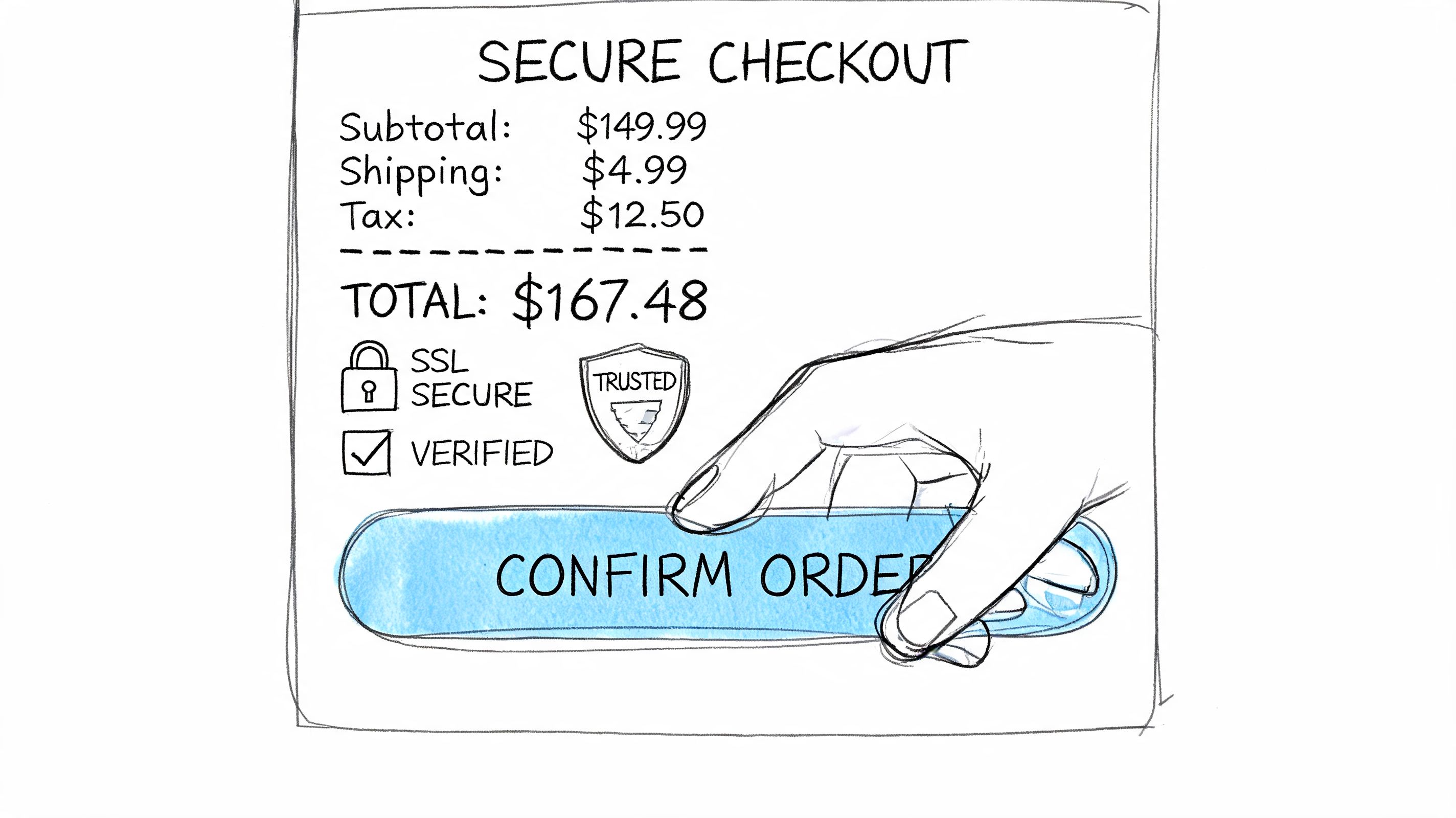
Checkout is where many firearms stores accidentally break trust. Not because they're careless, but because the store architecture assumes all problems can be solved at the very end. That's a mistake in a regulated category.
A shopper can spend time comparing products, selecting accessories, filling the cart, and entering personal details, only to hit a generic restriction message at the last step. That feels like a bait-and-switch even when the law is clear.
Existing guidance often focuses on making checkout faster. Speed matters, but it's not enough here. The more relevant issue is clarity. As noted in WebAppick's discussion of WooCommerce customer experience, 67% of customers prefer brands that explain policy barriers upfront, and pre-checkout validation with customized messaging can reduce cancellations by up to 40%.
Move restriction logic earlier in the journey
If an item has geographic limitations, surface that before the customer reaches payment. This doesn't mean plastering legal text everywhere. It means placing useful guidance in the spots where purchase intent forms.
Three high-value locations usually matter most:
- Product page notices for items with obvious state or local limitations
- Cart-level checks once a shipping ZIP is entered
- Checkout field validation before the customer reaches the final confirmation click
That sequence respects the customer's time. It also lowers emotional friction because the store behaves predictably.
Replace vague warnings with decision-making language
Most restriction messages are written like liability disclaimers. They protect the store, but they don't help the customer.
Compare the two styles:
| Weak message | Better message |
|---|---|
| This product is restricted. | This item can't ship to your entered ZIP code because of local shipping restrictions. |
| Order cannot be processed. | Please remove this item or contact support for a compliant alternative. |
| Shipping unavailable. | You may still be able to complete your purchase through an FFL transfer, depending on the item and destination. |
Good UX matters more than clever copy in this context. If you need a solid refresher on the basics of reducing confusion in interfaces, Bruce and Eddy's guide to UX design is useful because it focuses on clarity, hierarchy, and predictable user flow rather than decoration.
Customers don't judge your policy first. They judge whether your store explained the policy like a competent business.
Fix the hidden friction points
The biggest checkout problems in firearms eCommerce are often small but cumulative. A mobile field that hides an error. An FFL selection flow that feels separate from the order. A block message that appears without identifying the item causing the issue.
Useful fixes include:
- Show item-level restriction feedback: Tell the customer exactly which product triggered the issue.
- Keep the cart editable: Don't trap the shopper on an error state with no obvious next step.
- Make FFL guidance contextual: Explain when an FFL transfer may apply, instead of forcing every shopper through the same path.
- Write for mobile first: Restriction messages need to be readable without expansion, scrolling, or tiny legal text.
Later in the process, a short visual explanation can help teams align on what a cleaner conversion path should look like:
<iframe width="100%" style="aspect-ratio: 16 / 9;" src="https://www.youtube.com/embed/vj953BVISuk" frameborder="0" allow="autoplay; encrypted-media" allowfullscreen></iframe>Respect the customer even when the answer is no
A blocked order doesn't have to become a bad experience. If the store explains the restriction plainly, offers a next action, and avoids last-minute surprises, many customers will still trust the brand. Some will buy another item. Some will contact support. Some will return later from a different location or for a compliant product.
That's a better outcome than leaving them with a failed checkout and no explanation. In this category, transparency is part of the product experience.
Automate Shipping Compliance to Eliminate Errors
Manual compliance checks feel safe because a human is involved. In practice, they create the exact conditions that damage customer satisfaction. Delays, inconsistency, and preventable mistakes.
One staff member checks a state restriction one way. Another interprets a county issue differently. A third catches an address problem only after payment. The customer sees a store that looks uncertain about its own process. That uncertainty is what kills confidence.
The data lines up with what most firearms merchants already suspect. According to Hanover Research on the most important customer satisfaction metrics, 40% of compliance issues in firearms stores stem from address mismatches. The same source notes that automation tools can prevent 95% of restricted orders pre-checkout, directly lift CSAT by 22%, and support First Contact Resolution rates above 80%.
Manual review creates the wrong kind of control
Teams often rely on spreadsheets, internal cheat sheets, and staff memory as the primary source of truth. That setup breaks the moment order volume rises or regulations change.
Here's what manual review usually causes:
- Late intervention: The customer gets deep into checkout before anyone catches the issue.
- Uneven enforcement: Different staff members apply rules differently.
- Support backlog: Customers email or call because the website didn't explain what happened.
- Internal hesitation: Staff second-guess whether a destination is restricted.
None of that improves satisfaction. It just shifts the burden from the system to the customer and the support team.
Automation changes the customer experience before it changes your workload
When restriction logic runs automatically, the customer sees a cleaner store. That's the first benefit. Operational efficiency comes second.
A well-configured rule engine should do four things:
- Validate destination details in real time
- Block restricted combinations before checkout completion
- Show a message that explains the restriction in plain language
- Create a consistent result every time
That consistency matters more than many organizations realize. Customers can live with a limitation. They don't trust randomness.
What good automation looks like in WooCommerce
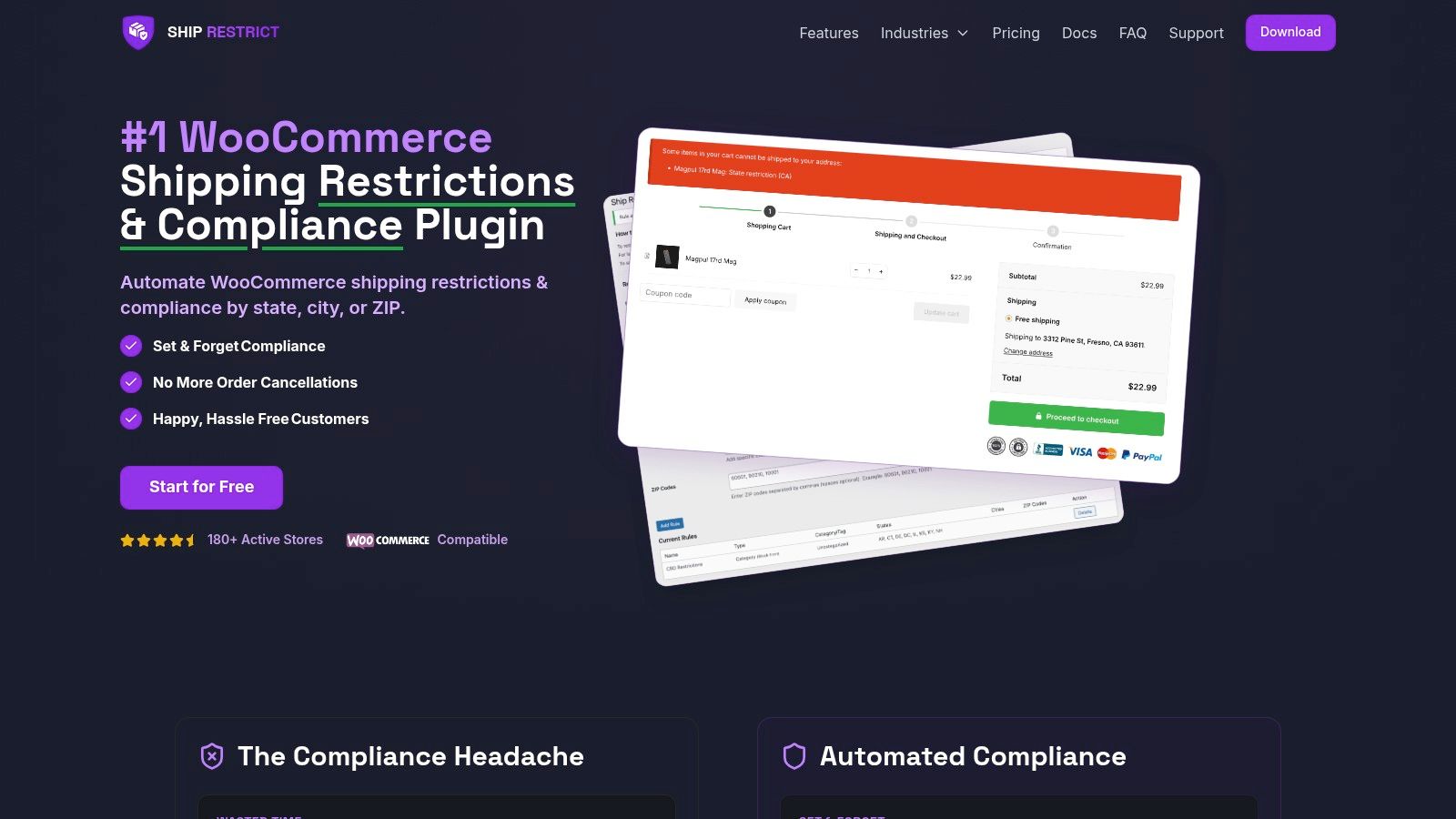
For regulated WooCommerce stores, the practical standard is granular restriction logic. State-level rules alone usually aren't enough. You need the ability to block or allow based on combinations like state, county, city, or ZIP, depending on the product and destination.
That matters because broad rules create two problems. They either block too much and frustrate legitimate buyers, or they miss a narrower restriction and force staff to clean up the order later.
A plugin such as Ship Restrict's automation approach for WooCommerce compliance is built around that operational need. It lets merchants create granular shipping restriction rules and stop restricted orders before checkout is completed. That's the right place to solve the problem because the customer gets a clear answer before payment capture and your team doesn't have to perform repeated manual checks.
The trade-off most stores get wrong
Some merchants worry that strict automated blocking will hurt conversions. Usually the opposite is true. Poorly communicated restrictions hurt conversions. Clear automated enforcement protects trust.
The trade-off is not automation versus flexibility. It's early clarity versus late disappointment.
A practical setup usually includes:
- Granular destination rules: Avoid overblocking with rules that match the actual legal boundary.
- Custom customer messages: Explain why the order can't proceed and what the buyer can do next.
- Bulk rule management: Keep updates manageable when laws or product categories change.
- Admin visibility: Make it easy for staff to confirm which rule triggered the block.
Field note: If your staff has to manually explain the same restriction more than a few times a week, your store hasn't automated the right part of the buying journey.
Where automation helps support teams
A lot of people think of compliance automation as a legal safeguard. It is, but the customer service impact is just as important.
When the website catches issues early and explains them well, support no longer has to play detective. Instead of digging through addresses, product classes, and local rules, the team can answer the customer's next real question. Can I ship this another way? Is there a compliant alternative? Do I need an FFL transfer?
That changes the tone of support from defensive to helpful. It also improves resolution quality because the customer arrives with more context.
What doesn't work
Some setups look automated but still fail customers:
| Approach | Why it underperforms |
|---|---|
| Broad state-only blocks | They can reject valid orders and create unnecessary frustration |
| Generic error text | Customers don't know whether the issue is legal, technical, or temporary |
| Post-order manual cancellation | This wastes the customer's time and creates refund friction |
| Unowned rule updates | Outdated logic erodes trust fast |
How to improve customer satisfaction in this category isn't mysterious. Remove preventable errors before the buyer commits, explain restrictions clearly, and enforce rules the same way every time. Automation is the mechanism that makes that possible.
Develop a Proactive Customer Communication Strategy
Even with strong checkout logic and automated rule enforcement, customers will still have questions. That's normal. The difference between a frustrating store and a trusted one is how those questions are answered.
A reactive support team waits for the complaint and improvises. A proactive team prepares explanations for the exact moments that create tension. In firearms eCommerce, those moments are predictable. ZIP code restrictions, transfer questions, item removals, and order alternatives come up again and again.

Build scripts that sound informed, not robotic
The job isn't to copy legal text into an email. The job is to translate the restriction into a usable next step.
These templates work better when your team personalizes them lightly.
We checked the destination details on your order, and this item can't ship to your ZIP code because of local shipping restrictions. The issue is with destination eligibility, not your payment. If you'd like, we can help you review compliant alternatives or confirm whether a transfer option applies to this item.
That answer does three things. It identifies the problem, removes unnecessary uncertainty, and opens a path forward.
For FFL-related confusion, use something like:
Some products require additional transfer handling based on the item and destination. If you send us your preferred local dealer information, we can review the available next steps and let you know what's compliant for this order.
For blocked-cart frustration, keep the tone calm:
I understand this is frustrating. The restriction is tied to the shipping destination, and our checkout blocks those orders automatically so we don't process a purchase that can't legally ship. We can help you check alternative items or review another compliant fulfillment path.
Write for clarity across channels
A good script fails if the customer never sees it. Many stores focus on email copy but ignore deliverability. If your restriction notices or order updates land in spam, customers experience silence, not service. For a practical checklist, MailGenius explains how to check if emails are going to spam, and that's worth reviewing if customers often say they never received your update.
Your communication stack should include:
- On-site messages: Immediate feedback during cart and checkout
- Transactional email: Confirmation of what happened and what comes next
- Support macros: Consistent replies for common compliance questions
- Help center content: Self-serve answers for repeat issues
Train staff to explain the why without sounding defensive
The wrong support tone in this category is cold certainty. “That's the law” may be accurate, but it ends the conversation badly.
Train your team on three habits:
- Acknowledge the frustration first: Customers want to feel heard before they hear policy.
- Name the reason plainly: Avoid jargon unless the customer asks for legal detail.
- Offer the next available action: Alternative item, documentation request, transfer path, or support review.
A simple internal resource like these customer service scripts for explaining shipping restrictions can standardize tone and reduce guesswork for newer staff.
Proactive communication starts before the ticket
The strongest communication strategy doesn't begin in the inbox. It begins when the product page, cart, checkout, and follow-up emails all tell the same story in the same voice.
That consistency is what makes a regulated store feel trustworthy. Customers don't need endless explanation. They need accurate explanation at the right moment.
Refine Post-Sale Workflows to Build Lasting Loyalty
Customer satisfaction doesn't end when payment clears. In firearms eCommerce, the post-sale phase often determines whether the customer remembers your store as disciplined or difficult.
Fulfillment needs to feel compliant and predictable. If an order requires an extra step, say so early. If a product category has special handling, reflect that in confirmation messaging, status updates, and support replies. Stores lose goodwill when post-sale communication changes tone or detail level after checkout.
Make fulfillment and returns feel consistent
The stores that keep trust after the sale usually do a few simple things well. They don't improvise around exceptions, and they don't force the customer to decode internal process changes.
A clean post-sale workflow should include:
- Order confirmation that matches checkout expectations: No new surprises after purchase
- Status updates tied to real milestones: Keep language plain and useful
- Returns guidance that distinguishes legal limits from store policy: Customers should know what's restricted by law and what's your operational choice
- Support handoff notes: If a customer already asked about a destination issue, the next rep shouldn't restart the conversation
A compliant order can still become a bad experience if fulfillment communication feels vague or inconsistent.
Use compliance data as a retention tool
Many stores leave value on the table in this area. Compliance data isn't just defensive. It can support smarter retention.
An emerging trend highlighted in Kangaroo Rewards' WooCommerce engagement guidance is linking compliance data with loyalty programs. Automating rule updates and tying them to rewards for customers in compliant ZIP codes can lift repeat purchase rates by 25%.
That idea matters because it shifts compliance from “what we can't do” to “how we serve the right customers better.” A few examples:
- Customers in clearly serviceable regions can receive faster educational follow-ups about related products.
- Shoppers who hit a restriction can be directed to compliant alternatives instead of disappearing from your list.
- Customers with repeat compliant purchases can receive customized loyalty offers that reflect what your store can fulfill reliably.
Build loyalty around reliability, not discounts
In regulated retail, reliability is the retention engine. If a customer believes your store handles rules correctly, communicates clearly, and fulfills orders without surprises, they're more likely to come back.
That's a stronger foundation than constant promotions. Discounts may pull the first order forward. Trust earns the next one.
Your High-Satisfaction Playbook for 2026
How to improve customer satisfaction in a firearms WooCommerce store comes down to one operating principle. Remove uncertainty where regulation creates friction.
Measure the moments generic eCommerce stores overlook. Redesign checkout so restrictions are visible before the final step. Automate compliance so customers get consistent answers instead of manual cleanup. Train support to explain restrictions with empathy and next steps. Then use post-sale data to strengthen retention, not just reduce risk.
The expert move is to prioritize these changes with driver analysis instead of instinct. As explained in Drive Research's guidance on improving customer satisfaction, companies that use regression-based driver analysis can identify which factors account for the largest share of satisfaction outcomes. In regulated eCommerce, drivers such as validation speed and message transparency typically account for 70% of score variance, and applying that method can lift CSAT by 15-25% in 3-6 months.
If you're planning for the next cycle of customer service improvements, broader market thinking also helps. reruptionchat's Analyse der Kundenservice-Zukunft is a useful read for how service expectations are shifting in eCommerce.
The stores that win in 2026 won't be the ones pretending compliance is invisible. They'll be the ones using it to create a cleaner, clearer, more trustworthy buying experience.
If you want to reduce restricted-order mistakes, explain shipping rules more clearly, and make your WooCommerce checkout feel more predictable for customers, Ship Restrict is built for that job. It helps firearms retailers automate granular shipping restrictions before checkout, replace manual address checks, and give shoppers clearer answers at the point where satisfaction is usually won or lost.
Automate Shipping Compliance
Stop worrying about restricted states. Ship Restrict handles it automatically.

Cody Yurk
Founder and Lead Developer of ShipRestrict, helping e-commerce businesses navigate complex shipping regulations for regulated products. Ecommerce store owner turned developer.
Automate Shipping Compliance
- Block restricted states
- No more cancellations
- Set and forget
3-day free trial · Card required