Dynamic Pricing Example: Boost Regulated Retail Profit
Explore a dynamic pricing example in regulated retail. Optimize for shipping compliance, manage risk, and boost profit effectively in 2026.
You're probably dealing with the same problem many regulated merchants hit after they finally get traffic. Orders come in from places you can't serve, checkout rules live in someone's head, customer service spends half the day explaining why an address won't work, and every product launch raises the same question: can we legally ship this there?
That's where the usual dynamic pricing example falls short. Most articles talk about airlines, hotels, or surge pricing. They don't help much when your store sells firearms, ammunition, or other products that trigger state, county, city, age, carrier, and dealer restrictions all at once. In regulated e-commerce, dynamic pricing isn't only a revenue lever. It's part of the control system that keeps bad orders from turning into legal exposure.
Digital platforms made this possible because they can update prices continuously instead of relying on fixed lists. Salesforce describes dynamic pricing as real-time adjustment based on signals like demand, inventory, competitor actions, customer behavior, and seasonal trends, with automation pushing those updates across e-commerce sites, booking engines, and mobile apps in real time in its overview of how dynamic pricing works in digital commerce. That same article notes a widely cited Amazon example where prices reportedly change about every 10 minutes, which shows how quickly modern pricing logic can react.
If you run a WooCommerce store in a regulated category, the more useful version combines dynamic pricing with dynamic restrictions. That means price, availability, shipping method, and checkout eligibility all change together based on compliance rules. For a broader retail framing, see these dynamic pricing strategies.
Automate Shipping Compliance
Block orders to restricted states automatically. 3-day free trial.
Start Free Trial1. Ammunition and Firearms Retailer Shipping Compliance
A practical dynamic pricing example in regulated retail starts before the price itself. It starts with whether the order should proceed at all.
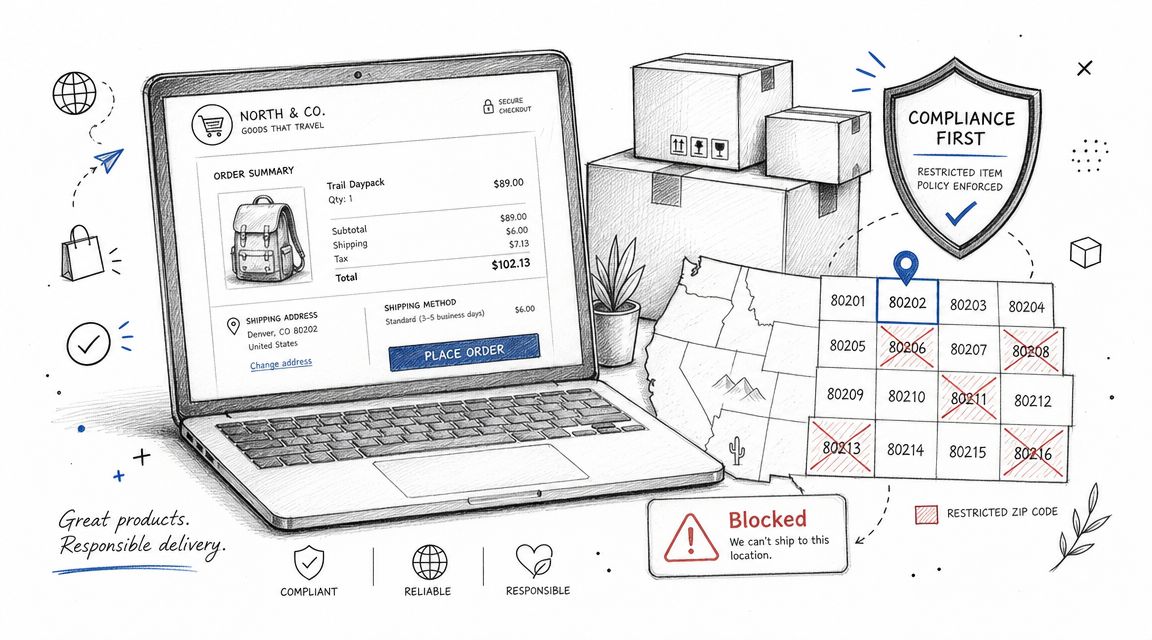
Large firearms and ammunition sellers already treat address validation as a business rule, not a customer service task. A customer enters a shipping address, the store checks state, county, city, and ZIP-level restrictions, then either blocks the order, reroutes it, or allows it with the correct handling logic. That's the difference between a scalable store and one that creates compliance debt with every sale.
Palmetto State Armory, Brownells, and Federal Ammunition are well-known examples of merchants that restrict shipments based on jurisdiction and product type. The specific lesson isn't just “block restricted states.” It's that restriction logic has to be granular enough to catch county and city carve-outs, because those are often where merchants get tripped up.
Where pricing fits
Once you've decided where you can legally ship, dynamic pricing can absorb the extra cost of compliant fulfillment. Some regions create more manual review, more labeling requirements, more carrier constraints, or more transfer coordination. Instead of eating that complexity everywhere, merchants can apply location-based shipping charges, availability controls, or stricter free-shipping thresholds where compliance overhead is higher.
That approach is much safer than using price as the first lever. One academic-business framing highlighted in this review of dynamic pricing models and guardrails says teams should ask four questions first: whether price is the right lever, whether customers will notice, what motivates the purchase, and whether the customer has a valid alternative. In regulated categories, that framework matters because availability is often the primary constraint, not price.
Practical rule: Block first, price second. If a destination isn't compliant, no shipping fee or discount should ever rescue the order.
A strong setup usually includes:
- Jurisdiction mapping: Build product-specific rules by state, county, city, and ZIP before launch.
- Customer messaging: Explain why an order is blocked so support doesn't have to reconstruct the rule after the fact.
- Scheduled rule maintenance: Update restrictions as laws and carrier policies change.
- Category testing: Test ammunition, serialized firearms, accessories, and restricted parts separately because they often follow different rules.
2. Multi-State Licensing and FFL Dealer Restrictions
A merchant can be right on product legality and still fail on dealer workflow. That happens when the store treats all FFL destinations as interchangeable.
A multi-state seller usually works with a patchwork of dealer relationships, license statuses, shipping permissions, and state-specific transfer requirements. If your system can't tell the difference between “we can ship this to that dealer” and “that dealer exists,” you're relying on staff memory at the worst possible point in the order flow.
Build the rule around the license, not the cart
Regional distributors and manufacturer direct-to-dealer programs often maintain internal lists of approved recipients, license types, and serviceable territories. The cleaner implementation is to make dealer eligibility part of checkout validation. That means the order only moves forward when the receiving FFL, product type, and destination state line up.
Free Shipping Compliance Audit
We'll review your WooCommerce store's shipping compliance for free.
This is also where many merchants misuse dynamic pricing. They try to smooth over operational friction with generic shipping charges. That doesn't fix the root problem. The right move is to tie shipping options and any dealer-handling charges to verified dealer pathways only.
A useful comparison comes from a pricing case study summarized in this article on dynamic pricing strategies with guardrails. A large U.S. mass retailer used a competitive-response engine, but kept it constrained with a minimum-margin floor and an absolute price cap. The reported result was net price realization 180 basis points above the prior year over four quarters, with no observed market-share loss in the affected categories. For regulated merchants, the lesson isn't competitor scraping. It's the guardrail design. Your pricing logic should never override dealer eligibility, license validity, or minimum viable margin.
What works in practice
Merchants with multi-state operations usually get better results when they separate these controls:
- Dealer validation rules: Which dealers can receive which products.
- License monitoring: Expiration dates, document storage, and renewal follow-up.
- Shipping method restrictions: Which carriers and services are allowed for each dealer path.
- Margin protection: Floors that prevent compliance-heavy orders from becoming loss-making orders.
The fastest way to create risk is to let operations “fix it after purchase.” In regulated e-commerce, bad dealer routing should fail before payment capture.
3. Age and Background Check Verification Compliance
Age gates that only ask a customer to click “I'm over 18” aren't compliance systems. They're weak friction.
For firearms, ammunition, and adjacent restricted products, the store needs to decide when verification happens, what products trigger it, and whether the order should route to an FFL transfer. If that logic sits outside checkout, staff will spend their day chasing documents and cleaning up orders that should never have been accepted.
Verification should happen early
The safest pattern is to verify age-related eligibility before payment is finalized, then layer any product-specific transfer requirements on top. That keeps inventory, fraud review, and compliance review from colliding after the transaction is already in motion. It also gives the customer a cleaner explanation of what happens next.
WooCommerce merchants that need a stronger workflow usually pair category-level restrictions with pre-checkout gating and dealer selection. If your process still relies on manual review after the order confirmation email, you're already late. A more structured approach appears in these age verification best practices for regulated products, especially for stores that need to combine age checks with shipping restrictions.
Another reason to be careful here is customer trust. Dynamic pricing and dynamic eligibility can both feel arbitrary if they aren't explained. Practitioner guidance in this piece on using dynamic pricing without losing customer trust argues for guardrails, transparency, and regular audits because shoppers react badly when prices or policies feel opaque, personalized, or inconsistent across channels.
Better pattern for the checkout flow
The stores that handle this well usually do four things consistently:
- Gate by product type: Handgun-related flows, long-gun flows, and ammunition flows shouldn't all behave the same way.
- Route to verified dealers: If transfer is required, make dealer selection part of the order path.
- Message the next step clearly: Customers should know whether they need age verification, dealer coordination, or both.
- Keep channels aligned: Product page, cart, checkout, and post-purchase emails should say the same thing.
When age and transfer logic are predictable, pricing complaints usually drop as well. Customers can tolerate constraints they understand. They resent surprises.
4. California and New York Compliant Product Restrictions
Some states force you to think less like a merchant and more like a policy engine. California and New York are the common examples because product legality, sale conditions, and fulfillment timing can vary enough that “ship to state” is too blunt a rule.
A merchant with broad national inventory often learns this the hard way. The catalog looks complete until you start matching individual products against state-specific restrictions, roster issues, serialization requirements, waiting periods, or related transfer conditions. Suddenly the actual problem isn't merchandising. It's product eligibility by destination.
Availability often matters more than discounting
This is one of the clearest cases where dynamic pricing shouldn't be your first move. If an item isn't compliant for a given destination, changing the price is irrelevant. The smarter lever is dynamic availability: show the product as unavailable, hide it entirely for that jurisdiction, or direct the customer to a compliant alternative.
That's consistent with the broader argument from the earlier academic decision framework. Before changing price, ask whether price is the variable that will influence the purchase. In a state-restricted environment, legal availability often dominates every other commercial factor.
For California-focused or New York-focused sales, merchants usually need a product data model that tracks state-relevant attributes in detail. Not just category. Specific characteristics that determine whether the product may be offered, transferred, delayed, or blocked.
Operational habits that reduce errors
Three practices make these stores much easier to manage:
- Separate compliant inventory logic: Don't rely on generic category tags when a product attribute determines legality.
- Explain state-specific holds: If processing timelines differ by state, say so before checkout.
- Review catalog syncs carefully: Product imports can accidentally expose items in restricted jurisdictions if mapping is loose.
A lot of stores think of this as a catalog issue. It's really a rules issue. The catalog only becomes accurate when destination rules and product attributes are connected tightly enough that a customer never sees an item they can't legally buy.
5. Shipping Carrier and Method Compliance Restrictions
Carrier logic is where many regulated stores leak money. The order is legal. The product is legal. The destination is legal. Then someone selects the wrong service level, misses a signature requirement, or uses a carrier that doesn't permit that shipment type under the merchant's account setup.
That's why a solid dynamic pricing example in this space includes carrier selection, not just product pricing. Cost and compliance are tied together.
The shipping method is part of the rule engine
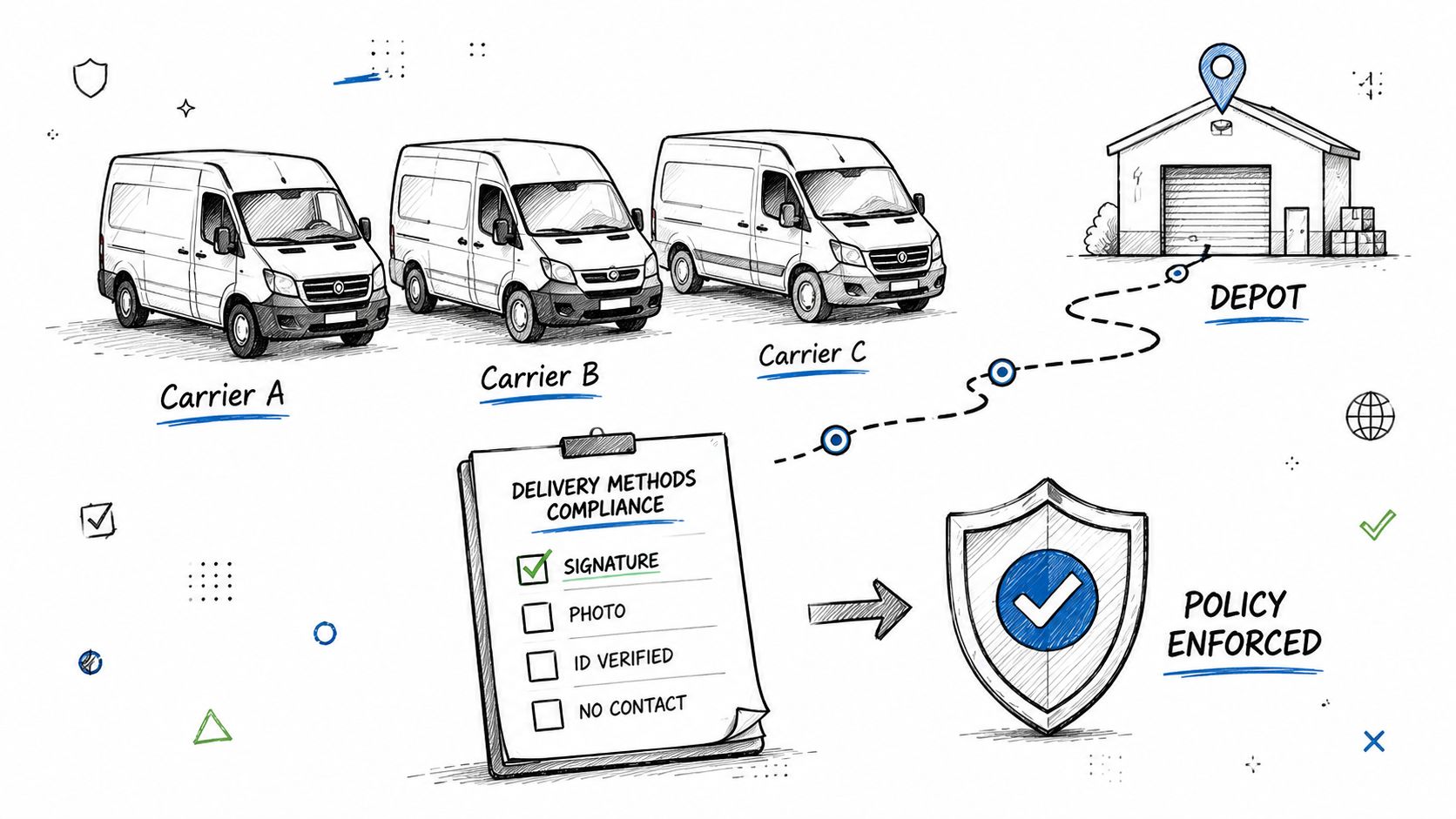
Different carriers handle firearms, ammunition, signatures, business delivery requirements, and restricted destinations differently. If your checkout treats shipping methods as a simple customer choice, you're asking the shopper to make a compliance decision they aren't equipped to make.
The better pattern is to decide carrier and method server-side, based on product class, destination, and required handling. Then you expose only compliant options. If that method costs more because of signature requirements, adult verification, dealer delivery, or specialized handling, the store can reflect that cost automatically.
This is where digital pricing systems shine. Automation can push changes quickly across storefronts and channels instead of relying on manual price lists or stale shipping settings. At enterprise scale, the need for speed is obvious. One industry summary says Amazon's dynamic pricing system reportedly updates prices about 2.5 million times per day and attributes a 25% revenue increase to that approach, while also saying dynamic pricing typically lifts profits by 5% to 8% on average and that AI-powered systems can raise gross profits by up to 22%, according to this roundup of dynamic pricing ROI case studies. A regulated merchant doesn't need Amazon-level volume to use the same principle. The takeaway is that automated adjustment beats manual upkeep when rules change fast.
Carrier control points worth enforcing
- Product-to-carrier mapping: Not every item should display every shipping method.
- Required service flags: Signature or dealer-only delivery should be automatic where needed.
- Transit-time buffers: Compliance-sensitive shipments shouldn't promise timelines that your workflow can't support.
- Checkout messaging: If only one service is valid, explain why instead of making it look like a bug.
6. County and Local Jurisdiction Restriction Enforcement
State-level compliance feels manageable until a city or county changes the answer.
That's why stores that only maintain state rules often end up with the most avoidable mistakes. A shipment can be lawful at the state level and still create a local compliance problem. In categories like firearms and ammunition, that gap matters more than many merchants expect.
ZIP code checks aren't enough by themselves
A basic ZIP code block can catch obvious restrictions, but it won't always resolve edge cases cleanly. ZIP codes can cross city boundaries, local rules change unevenly, and product restrictions may differ even inside the same state. Merchants serving places like New York City, Chicago, or restrictive California localities usually need county and city logic that sits on top of state rules, not underneath them.
The merchants who handle this well usually narrow their service footprint before they try to widen it. They don't rush into every jurisdiction they could theoretically serve. They choose the places they can defend operationally, then expand only when rule maintenance is stable. For WooCommerce stores, these county-level shipping restriction practices are a better model than state-only blocking.
Field note: Local restrictions create support tickets when your front end is vague. They create legal problems when your backend is vague.
A better enforcement pattern
County and local enforcement works best when the stack does all of this:
- Evaluates full destination hierarchy: State, county, city, and ZIP.
- Resolves edge cases deliberately: Don't assume ZIP always equals jurisdiction.
- Attaches rules to product classes: Accessories, ammunition, complete firearms, and parts may need different outcomes.
- Shows targeted messaging: “Unavailable in your jurisdiction” is more useful than a generic checkout failure.
There's also a commercial upside. When the store blocks inaccessible markets early, inventory gets reserved for markets you can serve. That improves fulfillment discipline and reduces the operational drag of orders that were never viable.
7. Inventory-Based Dynamic Shipping Cost and Availability Adjustments
Dynamic pricing is often sold as a margin tool. In regulated retail, it's often better used as a pressure valve.
When inventory gets tight, compliance costs rise, or certain regions become expensive to serve, the smartest move may be a shipping surcharge, a location-based availability rule, or a hold on sales to low-priority zones. That's not glamorous. It's effective.
Use pricing to protect operations, not just margin
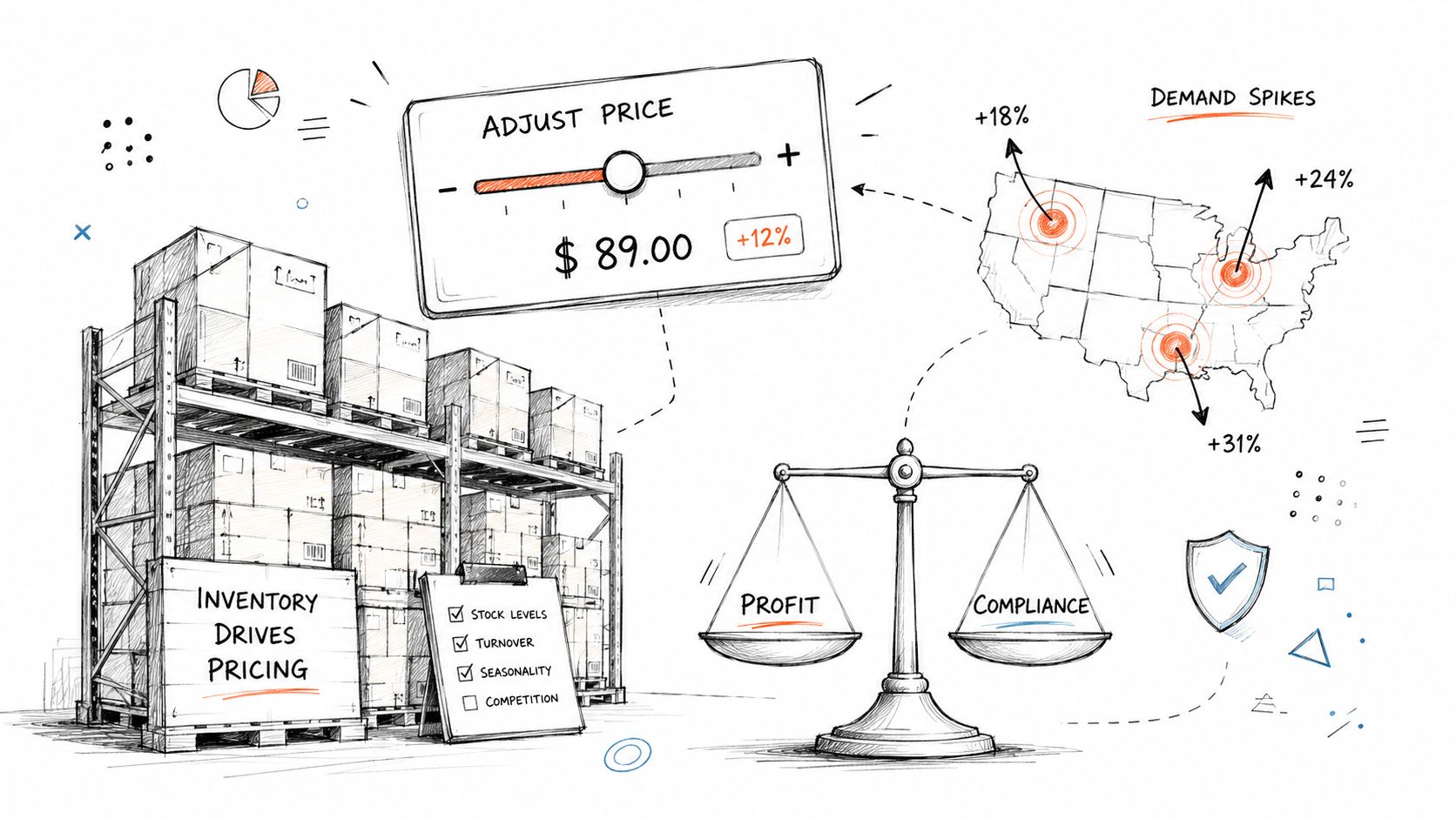
Ammunition sellers see this clearly during demand spikes. If a product is moving fast and fulfillment complexity differs by destination, equal shipping treatment across all regions often makes the least sense. Some zones require more review, more support, more constrained carrier options, or more risk tolerance than others.
Location-based pricing is a legitimate dynamic pricing approach, and Salesforce notes that real-time pricing can use inputs like demand, inventory, competitor pricing, and customer behavior, while location-based pricing may also reflect regional demand or regulatory factors, as described earlier. For regulated sellers, the most practical version is usually shipping-cost logic and availability logic, not personalized item pricing.
That only works if you know your true economics. Before adding rule-based surcharges or regional availability controls, merchants need to understand your landed costs. Otherwise they're guessing which orders are profitable.
A restrained model usually performs better
Merchants tend to get cleaner results with a modest rule set:
- Inventory thresholds: When stock falls below a set level, restrict certain regions or remove promotional shipping.
- Compliance-weighted zones: Higher-friction destinations carry higher shipping charges or fewer options.
- Transparent messaging: Explain that shipping varies by destination and handling requirements.
- Fallback alternatives: If a region becomes too costly to serve, offer dealer transfer or delayed fulfillment where appropriate.
If you're building this into WooCommerce, these location-based pricing strategies for restricted shipping zones are much more relevant than generic surge-pricing playbooks.
8. Scheduled Regulatory Update Automation and Notification System
The dangerous part of compliance isn't only getting a rule wrong. It's leaving a once-correct rule untouched after the law, roster, carrier policy, or license status changes.
That's why strong regulated stores treat rule updates like system maintenance, not like occasional admin work. If restrictions are changing but your store logic depends on manual edits when someone remembers, your compliance model is fragile.
Schedule the rule changes, then alert humans
The most reliable setup combines automatic rule updates where possible with human review for anything ambiguous. That means tracking agency updates, roster changes, internal dealer data, and license expiration events on a schedule. Then the platform should notify staff when a change affects checkout eligibility, shipping methods, or product availability.
The safety of automation hinges on its governance. Dynamic pricing guidance from Salesforce stresses connected data, clear rules, and automation that updates consistently across channels, as noted earlier. In a regulated environment, add one more requirement: an audit trail. If a product was blocked, allowed, or rerouted, you should be able to show which rule made the decision and when it was last updated.
The notification layer is where risk gets contained
A useful operating model usually includes:
- Tiered alerts: Urgent changes for immediately affected products, standard changes for routine maintenance, informational notices for upcoming review.
- Staging before production: Test new rules before they affect live checkout.
- Rule history: Keep timestamps and notes for every restriction update.
- Regular review cadence: Operations, legal, and store admins should review changes together, not in isolation.
The stores that invest here usually stop firefighting. They spend less time explaining exceptions and more time refining policy. That's one of the clearest business cases for custom workflow tooling. If your stack still depends on plugins plus spreadsheets plus inbox reminders, it may be time to evaluate the broader custom software development benefits for businesses for a regulated commerce operation.
Dynamic Pricing: 8-Point Compliance Comparison for Firearms Retail
| Scenario | Implementation Complexity 🔄 | Resource Requirements ⚡ | Expected Outcomes ⭐📊 | Ideal Use Cases 💡 | Key Advantages ⭐ |
|---|---|---|---|---|---|
| Ammunition and Firearms Retailer Shipping Compliance | High, multi-jurisdiction mapping & dynamic rules | Medium–High, regulatory feeds, dev + maintenance | Strong compliance, fewer chargebacks, scalable enforcement | Major online retailers with nationwide sales | Prevents illegal shipments, reduces manual checks, transparent messaging |
| Multi-State Licensing and FFL Dealer Restrictions | Medium–High, dealer verification & geofencing | Medium, FFL DB integration, license tracking | Ensures FFL compliance, lowers ATF audit risk | FFL networks, multi-state dealer operations | Automates license checks, prevents unlicensed shipments |
| Age and Background Check Verification Compliance | Medium, identity/age verification + routing | Medium, verification services, FFL directory | Blocks ineligible buyers, reduces fraud and chargebacks | Sellers of handguns/age-restricted items | Early blocking of non-compliant orders, streamlined FFL transfers |
| California and New York Compliant Product Restrictions | High, product-to-roster mapping, waiting period logic | Medium–High, roster feeds, frequent product updates | Avoids non-compliant sales, automates wait-time enforcement | Retailers shipping to CA, NY or other strict states | Maintains roster compliance, reduces state-specific liability |
| Shipping Carrier and Method Compliance Restrictions | Medium, carrier policy logic and selection | Medium, carrier integrations, policy monitoring | Fewer carrier rejections, correct handling applied | High-volume shippers needing compliant carriers | Automates carrier/method choice, reduces delivery disputes |
| County and Local Jurisdiction Restriction Enforcement | Very High, granular local data and hierarchy management | High, extensive local research, constant maintenance | Prevents hyper-local non-compliance, reduces local risk | Retailers serving many municipalities/urban areas | Granular enforcement across county/city/ZIP, captures local nuances |
| Inventory-Based Dynamic Shipping Cost and Availability Adjustments | Medium–High, inventory + pricing rule integration | Medium, inventory systems, analytics, pricing engine | Optimizes margins, prevents overselling, allocates compliance costs | High-demand products, constrained inventory situations | Dynamic cost allocation, improved profitability under constraints |
| Scheduled Regulatory Update Automation and Notification System | Medium, scheduled feeds, versioning, alerts | Medium, reliable data sources, alert infrastructure | Keeps rules current, reduces missed updates and audit exposure | All regulated retailers needing timely rule updates | Automates monitoring, provides audit trail and rollback capability |
From Reactive to Proactive: Your Compliance Roadmap
The biggest misconception about dynamic pricing is that it starts with price. In regulated e-commerce, it usually starts with permission. Can you sell the item to that customer, in that place, through that carrier, with that dealer workflow, under the current rule set? If the answer isn't clear and automated, pricing optimization is built on top of uncertainty.
That's why the most useful dynamic pricing example for firearms and other regulated merchants doesn't look like surge pricing. It looks like coordinated control over availability, shipping methods, fulfillment timing, location rules, dealer routing, and compliance-weighted costs. Price is one output. Restriction logic is the foundation.
This approach also resolves a common tension in regulated commerce. Merchants want efficiency, but they also need defensibility. Manual review can feel safe because a person is involved, yet it often creates inconsistency. One employee blocks an order. Another lets a similar one through. An automated rules engine, if it's mapped carefully and reviewed regularly, usually produces cleaner outcomes because it applies the same policy every time.
There's also a trust benefit when you do this well. Customers may not like every restriction, but they're far more likely to accept a rule that is predictable, visible, and explained before they've invested time in checkout. Hidden restrictions and last-minute reversals create the backlash. Clear boundaries reduce it.
For WooCommerce merchants, the practical roadmap is straightforward. First, map restrictions by product class and destination hierarchy. Second, connect those rules to checkout, shipping methods, and dealer workflows. Third, decide where dynamic pricing belongs and where it doesn't. In many regulated categories, shipping cost, availability, and service level are safer levers than personalized item pricing. Fourth, add scheduled updates, notifications, and rule history so your system stays current without constant scrambling.
The end result is more than compliance. It's a stronger operating model. Bad orders fail earlier. Staff spend less time on exceptions. Customers get clearer answers. Inventory goes to places you can legally and profitably serve. That's the shift from reactive to proactive, and it's what turns compliance from a drag on growth into part of the business strategy.
If you run a WooCommerce store that sells regulated products, Ship Restrict gives you the control layer this article describes. You can enforce shipping restrictions by state, county, city, or ZIP code before checkout, add clear customer messages, and replace manual address reviews with rules that scale. For firearms and ammunition merchants, that means fewer preventable errors, faster order handling, and a more defensible compliance workflow.
Automate Shipping Compliance
Stop worrying about restricted states. Ship Restrict handles it automatically.

Cody Yurk
Founder and Lead Developer of ShipRestrict, helping e-commerce businesses navigate complex shipping regulations for regulated products. Ecommerce store owner turned developer.
Automate Shipping Compliance
- Block restricted states
- No more cancellations
- Set and forget
3-day free trial · Card required