Drop Shipping Pros and Cons for Firearms Retailers
Thinking of dropshipping firearms or ammo? Weigh the drop shipping pros and cons for regulated eCommerce, from compliance risk to profit margins.
A retailer launches a firearms WooCommerce store, adds a broad catalog, and avoids buying inventory up front. Early orders come in. Then one supplier ships slower than promised, another sends incomplete tracking, and a restricted item gets routed with the wrong rules. The margin on those orders is still thin, but the compliance risk is fully yours.
That serves as the starting point for dropshipping in the FFL eCommerce field. The model can reduce upfront cash pressure and help a store test demand across optics, magazines, ammunition, cleaning gear, and other accessory categories. It also shifts day-to-day control to suppliers while leaving the retailer exposed to the operational and legal consequences of bad fulfillment.
In regulated commerce, fulfillment is never just a warehouse decision. It affects age-gated sales, state restrictions, carrier rules, payment processor tolerance, returns handling, and customer trust. Firearms retailers need to evaluate dropshipping through that lens, not through generic ecommerce advice built for apparel or home goods.
The right question is practical. Can your suppliers, checkout rules, and fulfillment workflows support compliant order handling at scale? If the answer is unclear, start with a compliant dropshipping framework for regulated products before you expand the catalog.
Automate Shipping Compliance
Block orders to restricted states automatically. 3-day free trial.
Start Free TrialFor firearms retailers, the pros and cons are sharper than in ordinary retail. Lower inventory exposure is real. So are supplier dependency, margin compression, weak shipment control, and liability when restricted products move through the wrong process.
1. Pro Low Startup Costs and Reduced Inventory Risk
A new FFL retailer can burn through cash long before the first profitable month. Inventory is usually the fastest way to do it.
Dropshipping reduces that pressure because you are not tying money up in stock that may sit for months. In the firearms and regulated-accessories space, that matters more than in ordinary retail. Cash that would have gone into shelves, storage controls, insurance, cycle counts, and dead inventory can go into the systems that keep the business sellable. That includes product data cleanup, checkout rules, tax setup, compliance screening, and customer service.
The advantage is simple. You can test demand before you commit capital.
That works well for accessory-heavy catalogs. A shop can add magazines, optics mounts, slings, cleaning kits, range bags, holsters, and lights without buying broad inventory up front. An ammo seller can test calibers and pack sizes before bringing pallet quantities into the building. For stores building on WooCommerce, wider catalog depth also helps the site look established earlier, which can improve conversion if the feed quality is good.
I usually recommend using dropshipping as a validation layer, not as the permanent plan for every SKU. Once products prove consistent demand, the economics often change. Fast-moving items may make more sense as stocked inventory because you get better margin, better shipment control, and fewer supplier-side surprises.
Low startup cost is real, but it only helps if the operation stays controlled.
- Watch feed accuracy closely: Delayed supplier feeds create oversells, cancellations, and support tickets. In regulated retail, that can also create compliance review work you did not need.
- Choose test categories carefully: Start with products that are easier to route and support operationally, rather than opening with the most restriction-heavy SKUs in the catalog.
- Negotiate before your volume provides significant influence: Ask about MAP enforcement, returns handling, blind shipping, damaged-order responsibility, and feed update frequency early.
- Build compliance into the checkout from day one: Cheap fulfillment becomes expensive fast if your store accepts orders that later have to be canceled. The operational fallout is outlined clearly in this breakdown of the true cost of shipping compliance violations, fines, fees, and consequences.
- Do not ignore privacy obligations while scaling the storefront: If you collect customer data for age-gated or regulated sales, review consent and data-handling practices alongside fulfillment workflows. IMADO's GDPR implementation strategies are a useful reference point for WordPress stores tightening that side of the stack.
Use dropshipping to learn what customers will buy. Then decide which SKUs deserve inventory, tighter control, and better margins.
Free Shipping Compliance Audit
We'll review your WooCommerce store's shipping compliance for free.
2. Con Compliance Complexity and Legal Liability
This is the part that kills weak operators.
In regulated retail, you can outsource fulfillment, but you can't outsource responsibility. If your store accepts an order that shouldn't ship to a specific state, county, city, or ZIP code, the supplier mistake becomes your customer problem first. In many cases, it becomes your processor problem right after that.
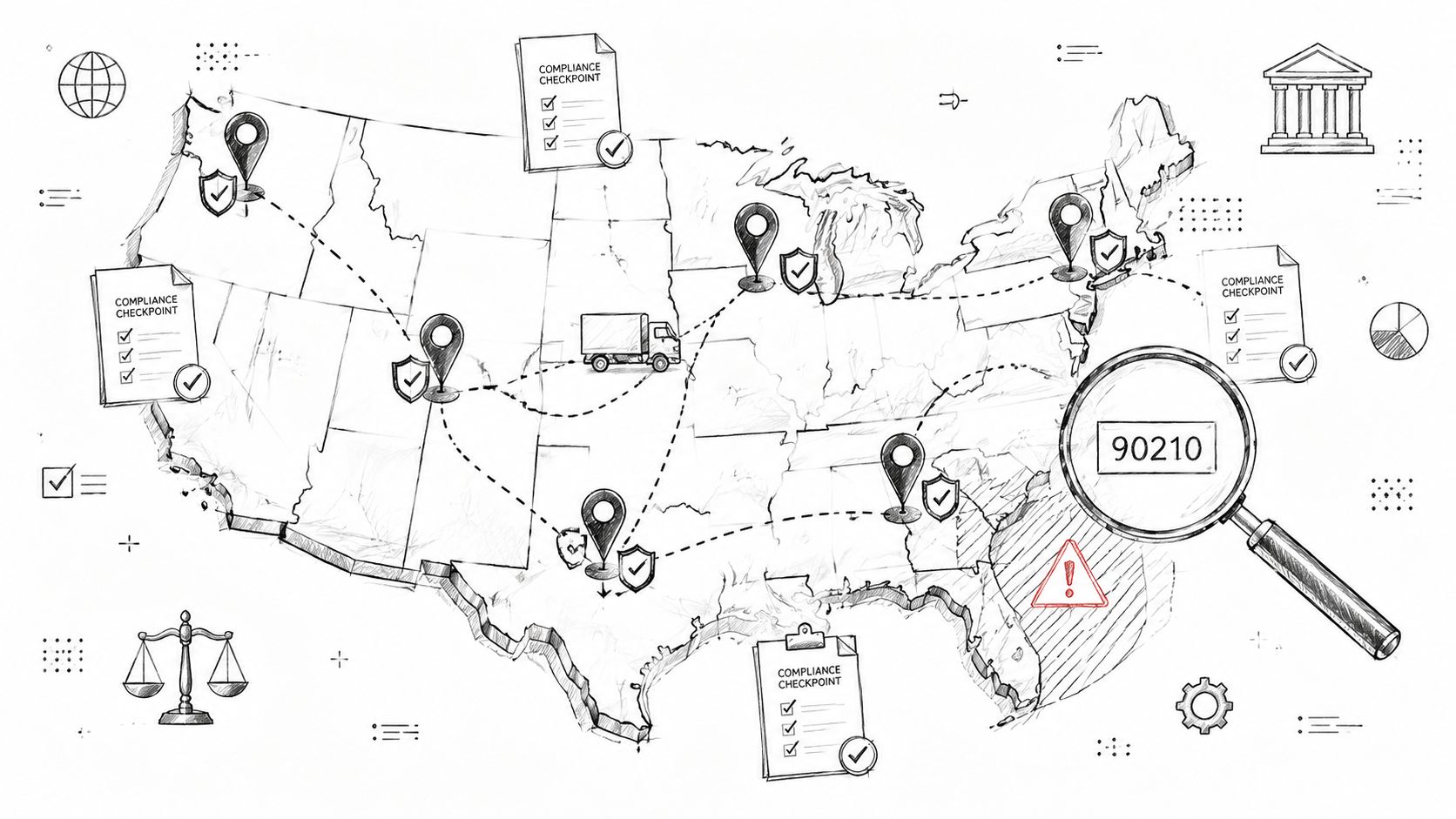
Firearms and ammunition retailers deal with a moving target. Product type matters. Destination matters. Local restrictions matter. Supplier policy matters. Carrier policy matters. If your catalog contains ammo, magazines, firearm parts, or complete firearms routed through transfer workflows, your checkout logic needs to reflect real-world restrictions before payment is captured.
What goes wrong in practice
A customer places an order late at night. Your store accepts it because the SKU is live and the cart functions normally. The supplier later flags the address, the item, or the jurisdiction. Now you've got a cancellation, an upset customer, possible fees, and an avoidable support ticket.
Multiply that by a product launch, a promotion, or a supplier feed issue and the damage stacks up quickly.
- Document restriction logic: Keep written rules for what can ship where, and why.
- Vet suppliers hard: Ask how they handle restricted destinations, stock sync, and order rejection workflows.
- Review new SKUs before publishing: Don't assume every muzzle device, magazine, or ammo line belongs in every market.
- Automate the front end: Manual review doesn't scale. The true cost of shipping compliance violations, fines, fees, and consequences is usually higher than retailers expect.
Customer data handling matters too. If your store collects sensitive customer information while managing restricted product transactions, disciplined privacy practices still matter. Teams tightening operations often borrow from adjacent compliance work, such as IMADO's GDPR implementation strategies, even though privacy compliance and shipping compliance solve different problems.
If you sell regulated goods online, checkout is part of your compliance system, not just your conversion funnel.
3. Con Limited Product Control and Quality Assurance
Dropshipping puts your reputation in somebody else's hands.
That's true for any ecommerce business, but it hits harder in firearms retail because buyers care about condition, packaging, lot consistency, and fitment. If a customer orders defensive ammunition, scope rings, a trigger component, or serialized-adjacent accessories, they expect the item to arrive in proper condition, packed correctly, and matching the product detail page. If it doesn't, they blame your store, not your supplier.
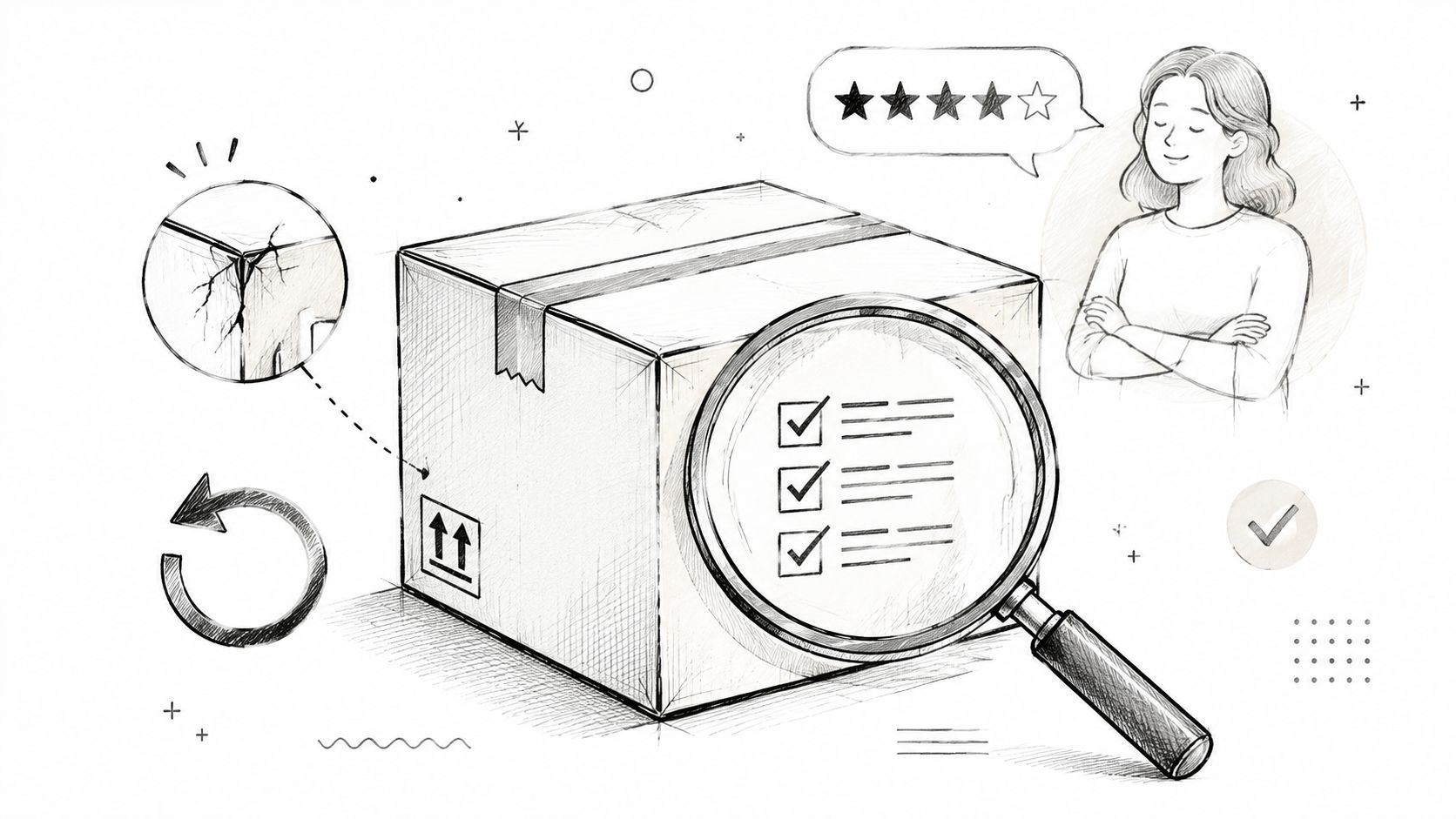
Published guidance on dropshipping points to the same weakness. Without direct inventory ownership, merchants have limited control over stock accuracy, shipping speed, and product consistency, which raises the odds of delays, cancellations, and negative reviews when supplier catalogs change or items are discontinued, as noted by BigCommerce's overview of dropshipping limitations.
Where quality issues show up
A customer orders 9mm ammunition and receives packaging that looks rough or inconsistent with what was advertised. A shotgun accessory arrives with generic packing material and no branded insert. A Cerakote-finished part shows up scratched because the supplier packed it loosely. None of these issues may be catastrophic alone, but each one erodes trust.
In regulated categories, trust is margin. Once customers think your store is a pass-through operation with weak oversight, they start comparison shopping on price alone.
- Order samples first: Don't list a supplier's catalog blind. Have products shipped to your team and inspect them.
- Set packaging expectations: If your supplier can't meet minimum presentation standards, remove the SKU.
- Track complaint patterns: One damaged order happens. Repeated complaints about one supplier or one line mean you have a process problem.
- Build a fast returns workflow: Slow resolution turns a supplier issue into a public review issue.
A lot of stores fail here because they treat quality control like a warehouse function. In dropshipping, quality control starts before the product is listed.
4. Con Reduced Profit Margins and Pricing Pressure
Dropshipping saves cash upfront, but it usually gives some of that savings back through weaker margins.
That's not a theory. Industry guidance places typical dropshipping profit margins at about 10% to 30%, versus 40% to 70% for traditional ecommerce, largely because supplier handling, storage, shipping, and insurance costs are baked into the wholesale price. In plain terms, you're buying convenience and flexibility. You're not buying pricing power.
Why margin gets squeezed fast
Firearms buyers comparison shop aggressively. Ammo buyers do it even more aggressively. If you're selling common calibers, popular optics accessories, or mainstream tactical products, there's a good chance several stores are offering near-identical listings sourced from overlapping distributor networks.
That creates a bad pattern. New retailers lower price to win the sale. Then shipping, payment costs, customer support time, and occasional exception handling eat what little margin was left. One compliance issue or one ugly return cycle can wipe out the profit from a batch of orders.
Strong operators don't try to win every cart on price. They win on reliability, stock clarity, and clean fulfillment.
A better approach is narrower and more deliberate.
- Sell where you can explain value: Compliance transparency and product expertise help more than shallow discounts.
- Favor specialty SKUs: Commodity products invite race-to-the-bottom pricing.
- Graduate winning items into stocked inventory: A hybrid model often works better than pure dropshipping for best-sellers.
- Push supplier negotiations as volume grows: If an item moves consistently, ask for improved terms or better freight handling.
If your only advantage is that you listed the same product as everyone else, your store is fragile. In this category, thin margins and operational mistakes are a bad combination.
5. Pro Automated Compliance Is Now Possible
A few years ago, a lot of regulated-product stores handled shipping restrictions with notes, memory, and manual order review. That approach was slow, inconsistent, and dangerous.
Now there's a better option. WooCommerce merchants can automate shipping restrictions before checkout completion, which changes the practical math of dropshipping regulated products. Automation doesn't remove legal responsibility, but it does reduce the odds that your staff accepts orders your business shouldn't process in the first place.
Why automation changes the model
Dropshipping already increases your dependence on outside fulfillment. If your internal team also has to manually verify every destination against a maze of restrictions, your operation won't scale cleanly. Staff get tired. Orders queue up. Judgment calls become inconsistent.
For a firearms retailer, that's where automation becomes more than a convenience tool. It becomes basic infrastructure. A resource like Ship Restrict's overview of automated shipping compliance for WooCommerce stores shows how rule-based enforcement can stop restricted orders before they become support issues.
Here's what that does in practice:
- Reduces preventable order fallout: Customers see restrictions earlier instead of after payment and review.
- Supports cleaner expansion: You can add new product categories or shipping regions with a more controlled process.
- Creates a record of enforcement: That helps with internal audits and staff consistency.
- Protects team time: Your staff can focus on exceptions instead of rechecking every routine order.
This is one of the few areas where a major con can be partially turned into an operational advantage. Stores that automate restrictions usually present a more professional buying experience because they're clearer upfront about what can and can't ship.
6. Con Slower Shipping and Weaker Customer Experience
Dropshipping often means slower fulfillment. Customers feel that immediately.
When your supplier ships the order instead of your own warehouse, you lose some control over cutoff times, pick-pack speed, tracking consistency, and exception handling. In regulated retail, those delays can get worse because certain items may need additional review steps, address verification, or supplier-side approval before the order moves.
The customer doesn't care whose fault it is
If a buyer orders magazines for a training weekend or ammo for an upcoming range trip, they're judging your store on whether the order arrives when expected. They won't separate your role from your supplier's role. They just remember that your store was slower than the next option.
That creates a retention problem. A first order with shaky communication, delayed tracking, or a late shipment often becomes a last order.
Use a few hard rules here:
- Show realistic timelines before purchase: Don't bury fulfillment expectations in policy pages.
- Choose suppliers with reliable tracking events: Silence after purchase drives support tickets.
- Use regional suppliers when possible: Reducing transit distance helps even when you don't control the warehouse.
- Automate compliance checks up front: The more you catch at checkout, the fewer delays you create after payment.
A slower order can still feel professional if your communication is clear. A vague order status almost always feels worse than the delay itself.
If fast delivery is central to your brand promise, pure dropshipping is usually a poor fit. A hybrid approach with stocked fast-movers and dropship-only long-tail items is often easier to defend.
7. Con Minimal Brand Control and Customer Relationship
A lot of firearms retailers underestimate this one because it doesn't show up on a P&L right away.
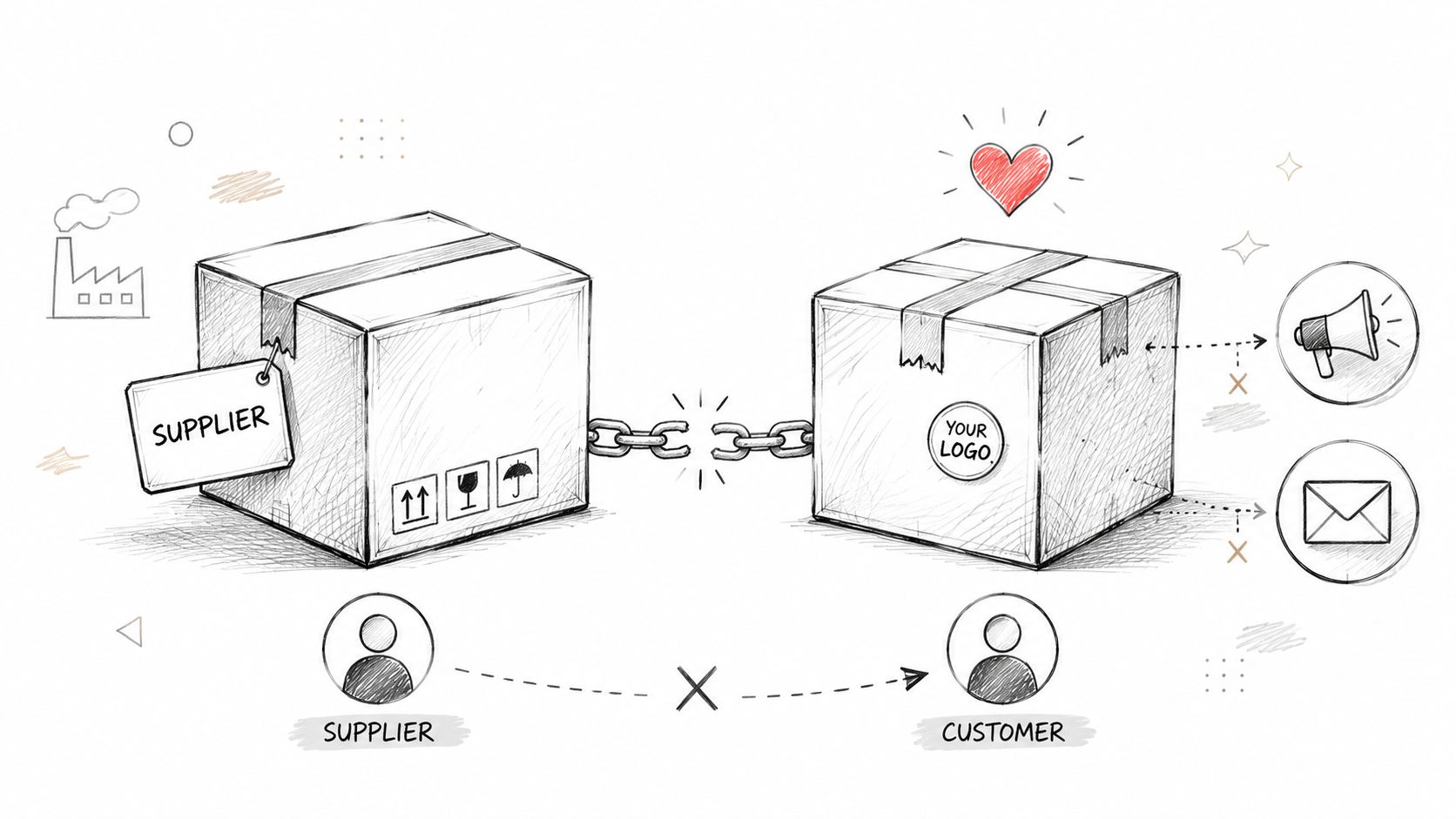
When a supplier handles fulfillment, your store can start to feel like a middle layer instead of a trusted retailer. The box may not look like yours. The insert may not mention your business. The experience can feel generic, even if your website and product pages are strong. In categories where buyers value expertise, safety, and confidence, generic is expensive.
Trust is part of the product
Customers buying regulated goods want clean answers. They want to know who they're dealing with, what restrictions apply, how returns work, and whether the retailer understands the category. If the order experience feels detached from your brand, you lose one of the few defenses smaller stores have against larger competitors.
That doesn't mean dropshipping makes branding impossible. It means you have to build brand in different places.
- Own the pre-purchase experience: Clear product data, restriction messaging, and policy visibility matter.
- Use post-purchase communication well: Order updates, compliance explanations, and support responsiveness build trust.
- Create educational content: Explain shipping restrictions, transfer expectations, and product differences in plain language.
- Ask suppliers about branded packing options: Some won't offer them. Some will if you ask early.
A store that can't beat large competitors on price should compete on confidence. In firearms ecommerce, confidence comes from clarity, not slogans.
8. Con Extreme Supplier Dependency and Lack of Control
Every dropship store depends on suppliers. Firearms retailers depend on them even more because the pool of acceptable partners is narrower.
That means your supplier doesn't just influence stock. They influence pricing, shipping speed, order acceptance, packaging quality, and practical compliance outcomes. If they change policy, raise prices, stop carrying a line, mishandle an order, or tighten destination rules with little notice, your storefront feels the hit immediately.
Dependency becomes risk concentration
Many stores get trapped in this situation. One supplier carries the hot SKUs. Another has better pricing but weaker fulfillment. A third is easier to work with but has inconsistent catalog hygiene. If you rely too heavily on one source for key products, your business becomes more brittle than it looks on the surface.
That's especially dangerous in regulated categories, where replacing a supplier isn't always quick or simple.
Build in redundancy wherever you can:
- Split important categories across more than one supplier: Don't leave core ammo or accessory lines tied to a single relationship.
- Set service expectations in writing: Stock sync, cancellation handling, restricted-destination logic, and returns should all be discussed early.
- Monitor supplier behavior, not just price: Cheap products from a chaotic supplier usually cost more over time.
- Keep your own compliance rules active: Don't assume supplier standards are enough to protect your store.
The weakest part of a dropship operation is usually the part the customer never sees: supplier process discipline.
For firearms retailers, supplier management is not a purchasing task alone. It's a compliance and brand-protection function.
Drop Shipping: 8-Point Pros & Cons
| Item | 🔄 Implementation Complexity | ⚡ Resource Requirements | ⭐ Expected Outcomes | 📊 Ideal Use Cases | 💡 Key Advantages & Tips |
|---|---|---|---|---|---|
| Pro: Low Startup Costs and Reduced Inventory Risk | Low, simple to launch but needs supplier setup | Low capital; moderate supplier integrations and compliance tooling | Reduced upfront investment, faster cash flow, lower inventory risk | New firearms retailers, niche/seasonal testing, low-capital launches | Lower barrier to entry; negotiate discounts, use multiple suppliers, monitor inventory, leverage Ship Restrict for compliance |
| Con: Compliance Complexity and Legal Liability | High, multi-jurisdiction rules and ongoing monitoring | High legal, compliance and tech resources; needs automation | Significant risk of fines, chargebacks, payment loss if unmanaged | Businesses able/willing to invest in compliance automation or avoid regulated SKUs | Automate rules with Ship Restrict, keep documentation, subscribe to regulatory updates, vet suppliers |
| Con: Limited Product Control and Quality Assurance | Medium, depends on supplier processes and audits | Requires QA workflows, sample verification, returns handling | Inconsistent quality, potential safety issues and higher returns | Low-risk accessories or items after supplier sample validation | Audit suppliers, request samples, set quality clauses in contracts, implement fast returns process |
| Con: Reduced Profit Margins and Pricing Pressure | Medium, needs active pricing strategy and differentiation | High marketing, customer service, and compliance investment to offset margins | Lower margins; pricing competition can threaten viability | Niche products, value-added/service-focused sellers, hybrid inventory models | Differentiate via service/compliance, negotiate rates as volume grows, use Ship Restrict to cut compliance overhead |
| Pro: Automated Compliance Is Now Possible | Medium, initial setup and rule configuration required | Moderate tech investment; ongoing rule maintenance | Strong reduction in compliance errors, chargebacks; scalable expansion | Multi-state retailers, regulated-product dropshippers | Configure comprehensive rules, use bulk rule creation, document audit trails, promote compliance as trust signal (Ship Restrict) |
| Con: Slower Shipping and Weaker Customer Experience | Low–Medium, supplier-dependent fulfillment timing | Requires supplier selection, communications automation, regional partners | Longer delivery times, potential negative reviews and churn | Non-urgent items or retailers who clearly communicate timelines | Set clear expectations, offer shipping tiers, use regional suppliers, automate notifications, use Ship Restrict to avoid compliance delays |
| Con: Minimal Brand Control and Customer Relationship | Low–Medium, limited control over packaging and touchpoints | Invest in marketing, content, CRM to capture customer data | Weaker brand loyalty and reduced customer lifetime value | Sellers combining dropship with owned inventory or strong content strategies | Build brand around compliance, use email outreach, request branded packaging, highlight Ship Restrict compliance to build trust |
| Con: Extreme Supplier Dependency and Lack of Control | High, supplier changes directly impact business continuity | Requires supplier diversification, contracts, SLAs and monitoring | Vulnerability to price hikes, stockouts and supplier failures | Businesses with supplier networks or those maintaining buffer inventory | Diversify suppliers, negotiate price-locks/SLAs, monitor supplier health, keep backups, enforce compliance rules with Ship Restrict |
Your Decision Checklist Should You Dropship Regulated Goods
Dropshipping firearms, ammo, and accessories isn't a simple yes-or-no decision. It's a business model with real advantages, but it punishes sloppy operators fast.
The upside is obvious. You can enter the market without tying up cash in inventory, expand your catalog faster, test demand before buying deep, and avoid a lot of warehouse overhead. For a small or mid-sized WooCommerce store, those are meaningful advantages. They can buy you time to learn what customers want before you commit capital to stocking it.
The downside is just as real. You give up control over fulfillment quality, shipping speed, and parts of the customer experience. You accept thinner margins. You become dependent on suppliers whose systems, policies, and discipline may not match your own. In regulated retail, all of that sits on top of the biggest issue of all, which is compliance risk.
If you're making this call, ask yourself three direct questions.
- Am I prepared for thin profit margins? If your operation depends on healthy per-order spread, dropshipping may disappoint you quickly.
- Do I have a trusted network of compliant suppliers? If you don't trust their stock data, packaging, and restricted-destination handling, your store will absorb the fallout.
- Am I willing to invest in automated compliance? This is not optional in regulated ecommerce. The legal and operational downside is too large to leave to manual review.
For many firearms retailers, the best answer isn't pure dropshipping or pure stocked inventory. It's a hybrid model. Use dropshipping to test long-tail products, new categories, and lower-risk accessories. Stock your proven sellers, high-priority items, and products where speed and consistency matter most. That structure gives you flexibility without handing over your entire customer experience.
For WooCommerce stores selling regulated goods, the practical starting point is clear. Build the compliance layer first. Then choose suppliers. Then choose products. Retailers who reverse that sequence usually create expensive problems for themselves.
If your store is serious about selling in this category, treat compliance as core infrastructure, not a back-office task. Once you've done that, the drop shipping pros and cons become easier to evaluate through an operator's lens instead of a startup fantasy.
If you run a WooCommerce store that sells firearms, ammunition, or other regulated products, Ship Restrict gives you a practical way to enforce shipping rules before bad orders get through checkout. It helps you block restricted destinations by state, county, city, and ZIP code, reduce manual review, and keep compliance from turning into a daily fire drill.
Automate Shipping Compliance
Stop worrying about restricted states. Ship Restrict handles it automatically.

Cody Yurk
Founder and Lead Developer of ShipRestrict, helping e-commerce businesses navigate complex shipping regulations for regulated products. Ecommerce store owner turned developer.
Automate Shipping Compliance
- Block restricted states
- No more cancellations
- Set and forget
3-day free trial · Card required