Dedicated Account Management: Maximize Your Firearms
Unlock the power of dedicated account management for firearms eCommerce. Discover key benefits, boost ROI, and ensure compliance with the right partner.
If you run a WooCommerce store that sells firearms, you already know the pattern. An order comes in from a state with layered restrictions. Someone on your team pauses fulfillment, checks the destination, reviews product details, confirms whether the shipment is allowed, then answers an annoyed customer asking why checkout failed or why the order is delayed. Meanwhile, another rule changes, a county-level exception appears, and the backlog grows.
That's not a customer service problem. It's an operations and compliance problem.
For regulated eCommerce, dedicated account management matters because the cost of being wrong isn't limited to a refund or a support ticket. A bad rule, a missed exception, or a slow response can create legal exposure, marketplace disruption, payment friction, and damaged trust with repeat buyers. In a category where fulfillment rules are part of the business model, the right account partner does more than answer questions. They help you keep the business stable while you scale it.
Beyond the Support Ticket Your Business on Autopilot
A lot of firearms merchants start in reactive mode. The store works. Orders come in. The team handles compliance with a mix of plugin settings, spreadsheets, internal notes, and memory. That setup can hold for a while, especially when order volume is manageable and one person knows the rules well enough to catch edge cases.
Automate Shipping Compliance
Block orders to restricted states automatically. 3-day free trial.
Start Free TrialThen growth exposes the cracks.
A new team member doesn't know why one ZIP code is blocked and another isn't. Customer support gives a different answer than fulfillment. A manager updates a restriction in one place but forgets another. Someone ships late because they wanted to be safe. Someone else approves an order they should have stopped. None of this looks dramatic in isolation. Together, it creates drag across the business.
What the daily grind usually looks like
For a small or mid-sized firearms retailer, the recurring pain points are familiar:
- Manual address review: Staff members stop to check destinations before release.
- Exception handling: Product type, buyer type, and shipping destination don't always fit a simple rule.
- Customer friction: Buyers want clear answers when an order is blocked or modified.
- Knowledge bottlenecks: One operations lead often becomes the only person who knows how the rules work.
- Growth delays: Time spent policing orders is time not spent improving merchandising, retention, or store operations.
Dedicated account management changes the equation. Instead of opening a support ticket every time something breaks, you work with someone who knows your store, your risk profile, your workflows, and the operational consequences of a bad configuration.
Practical rule: If your compliance process depends on one employee remembering edge cases, your store isn't automated. It's fragile.
A dedicated account manager in a regulated environment acts more like an operating partner than a help desk contact. They don't just react to incidents. They help shape the system so fewer incidents happen.
That matters even more when the downside includes account disruption on major sales channels. If a compliance issue or policy problem escalates into a platform suspension, merchants often scramble to get back online fast because downtime compounds into lost revenue, support load, and inventory planning problems. The better path is preventing avoidable failures before they reach that point.
What Is Dedicated Account Management Really
The simplest way to explain dedicated account management is this. You're not buying access to a queue. You're assigning a co-pilot.
A standard support model is built for broad coverage. It works fine when the issue is simple, isolated, and easy to document. A password reset, a billing question, a basic settings issue. Regulated eCommerce rarely stays that simple. Firearms stores deal with rules that affect product availability, checkout behavior, fulfillment approvals, and customer messaging all at once. A generic support rep can answer one ticket. A dedicated account manager can connect the pieces.
Free Shipping Compliance Audit
We'll review your WooCommerce store's shipping compliance for free.
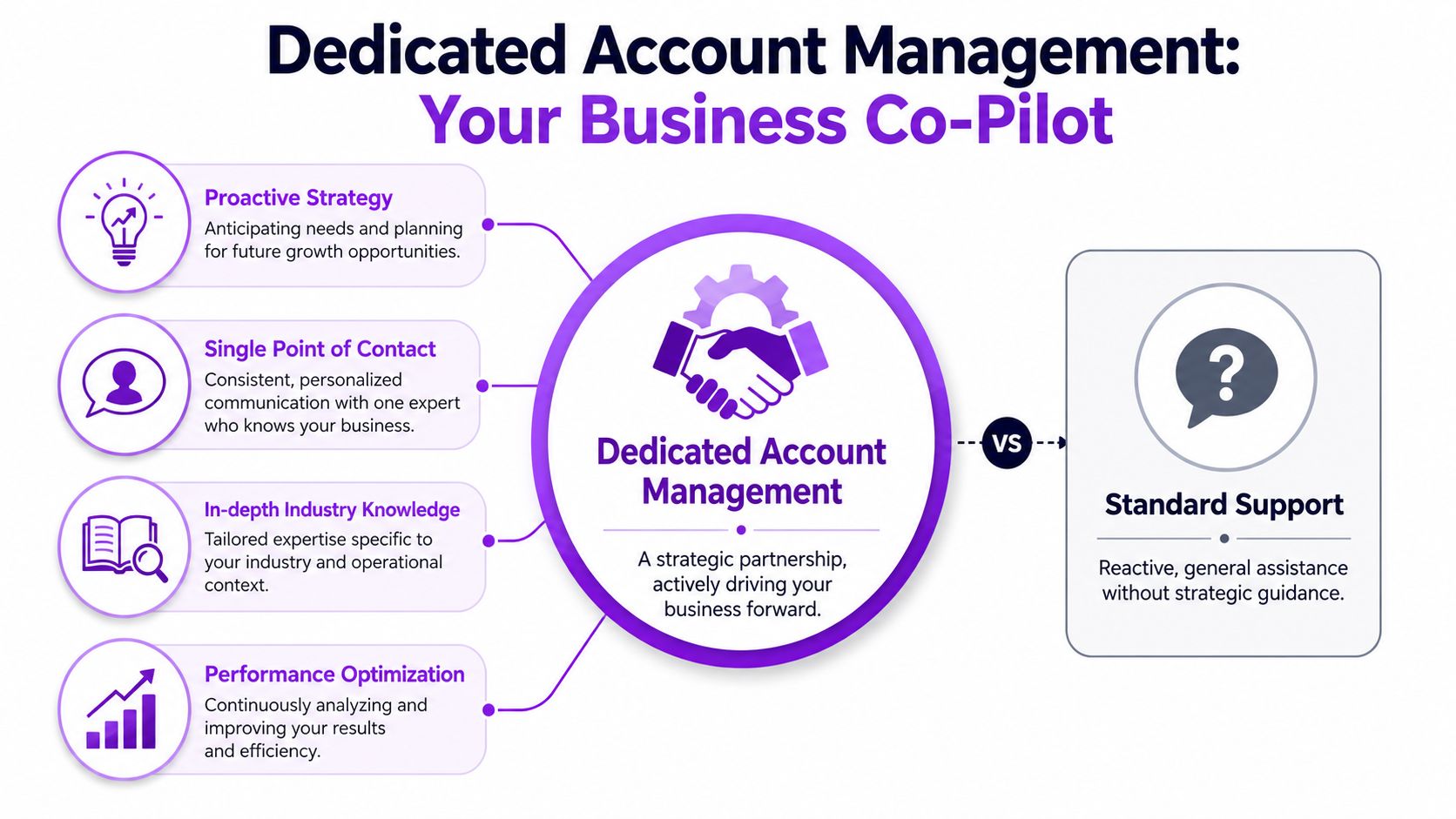
Co-pilot versus call center
The difference shows up in how work gets done.
| Model | What you usually get | What it means in practice |
|---|---|---|
| Standard support | Reactive answers, issue-by-issue handling | You repeat context, wait for triage, and manage strategy yourself |
| Dedicated account management | Ongoing context, proactive guidance, internal advocacy | The vendor helps prevent bad setups, prioritize fixes, and align the tool with your operating model |
A dedicated account manager should know your catalog complexity, shipping logic, escalation paths, and the practical difference between a nuisance issue and a high-risk one. If your blocked-order messaging is confusing, that's not just a content tweak. It affects conversion, support volume, and customer confidence. If a restriction rule is too broad, it can suppress legitimate revenue. If it's too narrow, it can expose you to preventable risk.
What a real dedicated account manager does
The role is broader than “premium support.” At a minimum, it should include responsibilities like these:
- Compliance-oriented configuration guidance: They help structure restriction logic in ways your operations team can effectively maintain.
- Proactive account reviews: They look for brittle workflows, outdated rules, and friction points before they turn into incidents.
- Training for your team: They reduce dependence on one power user by making the system understandable across operations, support, and admin staff.
- Escalation ownership: When something urgent breaks, they know the history and can move it internally without restarting the conversation.
- Business advocacy: They push your use case inside the vendor's organization so product, support, and implementation teams understand what matters to you.
The relationship depth matters. In competitive B2B sectors, 69% of customers are prepared to switch providers if their experience falls short, and companies using dedicated account managers, who often focus on just 2-3 clients versus a generalist's 15+, report higher retention rates because the relationship is more focused and strategic, according to Linear Design's guide to dedicated account managers.
A good dedicated account manager doesn't just know the software. They know how your business breaks under pressure.
What doesn't work
Some “dedicated” offerings are dedicated in name only. Watch for these weak versions:
- Named contact, no authority: You get one person, but they can't influence roadmap, prioritization, or urgent resolution.
- Quarterly check-ins with no account knowledge: The manager shows up for meetings but still needs the basics re-explained.
- Support rep with a better title: Fast responses are useful, but they aren't strategy.
- No operational viewpoint: If the account lead talks only about features and never about workflow, auditability, or risk, they're not managing the account. They're demoing the product.
Dedicated account management earns its keep when it reduces complexity, sharpens decision-making, and gives your team fewer ways to make an expensive mistake.
The Onboarding Process and Service Level Agreements
The value of a dedicated account manager becomes obvious during onboarding. That's where the difference shows between “here's the dashboard” and “here's how we'll make this workable inside your business.”
A strong onboarding process for a firearms eCommerce operation starts with discovery, not setup. The account manager should want to understand your products, shipping patterns, current review process, exception handling, and who owns compliance decisions internally. If they skip that and jump straight into feature activation, expect rework later.
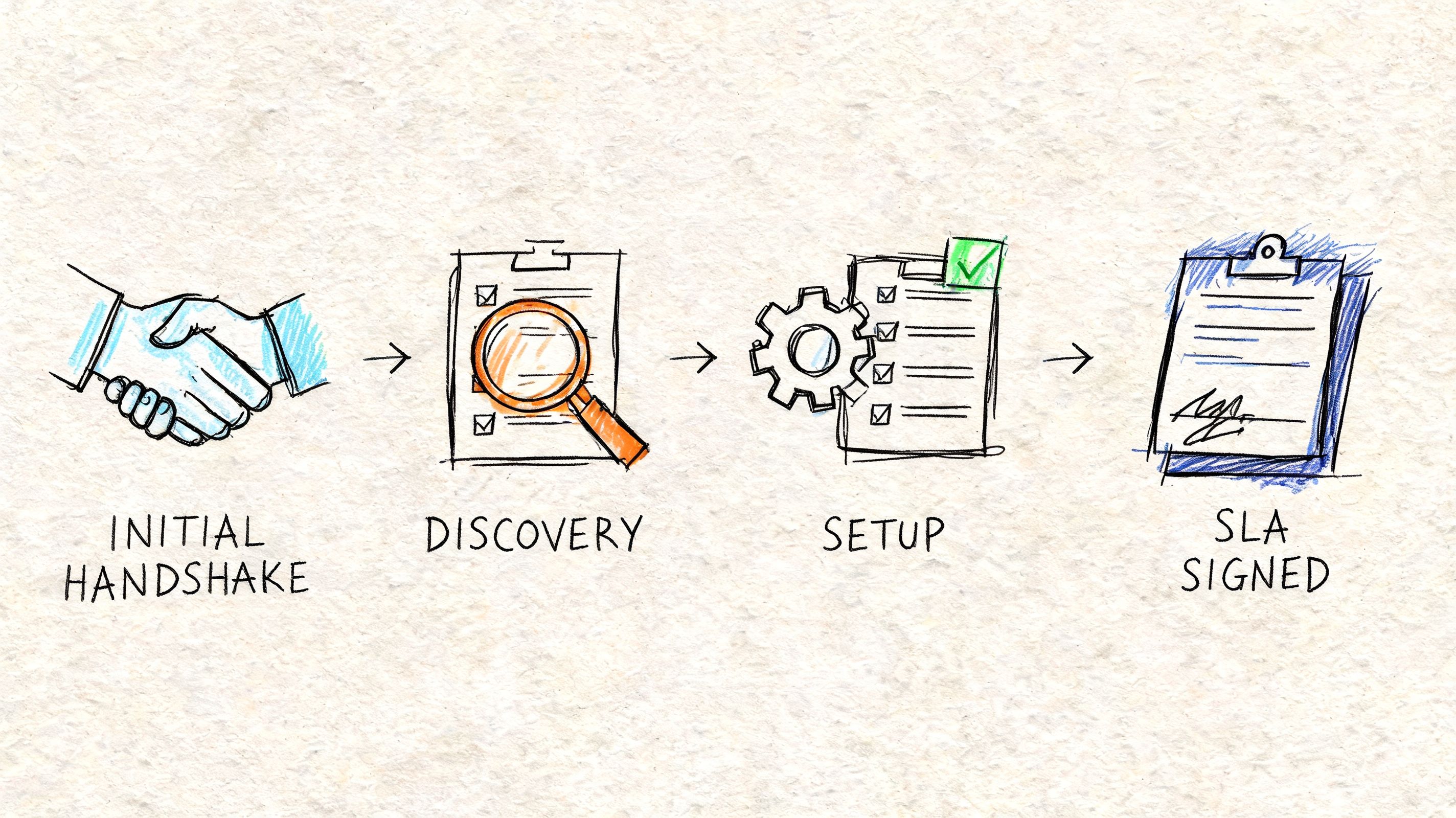
What onboarding should include
In a regulated store, onboarding usually works best when it follows a clear sequence.
-
Current-state audit
The first step is reviewing what you already have. That includes existing shipping restrictions, product classes, checkout messaging, fulfillment exceptions, and any manual review steps your team relies on. If you need a baseline on the underlying risk areas, this guide to firearms and ammunition shipping compliance for WooCommerce stores is a useful reference point. -
Rule design and prioritization
Not every rule should be built at once. A good account manager helps separate must-have controls from nice-to-have refinements. High-risk restrictions usually come first. Edge cases come next. Customer-facing message quality often gets overlooked here, but it shouldn't. -
Testing in real workflows Many teams tend to rush this stage. Rules need to be tested against actual order scenarios, not just hypothetical examples. Operations, support, and whoever handles store administration should all see how blocked orders, allowed orders, and ambiguous cases behave.
-
Team training and handoff
Your account manager should leave the team with a usable operating model. Who updates rules. Who approves exceptions. Who checks logs. Who escalates urgent issues. If onboarding ends with one admin understanding everything and everyone else confused, it wasn't finished.
Field note: The best onboarding plans reduce tribal knowledge. They don't create a new dependency on one outside expert.
What to look for in an SLA
A service level agreement matters because regulated merchants don't just need help. They need predictable help.
Look closely at these areas:
- Response commitments: Ask how quickly urgent compliance-impacting issues are acknowledged.
- Resolution targets: Acknowledge and resolve are not the same thing. You want both defined.
- Escalation path: Find out what happens when the issue affects checkout, order release, or active fulfillment.
- Review cadence: Ongoing account reviews should be scheduled, not improvised after something goes wrong.
- Ownership clarity: Know whether your account manager coordinates technical teams or just forwards messages.
A weak SLA leaves room for confusion right when your store needs certainty. A strong one creates operational calm. That's the fundamental goal of onboarding. It shouldn't just activate a service. It should lower the number of judgment calls your team has to make under pressure.
Key Benefits for Firearms eCommerce Merchants
For firearms merchants, the biggest upside of dedicated account management isn't warmer service. It's better control over a business that can't afford sloppy processes.
That distinction matters. In many eCommerce categories, a preventable shipping mistake is expensive but survivable. In firearms, the same mistake can trigger legal risk, canceled orders, customer distrust, and internal clean-up across operations and support. A dedicated account manager helps shrink those failure points.
Compliance gets operationalized
Most merchants don't struggle because they ignore compliance. They struggle because compliance lives in too many places at once. Part of it sits in platform settings. Part in internal SOPs. Part in the head of whoever has been there longest.
Dedicated account management helps convert that scattered knowledge into repeatable execution.
- Rules become structured: Restriction logic is set up in ways the team can review, maintain, and explain.
- Exceptions become visible: Instead of handling unusual cases through side messages and memory, the business can define how they should be treated.
- Change management improves: When laws or policies shift, someone is accountable for translating those changes into actual store behavior.
That's the difference between having restrictions and having a compliance system.
Operations get faster without getting sloppy
Manual checks feel safe because a human is involved. In practice, they often create inconsistency. Two staff members may review the same order differently. A rushed fulfillment window encourages shortcuts. A backlog invites avoidable approvals.
Dedicated account management supports better process design so the team spends less time on repetitive verification and more time on exceptions that need judgment.
A few workflow gains show up quickly:
- Fewer repeated explanations between teams
- Cleaner ownership between support and fulfillment
- More reliable blocked-order handling
- Less dependence on one operations lead
For businesses that also need broader process rigor across fulfillment and admin work, tools built for approvals and accountability can help. Some teams pair their commerce stack with platforms like Dutiful for e-commerce operations to tighten handoffs and document who approved what internally.
The customer experience improves in the right places
Customers don't need a long lecture on regulated commerce. They need clarity.
When restriction logic is poorly configured, customers see confusing denials, vague cart issues, or inconsistent messages from support. That creates frustration even when the business is technically following the rules. A dedicated account manager should help tighten the customer-facing side of compliance so buyers understand what happened and what to do next.
That's especially important for merchants operating in this category, where firearms eCommerce requirements and restriction handling are tied directly to whether checkout feels trustworthy.
Buyers can accept a restriction faster than they can accept confusion.
Growth gets less risky
Growth is where weak systems break. A store can survive with messy manual controls at low volume. It gets harder when order volume rises, catalogs expand, or multiple stores need aligned rules.
Dedicated account management supports growth because it gives the merchant a planning layer. Not just a support layer. You get someone who can help sequence improvements, pressure-test new workflows, and flag where expansion creates new operational exposure.
What works is disciplined scaling. Build rules before the sales push. Test new scenarios before seasonal peaks. Document exceptions before staffing changes. What doesn't work is waiting until after a bad shipment, a wave of blocked orders, or a support spike to figure out how the system should have been configured.
Measuring ROI and Defining Your KPIs
The ROI case for dedicated account management gets clearer when you stop treating it as a service add-on and start treating it as a performance lever. In a firearms eCommerce business, the return rarely lives in one metric. It shows up across risk reduction, labor efficiency, customer retention, and account stability.
Start with the metrics your team can influence and review every month.
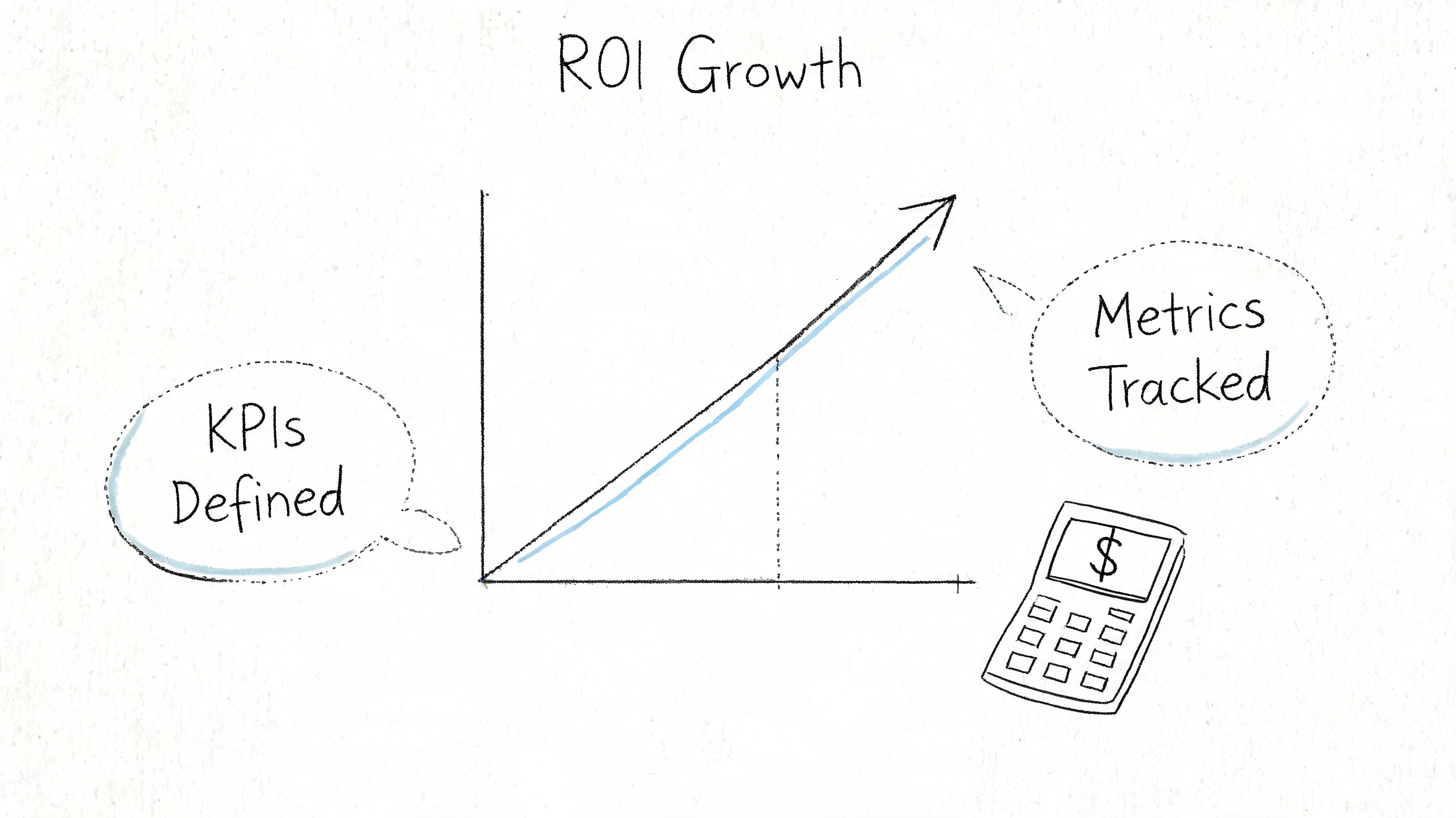
KPIs that matter in a regulated store
If you're evaluating the value of dedicated account management, look at operational indicators before you look for a vanity headline.
| KPI | Why it matters |
|---|---|
| Manual order review time | Shows whether the system is reducing hands-on compliance work |
| Blocked order clarity | Indicates whether customers understand restrictions or create support load |
| Mis-shipped or reversed orders | Highlights preventable operational failures |
| Issue escalation time | Reveals whether urgent problems move fast enough internally |
| Rule update turnaround | Measures how quickly the business can adapt when requirements change |
| Repeat customer continuity | Shows whether the buying experience is stable enough to preserve trust |
These metrics are useful because they connect directly to cost, risk, and retention. They also expose a common mistake. Many teams judge account management by how friendly or responsive the contact is. That's too soft. The key question is whether the relationship changes store performance.
Retention is the revenue argument
In B2B environments, 87% of revenue comes from existing customers, and leading firms use dedicated account management to achieve Net Revenue Retention above 120% by identifying growth opportunities that generic CRM or customer success tools often miss, according to Kapta's analysis of dedicated account management platforms.
For a firearms merchant, that lesson translates well even if the exact account structure differs. Existing buyers are usually the customers you can serve most efficiently because they already know your process, trust your catalog, and understand the category. If your store experience becomes more reliable, those customers are easier to keep. If compliance handling is messy, they don't need many bad experiences to look elsewhere.
Benchmark mindset: Track whether dedicated account management reduces friction for your best existing customers, not just whether it resolves tickets faster.
Build a reporting rhythm your team will use
A KPI dashboard only helps if someone reviews it and acts on it. Keep the reporting cycle practical. Monthly is usually enough for trend visibility without turning the process into overhead.
If your team struggles to keep reports current, it can help to automate KPI reporting with AI so operational metrics are easier to surface and compare over time.
This walkthrough is also worth reviewing if you need a quick visual reset on what ROI tracking should support in a client-account relationship:
<iframe width="100%" style="aspect-ratio: 16 / 9;" src="https://www.youtube.com/embed/LvuUTucPYDo" frameborder="0" allow="autoplay; encrypted-media" allowfullscreen></iframe>A solid review cadence usually includes:
- A short monthly scorecard: Focus on exceptions, changes, and operational impact.
- A quarterly account review: Look for recurring friction, new risk areas, and workflow improvements.
- A clear owner for each KPI: If no one owns the metric, no one fixes it.
- A written action log: Tie account reviews to actual decisions, not just discussion.
What doesn't work is collecting screenshots from dashboards and calling that measurement. ROI needs cause and effect. If the account manager recommended a rule redesign, you should be able to see whether manual review time fell, support confusion dropped, or repeat order handling became smoother.
How to Evaluate a Vendor's Offer
By the time a vendor offers dedicated account management, most merchants are already sold on the idea of having a named contact. That's not enough. You need to know whether the offer will hold up under real operating pressure.
The easiest way to evaluate a vendor is to stop asking “Do you provide dedicated support?” and start asking “How do you handle my category when things get messy?” A serious partner will have crisp answers. A weak one will hide behind generalities.
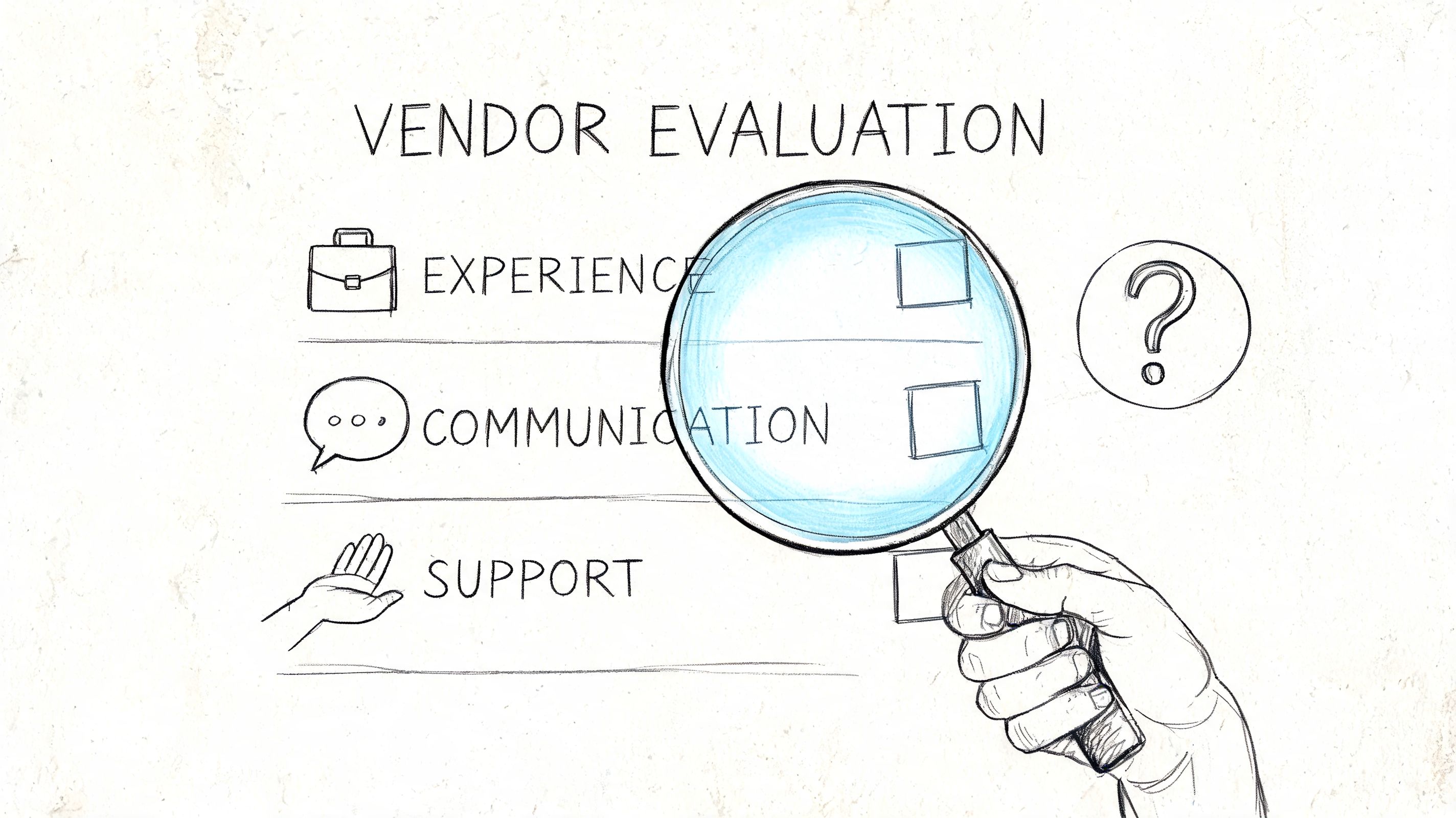
Questions worth asking in the sales process
Bring a checklist. Use it.
-
How do you update rules when restrictions change?
You want a process answer, not “we handle updates quickly.” Ask who owns the update, how it is reviewed, and how your team is informed. -
What happens when a rule conflicts with a real order scenario?
Vendors should be able to explain testing, exception handling, and escalation. -
Can you support multi-store governance?
If you operate more than one storefront, ask how settings stay aligned and how changes are controlled across environments. -
How customizable are customer-facing messages?
This matters more than many vendors admit. Clear messages reduce support volume and buyer frustration. -
What does your account review process cover? Ask for examples. You want reviews that examine workflow, risk, and performance, not just renewal readiness.
Signs the offer is strong
A vendor is usually worth trusting when they can describe how they work in specific operational terms.
| Strong signal | Why it matters |
|---|---|
| They ask about your current workflow | It shows they understand configuration lives inside operations |
| They discuss escalation and ownership clearly | It reduces confusion during urgent issues |
| They can explain how rules are tested | It suggests they care about execution, not just setup |
| They understand category-specific edge cases | It lowers the chance you become their learning experience |
| They provide implementation guidance, not just support access | It means the account role includes strategy |
If you want a sense of the practical setup questions a category-specific workflow should support, this FFL dealer shipping restrictions WooCommerce setup guide is a good benchmark for the level of detail to expect.
Red flags that should slow you down
These issues usually surface early if you listen carefully:
- Everything sounds customizable, but nothing sounds standardized
- The vendor can't explain how compliance updates reach your store
- The account manager seems separate from technical delivery
- No one can describe a review cadence
- The SLA language is vague around urgent problems
Vendors who can't explain their operating model usually don't have one.
Dedicated account management is only valuable when it comes with accountability, category knowledge, and enough internal authority to get things done. Otherwise, you're paying extra for a friendlier inbox.
If you run a regulated WooCommerce store and want tighter control over shipping compliance, Ship Restrict gives firearms merchants a practical way to automate restriction enforcement, reduce manual reviews, and support higher-stakes operations with enterprise options that include dedicated account management.
Automate Shipping Compliance
Stop worrying about restricted states. Ship Restrict handles it automatically.

Cody Yurk
Founder and Lead Developer of ShipRestrict, helping e-commerce businesses navigate complex shipping regulations for regulated products. Ecommerce store owner turned developer.
Automate Shipping Compliance
- Block restricted states
- No more cancellations
- Set and forget
3-day free trial · Card required