Navigating Nicotine Pouch Oral Nicotine Shipping Restrictions
Your guide to nicotine pouch oral nicotine shipping restrictions. Understand PACT Act rules, state laws, and carrier policies for compliant e-commerce sales.
Shipping nicotine pouches legally isn't as simple as slapping a label on a box. The short answer? It's a logistical puzzle that demands a multi-layered compliance strategy. You’re not just dealing with one set of rules, but three: federal PACT Act requirements, a patchwork of state-by-state flavor bans, and the specific policies of carriers like USPS, UPS, and FedEx.
Think of it as a digital minefield for any e-commerce store in the space.
Your Quick Guide To Nicotine Pouch Shipping Rules
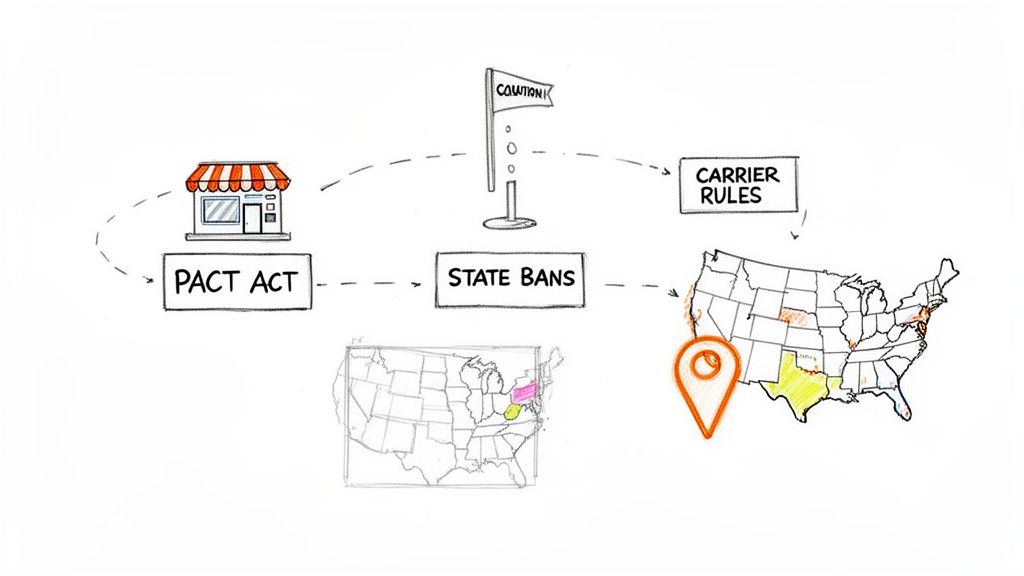
A single misstep with nicotine pouch oral nicotine shipping restrictions can spiral into returned shipments, thousands in fines, or serious legal trouble. That's why trying to manage compliance manually is a losing game for any growing business. This guide will walk you through each layer of these regulations, one step at a time.
To get a complete picture of the compliance landscape, you have to understand the interplay between federal laws, state restrictions, and carrier policies.
Automate Tobacco Shipping Compliance
Block orders to restricted states automatically. 3-day free trial.
Start Free TrialLet's quickly summarize the hurdles you're up against before we dive deep.
Overview Of Nicotine Pouch Shipping Hurdles
This table gives you a high-level look at the main categories of restrictions you'll need to manage.
| Restriction Type | Governing Body | Common Examples |
|---|---|---|
| Federal Law | U.S. Congress (PACT Act) | Age verification, tax registration, reporting requirements. |
| State & Local Law | State Legislatures, City Councils | Flavor bans (e.g., mint, fruit), total online sales bans, specific licensing. |
| Carrier Policy | USPS, UPS, FedEx, Regional Carriers | Business-to-business only shipments, outright bans, special contract requirements. |
Each of these layers acts like a filter. A shipment might be legal under federal law but banned by a state, or permitted by the state but refused by your chosen shipping carrier. Getting it right means satisfying all three simultaneously for every single order.
This guide will break down exactly what you need to know, covering:
- Federal, state, and local laws that govern online sales.
- Carrier-specific rules and what each one demands.
- How to use automated solutions to navigate this challenging landscape safely and effectively.
Understanding The Regulatory Maze For Oral Nicotine
<iframe width="100%" style="aspect-ratio: 16 / 9;" src="https://www.youtube.com/embed/ajS8LMnoxPc" frameborder="0" allow="autoplay; encrypted-media" allowfullscreen></iframe>Navigating the world of nicotine pouch shipping restrictions can feel like trying to solve a puzzle where the pieces are constantly changing. It all starts at the federal level, where laws like the PACT Act lay down the ground rules for every single seller in the country. This is the baseline—the absolute must-knows for anyone shipping oral nicotine products anywhere in the U.S.
But federal law is just the beginning of the story.
From there, you descend into a chaotic patchwork of state and local regulations. What's perfectly fine to ship to a customer in one state could be completely banned just one state over. Think of places like Utah, where shipments are a no-go, or California, where certain flavors are off-limits. You can dive deeper into these complexities in our detailed guide on PACT Act compliance for WooCommerce.
Free Tobacco Compliance Audit
Selling tobacco or nicotine products? We'll review your WooCommerce store's shipping compliance for free.
This isn't just a U.S. problem, either. The regulatory web stretches across the globe, with each country putting up its own unique walls. Back in 2020, when Swedish Match shipped a staggering 130 million cans of Zyn, they ran into completely different roadblocks. Germany suddenly decided to classify the pouches as a food product, grinding distribution to a halt, while Canada restricted all sales to pharmacies only. It's a prime example of how quickly and unpredictably the rules can change.
How Major Shipping Carriers Handle Nicotine Pouches
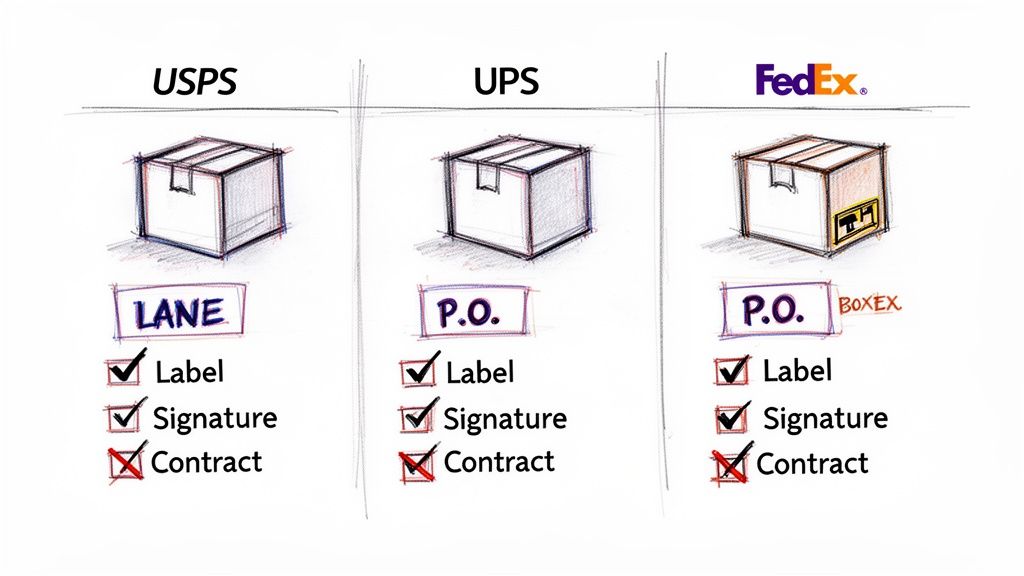
Navigating federal and state laws is only half the battle. When it’s time to actually ship your nicotine pouches, the carriers themselves—USPS, UPS, and FedEx—are the final gatekeepers.
Each one has its own set of strict, non-negotiable policies for handling nicotine pouch and oral nicotine shipping. Think of their rules as another layer of compliance you have to get right, completely separate from government regulations.
United States Postal Service (USPS)
The USPS is notoriously strict. To ship oral nicotine with them, you absolutely must be approved under their comprehensive PACT Act compliance program. This isn’t a simple sign-up; it's a rigorous application process that dictates everything from specific labeling and packaging to mandatory adult signature confirmation upon delivery.
If you aren't an approved business, you can't use the mail to ship these products. It's that simple.
UPS and FedEx
Private carriers like UPS and FedEx take a different route. Instead of a broad public program, they require you to secure a special contractual agreement specifically for shipping tobacco or nicotine products. These contracts are only available to licensed businesses that can meet their vetting requirements.
Once you have a contract, you'll also have to use their proprietary age verification systems at checkout and upon delivery. They also enforce their own service limitations, like a flat-out refusal to deliver any oral nicotine products to P.O. boxes.
Failing to understand and follow these distinct carrier policies is a fast track to getting your shipping account suspended or shut down entirely.
Comparing Carrier Requirements For Nicotine Pouch Shipments
When you're deciding which carrier to work with, it helps to see their requirements side-by-side. Each has a unique approach to managing the risks and legal obligations of shipping age-restricted nicotine products.
| Requirement | USPS | UPS | FedEx |
|---|---|---|---|
| Special Contract Needed | No, but requires PACT Act program approval. | Yes, a specific Nicotine Shipping Agreement is mandatory. | Yes, a Tobacco Shipping Agreement is required. |
| Shipping Service Restrictions | Priority Mail Express, Priority Mail, certain Ground services. | Most services are available with a contract. | FedEx Express services only; no Ground or Home Delivery. |
| Adult Signature Required | Yes, Adult Signature Required or Adult Signature Restricted Delivery. | Yes, Adult Signature Required is mandatory. | Yes, Adult Signature Required is mandatory. |
| P.O. Box Delivery | Permitted to certain APO/FPO/DPO addresses, but otherwise restricted. | No, delivery to P.O. Boxes is prohibited. | No, delivery to P.O. Boxes is prohibited. |
| Labeling Requirements | Must include specific PACT Act-compliant markings. | Must comply with all federal, state, and local laws. | Must comply with all federal, state, and local laws. |
| Age Verification | Done via Adult Signature service at delivery. | Requires integration with their approved verification systems. | Requires integration with their approved verification systems. |
Ultimately, there’s no single "best" carrier—it all depends on your business model, customer locations, and ability to meet each company's specific compliance demands. The key is to do your homework and formalize an agreement before you ship your first package.
The High Cost of Getting Shipping Compliance Wrong
When a restricted order slips through the cracks, the fallout goes way beyond a simple mistake. Violating federal PACT Act rules isn't just a slap on the wrist. We're talking about serious civil penalties, with fines that can hit thousands of dollars per infraction.
Think about that for a second. A single non-compliant shipment could unleash a wave of fines big enough to jeopardize your entire business.
Then you have state-level enforcement, which adds a whole other layer of risk. Authorities can seize your inventory, pull your business licenses, and levy their own massive fines, shutting you down almost overnight. And beyond the direct legal heat, the hidden costs start piling up fast.
You'll be eating wasted postage on returned packages, dealing with carriers like UPS or FedEx threatening to suspend your account, and trying to repair irreversible damage to your brand's reputation. A compliance failure is a lot like a data breach—one error can cause devastating, long-term harm.
Automating Shipping Compliance In Your WooCommerce Store
Trying to manually check every single order against the tangled web of nicotine pouch oral nicotine shipping restrictions is a surefire way to make mistakes. The real solution is to automate enforcement right inside your WooCommerce store, creating a digital compliance officer that works around the clock to protect your business.
A powerful tool can turn this manual headache into a reliable, automated workflow. The global regulatory scene is always shifting; one international review found that 20 out of 67 surveyed countries have specific sales bans on these products. Others have vague or nonexistent rules, creating a minefield of unpredictable risks.
The screenshot above shows a simple rule blocking all shipments to Utah, a state with a total ban. This kind of setup prevents expensive shipping errors before they ever happen, ensuring every order that goes out the door is compliant—automatically.
To see exactly how this works from start to finish, check out our complete guide on automated shipping compliance for WooCommerce stores.
Operational Best Practices For Shipping Oral Nicotine
Setting up automated rules at checkout is a huge step, but your compliance job isn't over until the order is safely—and legally—on your customer's doorstep. When you’re fulfilling an order for oral nicotine, you’re dealing with a physical checklist for packaging, labeling, and documentation that has to be followed to the letter. Get it wrong, and you're looking at costly mistakes.
This means using discreet packaging that doesn’t scream "nicotine inside!" and making sure every required federal and state warning label is properly applied. You'll also need to keep meticulous records of every single sale, a topic we dig into deeper in our guide to best practices for online age verification.
If you’re thinking about shipping internationally, the stakes get even higher. A detailed regulatory scan found that 20 countries flat-out prohibit the sale of nicotine pouches. This list includes major markets like Germany, Russia, and Singapore, making global shipping a minefield. You can get a sense of the worldwide complexity by reading the full findings on global regulations.
This whole process might sound complicated, but a rule-based system can automate these complex shipping decisions so you don't have to think about them for every single order.
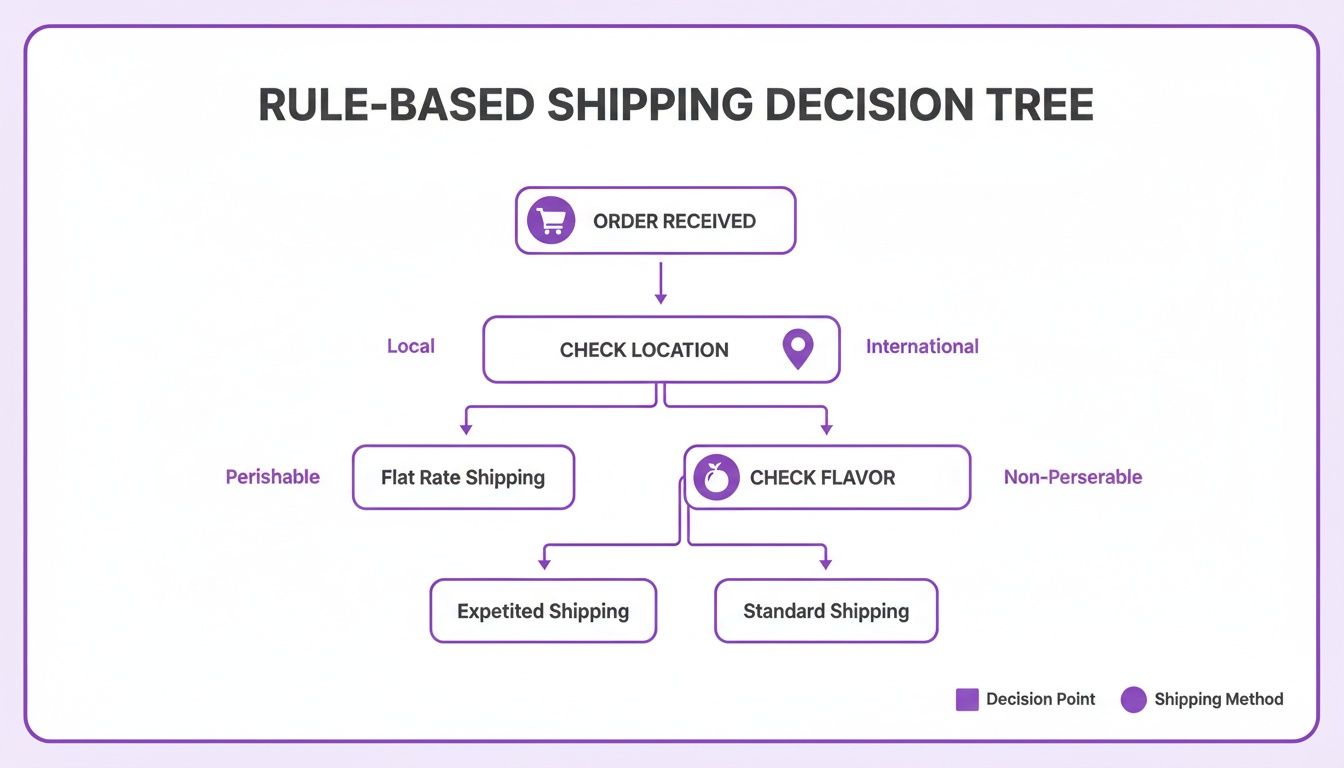
A workflow like this one ensures every order gets checked against location and product rules before your team even starts picking and packing. It’s all about building a system that catches potential compliance issues automatically.
FAQs About Shipping Nicotine Pouches
When you're selling nicotine pouches online, it feels like the rules are constantly shifting under your feet. It's totally normal to have questions—in fact, it's a good sign you're taking compliance seriously.
We've gathered some of the most common questions we hear from merchants just like you. Think of this as your go-to guide for those tricky situations and lingering uncertainties about shipping rules. Let's clear things up so you can ship with confidence.
Automate Tobacco Shipping Compliance
Stop worrying about restricted states. Ship Restrict handles it automatically.

Cody Yurk
Founder and Lead Developer of ShipRestrict, helping e-commerce businesses navigate complex shipping regulations for regulated products. Ecommerce store owner turned developer.
Automate Tobacco Compliance
- Block restricted states
- No more cancellations
- Set and forget
3-day free trial · Card required